
Fredericktown
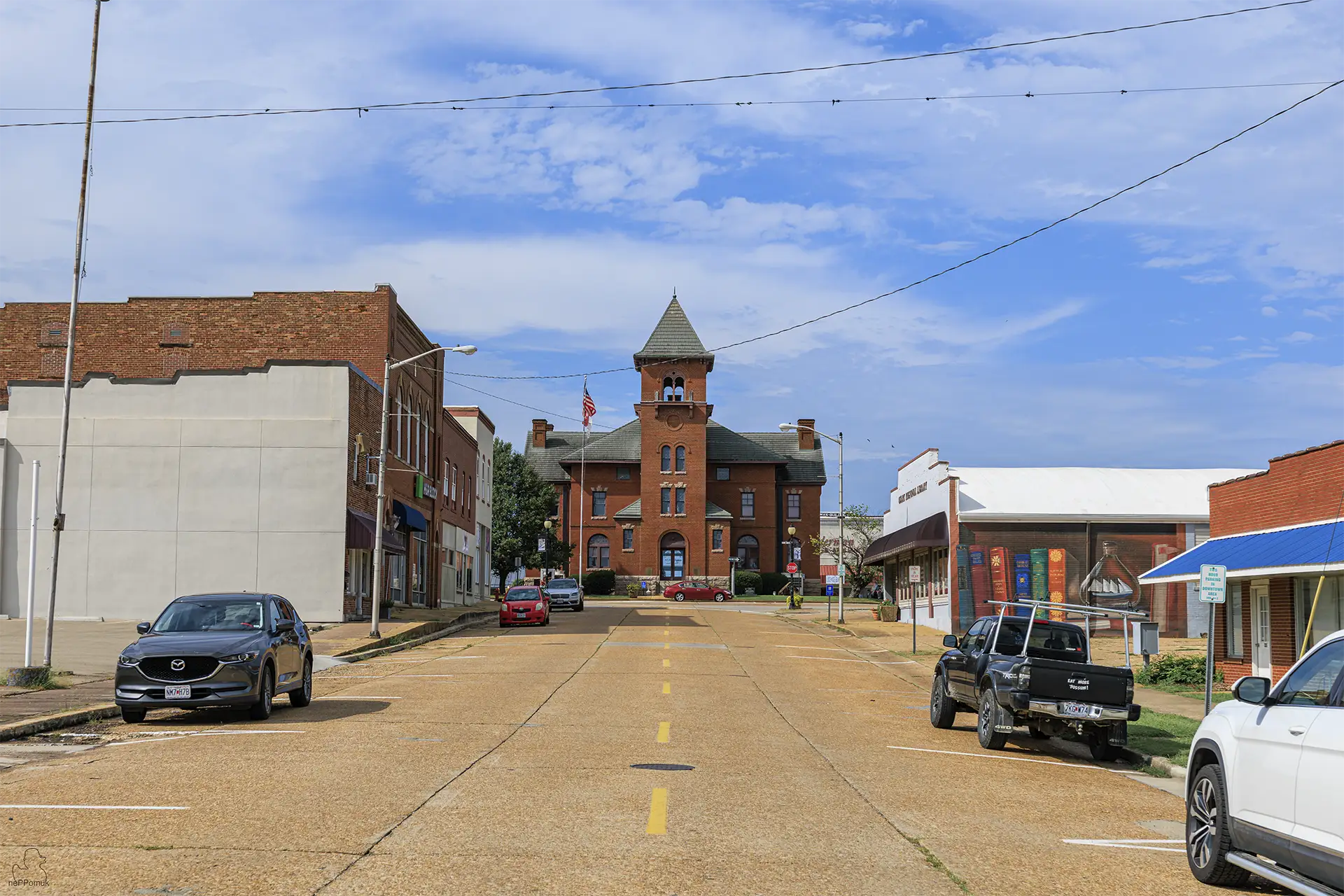
Fredericktown liegt im Südosten des US-Bundesstaates Missouri, eingebettet in die Ausläufer der Ozark Mountains. Die Kleinstadt ist Verwaltungssitz des Madison County und gehört zu jenen Orten im amerikanischen Mittleren Westen, deren historisch gewachsene Strukturen bis heute das Stadtbild prägen. Im Zentrum steht das markante Madison County Courthouse, umgeben von traditionellen Geschäftsgebäuden, breiten Straßen und einer Architektur, die von der wirtschaftlichen Entwicklung der Region erzählt.
Die Geschichte Fredericktowns reicht bis zu den französischen Siedlern des ausgehenden 18. Jahrhunderts zurück. Aus den Anfängen der Siedlung St. Michael entwickelte sich im frühen 19. Jahrhundert ein regionales Verwaltungs- und Handelszentrum. Der Blei- und Kobaltbergbau, die Anbindung an das amerikanische Eisenbahnnetz und die Ereignisse des Amerikanischen Bürgerkriegsbeeinflussten die Entwicklung der Stadt nachhaltig. Viele dieser historischen Zusammenhänge lassen sich noch heute an Gebäuden, ehemaligen Gewerbestandorten und lokalen Museen nachvollziehen.
Das heutige Fredericktown in Missouri vermittelt einen unmittelbaren Eindruck vom Leben in einer amerikanischen Kleinstadt. Entlang der Main Street wechseln sich historische Backsteinfassaden mit kleinen Geschäften, Restaurants und traditionellen Handwerksbetrieben ab. Abseits des Zentrums bestimmen Wohnhäuser mit Veranden, Gewerbeflächen, Kirchen und die alltägliche Infrastruktur das Erscheinungsbild. Gerade diese Mischung aus historischer Architektur und gegenwärtigem Stadtleben macht den besonderen Charakter Fredericktowns aus.
Auch aus fotografischer Perspektivebesitzt die Stadt ihren eigenen Reiz. Während das Courthouse und die historischen Straßenzüge klassische Motive der Stadt- und Reisefotografiebieten, eröffnen Hintergassen, Wandbilder, Werkstätten und unscheinbare Fassadendetails einen anderen Blick auf den Ort. Fredericktown zeigt dabei eine Seite der USA, die weniger von touristischen Attraktionen als vom alltäglichen Leben ihrer Bewohner geprägt wird.
Courthouse, Civil War, and mining tell of Fredericktown’s eventful past.
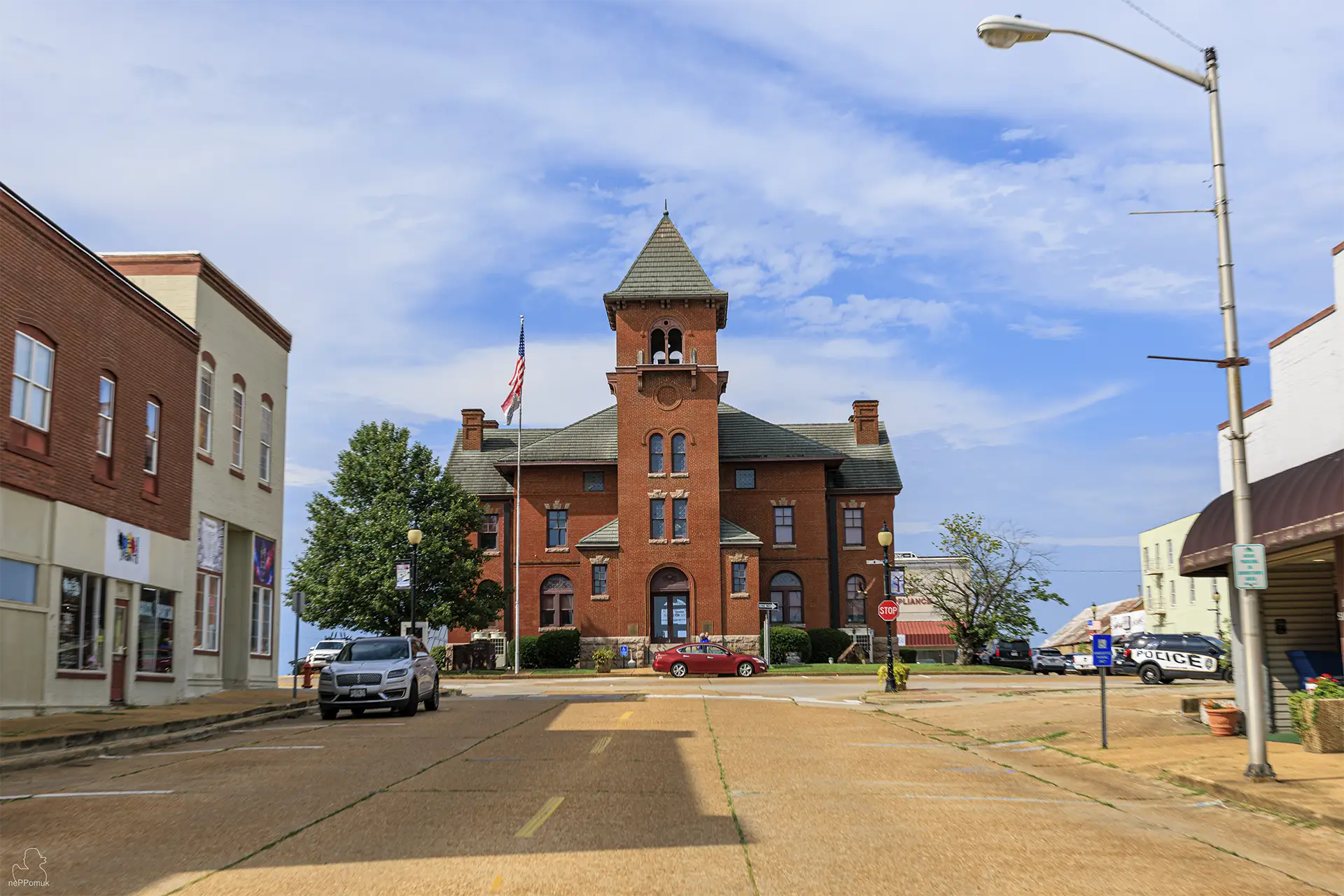
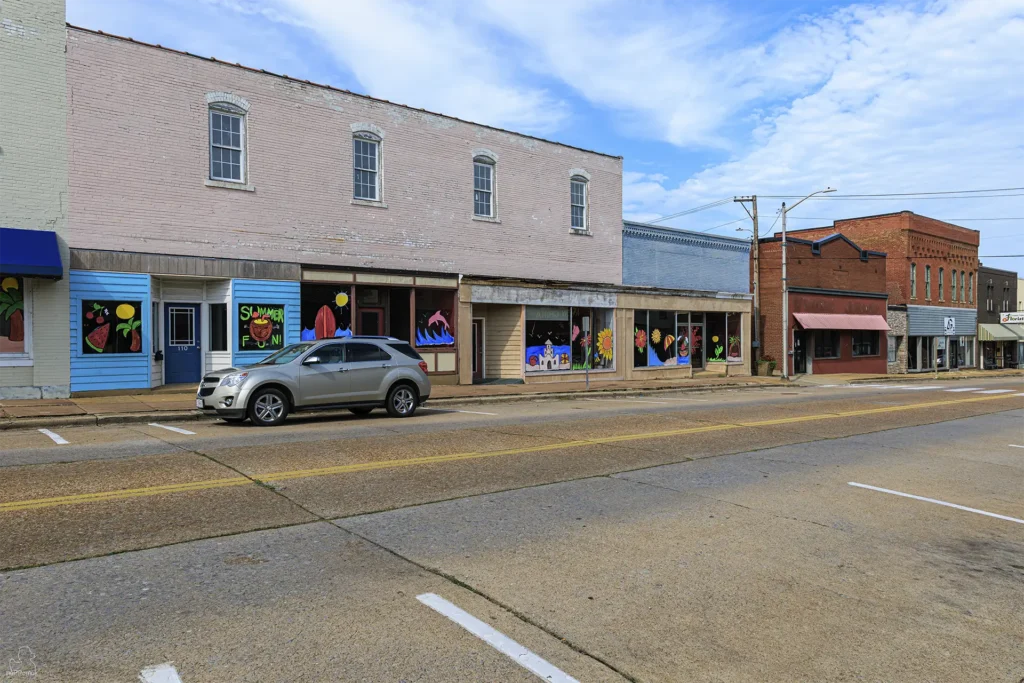
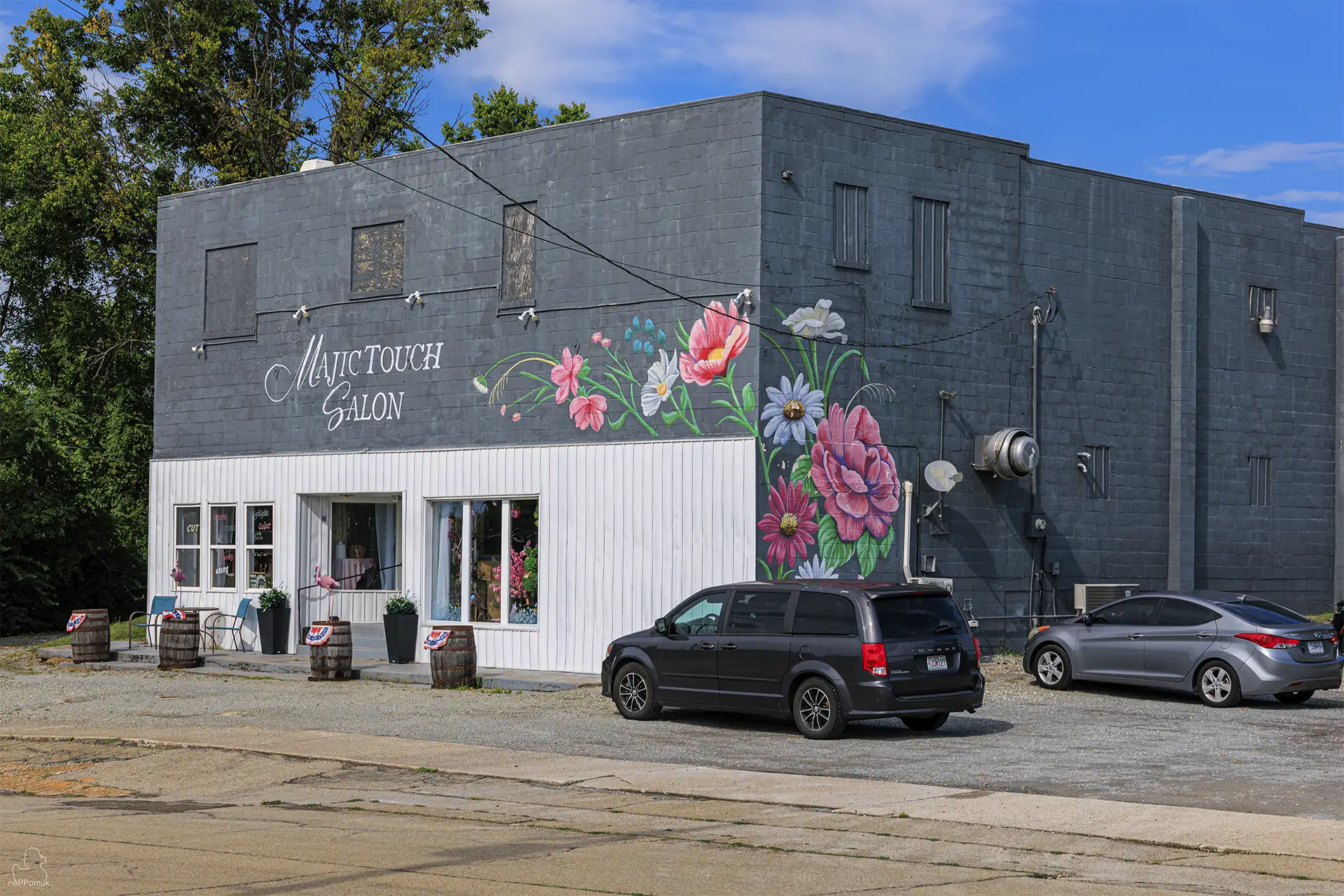
Shops, craft businesses, and historic facades shape life around Main Street.
- Architektur, Brain Sandwich, Cathedral Basilica of Saint Louis, Citygarden St. Louis, Eads Bridge, East St. Louis, Gateway Arch, Mississippi River, Old Courthouse St. Louis, Route 66, Scott Joplin, Soldiers Memorial St. Louis, St. Louis, St. Louis Sehenswürdigkeiten, Ted Drewes Frozen Custard, Toasted Ravioli, Union Station St. Louis
Fredericktown and its history
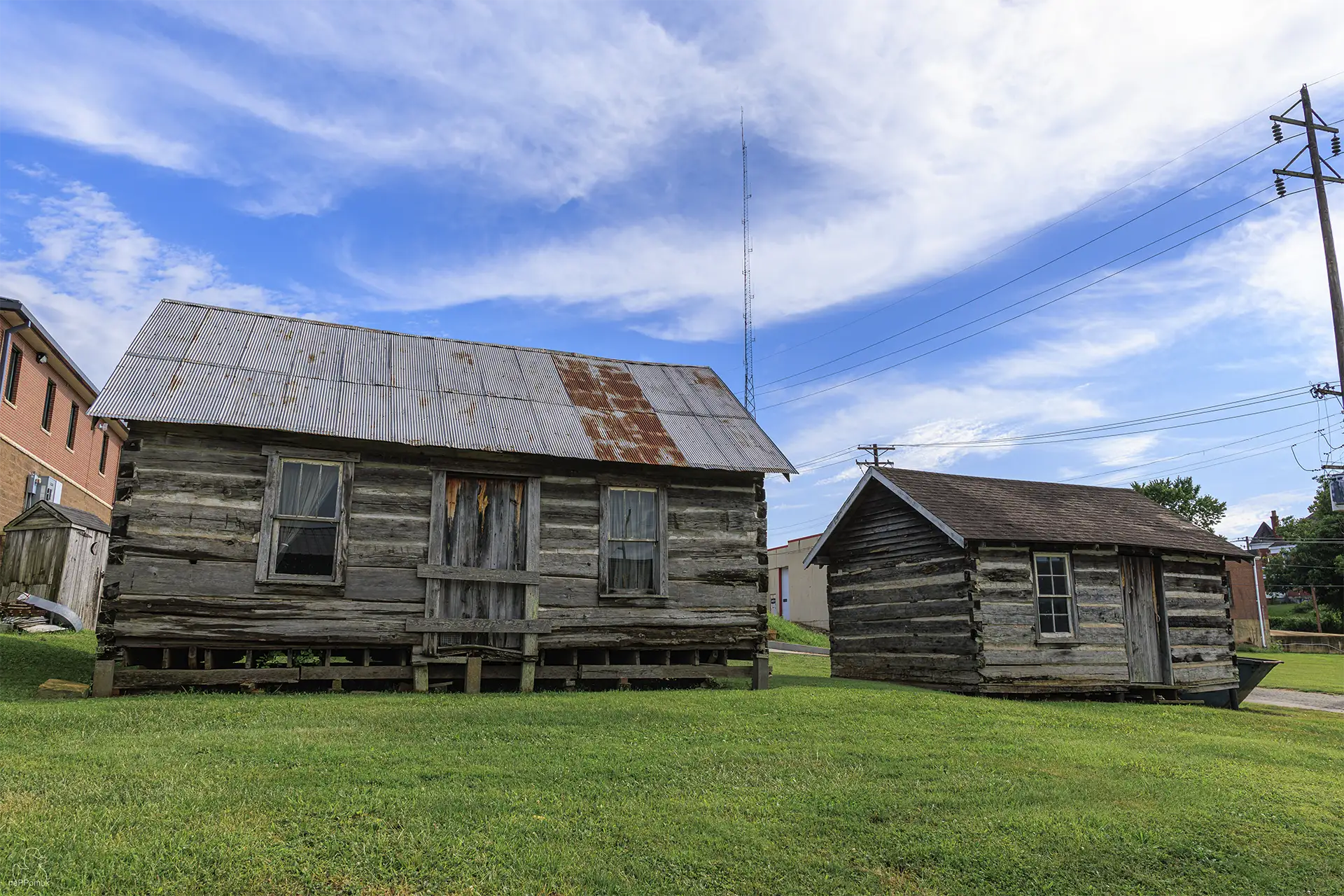
French settlers and the origins of St. Michael
The history of Fredericktown in Missouribegins long before the town was actually founded. As early as the 18th century, the region in southeastern Missouri attracted European settlers, who were mainly interested in the rich mineral resources. Especially the lead deposits around Mine La Motte, a few kilometers north of present-day Fredericktown, played an important role. French miners and settlers developed the area at a time when the western bank of the Mississippi still belonged to the largely sparsely populated frontier regions of the European colonial powers.
Around 1800, a small French-influenced settlement called St. Michaelemerged along the waterways of Saline Creek and Village Creek. Thirteen French-Creole families had received land allocations under Spanish administration and built their homes there. The settlers came predominantly from existing French communities along the Mississippi, including Ste. Genevieve. Their way of life was shaped by agricultural traditions, the Catholic faith, and communally used land.
The early homes were mostly made of wood and built in a style characteristic of the French colonial period. In addition to agriculture, the nearby mining and trade with other settlements formed important economic foundations. With the Louisiana Purchase von 1803, through which the United States acquired the vast French territory west of the Mississippi, the political conditions in the region also changed fundamentally.
The French-Creole origins of the first settlers nevertheless remained an important part of local identity. In particular, the name St. Michael outlasted the original settlement and can still be found in local history today.
Read more
The flood of 1814 and the founding of Fredericktown
A defining event in the town’s early history was the flood of 1814. After exceptionally heavy rainfall, the streams around St. Michael overflowed their banks and flooded large parts of the settlement. Numerous houses were damaged or destroyed. This raised the question for the residents of whether they should rebuild their buildings at the previous location or settle again on higher ground.
Many families decided to move. In some cases, the still usable wooden beams from the damaged buildings were dismantled and reused at the new location. The settlement gradually shifted away from the flood-prone area. This development was an important prerequisite for the emergence of the later Fredericktown.
With the founding of Madison County in 1818, named after the former US President James Madison, the region gained new administrative significance. In 1819, a site on land that Nathaniel Cookowned was selected for the county seat. From this planned development, Fredericktown emerged, which absorbed the older settlement of St. Michael over time.
The name Fredericktown is traditionally traced back to George Frederick Bollinger, an influential early settler and politician in the region. The town developed into the central point of contact for administration, justice, and trade in Madison County.
An administrative center with growing regional significance
The establishment of the county administration brought new responsibilities and economic opportunities. Merchants, artisans, and service providers settled in the area, while road connections to the surrounding communities gained importance. In the first decades, shops and public facilities were already established, increasingly making Fredericktown the economic center of the county.
This development laid the foundation for the historic town center. The area around the present-day Court Squarestill recalls Fredericktown’s role as an administrative and commercial center. However, the buildings preserved today date mostly from later phases of development and are examined more closely in the chapter on the Madison County Courthouse and its surroundings.
Between agriculture, mining, and economic change
During the 19th century, Fredericktown’s development was closely tied to the natural resources of southeastern Missouri. The surrounding lead depositswere part of a mining region whose economic importance extended far beyond Madison County. Mines, agricultural operations, and local craftsmanship formed essential foundations for supplying the population and for trade with neighboring communities.
The town itself primarily served as a regional center for trade and services. Agricultural products were sold here, goods for daily needs were offered, and business was conducted that was connected to the extraction of raw materials. However, development did not proceed evenly. Economic upswings alternated with periods of weaker demand and declining mining activity.
With the expansion of the railroad connections, transportation options for people, raw materials, and goods improved later on. As a result, Fredericktown became more closely integrated into interstate economic relations. The railroad also influenced the spatial development of the town and created new conditions for commercial businesses.
In the 20th century, the local economic structure changed again. The shoe industry temporarily became an important employer after traditional mining activities had declined in importance. This development shows how Fredericktown has repeatedly had to respond to changing economic conditions throughout its history.
The industrial history and the former railroad depotare discussed in more detail in Chapter 4.
Missouri in the Civil War – A state between the fronts
With the outbreak of the American Civil War in 1861Missouri found itself in a particularly difficult political and military situation. Although the state remained part of the United States, it was also a slave state, in which significant parts of the population sympathized with the Southern states. Political loyalties, economic interests, and regional ties created deep tensions within society.
Missouri had considerable strategic importance because of its geographical location. The Mississippi was an important transport and supply route, while the rail connections from St. Louis into southeastern Missouri were of military value. Control of these transport routes was therefore of interest to both the Union and the secession-oriented forces.
Especially the Missouri State Guard, an armed formation under the leadership of the secession-friendly state government, attempted in 1861 to push back Union influence in various parts of the state. In southeastern Missouri, units under Brigadier General Meriwether Jeff Thompson, which sought to tie down enemy forces through rapid troop movements and attacks on infrastructure.
The area around Fredericktown also became the scene of military clashes. The town lay in an area where road links, railway lines, and control of smaller towns were important for the conduct of the war.
The Battle of Fredericktown on October 21, 1861
On October 21, 1861a clash took place south of Fredericktown between Union troops and the units of General Jeff Thompson. It was preceded by military operations by the Missouri State Guard against the railroad infrastructure, especially against links that were important for the supply and movement of Union troops.
Two Union units under the colonels Joseph B. Plummerand William P. Carlinadvanced on Fredericktown to confront Thompson and his men. After Union troops occupied the town, Thompson returned to the area with part of his forces and attempted to attack the opposing units.
Around noon, a roughly two-hour engagement developed. The numerically superior Union troops were able to repulse the attacks and eventually forced the Missouri State Guard to retreat. Cavalry units then pursued the fleeing troops.
The Battle of Fredericktown ended in a Union victoryand helped solidify their military control over southeastern Missouri. Although the engagement was limited in scale compared with the major battles of the Civil War, it had important regional significance. It was also one of the early operations of troops under the command of the later Union general and U.S. President Ulysses S. Grant, who, however, did not take part in the battle itself.
For the history of Fredericktown, the event remains a significant turning point. The military clashes illustrate how directly the national conflict also affected smaller communities that were far removed from the major political centers of the United States.
Historical memory and the preservation of cultural heritage
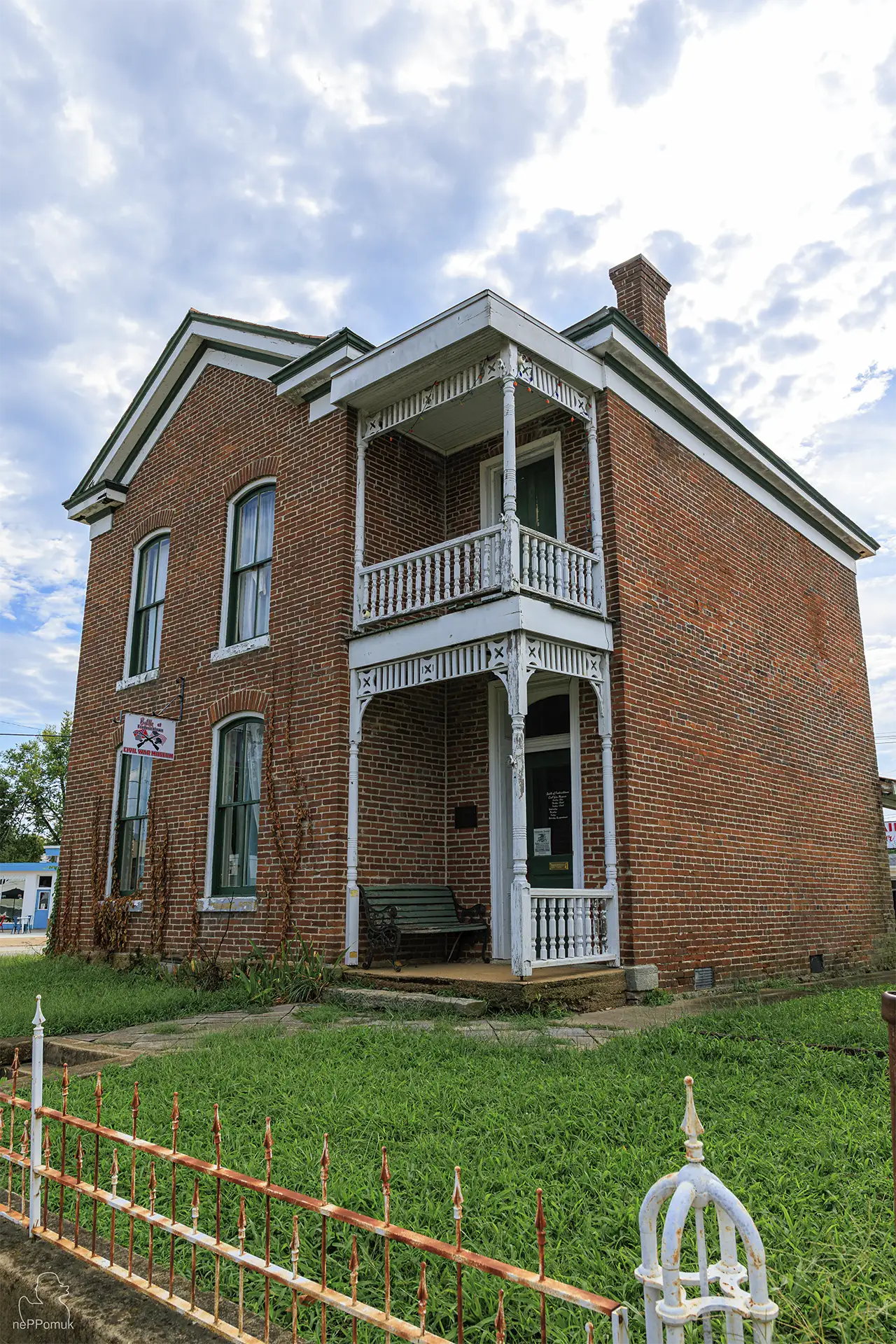
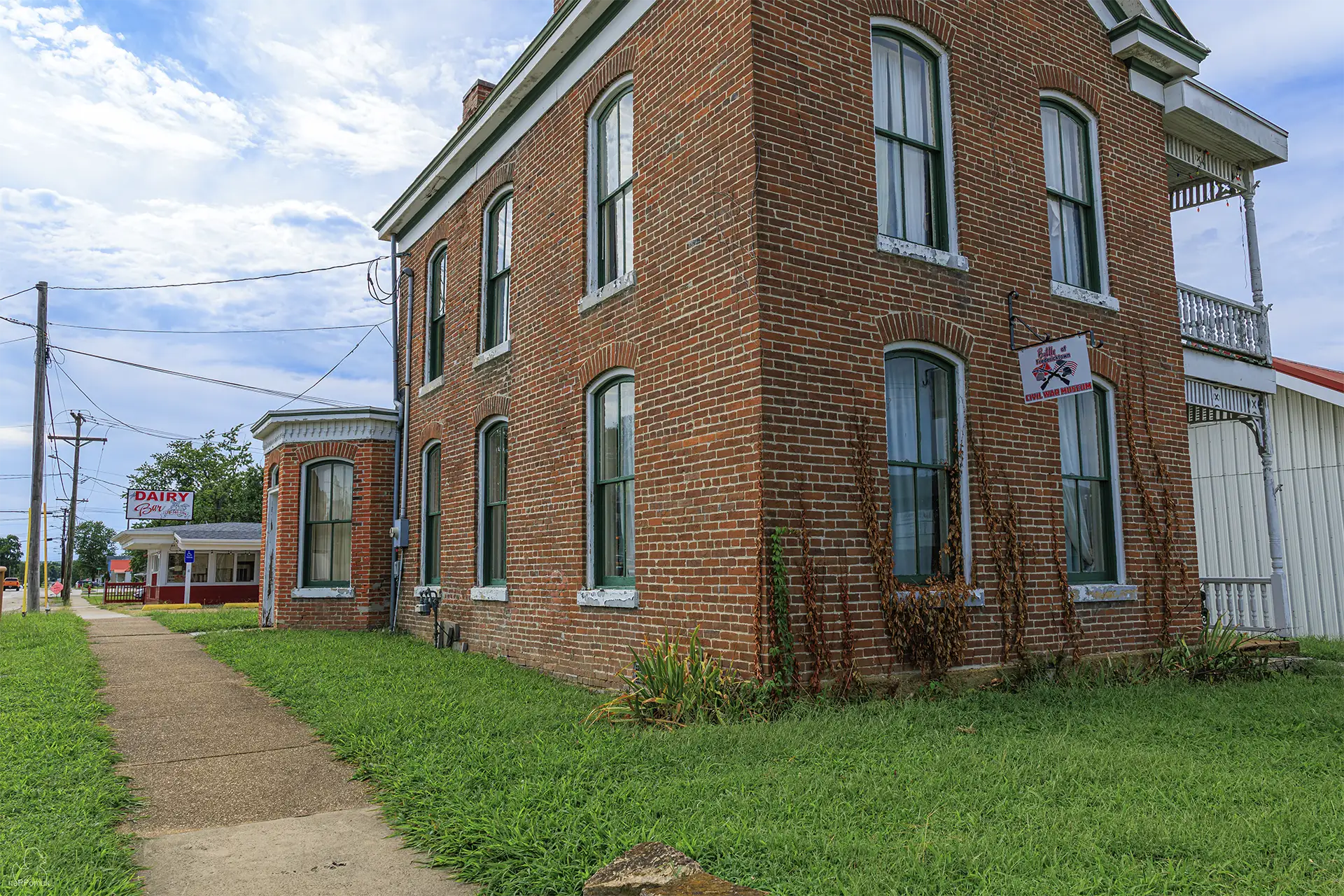
Engaging with its own history remains visible in Fredericktown to this day. Historic buildings, local museums, and heritage preservation initiatives safeguard traces of the town’s different phases of development. An important role is played by the Battle of Fredericktown Civil War Museum, which deals with the military events of 1861 and their regional significance.
The museum is located in a historic brick building on South Main Street. Its architecture, with its traditional window shapes and white wooden veranda, is reminiscent of the residential and commercial buildings of the 19th century. The building is thus not only a place for presenting history, but also part of the historic appearance of the downtown area itself.
In addition to Civil War history, the preservation of early settlement culture is also one of the tasks of local historical initiatives. In particular, the historic log cabins and the traditions from the time of St. Michael convey an impression of the conditions under which the first European settlers lived in the region.
Historic log cabins and local preservation
An illustrative example of these efforts is the preservation or relocation of historic log cabin buildings. This includes the Berryman Log Cabin, which was secured as part of local preservation efforts. Such buildings make the simple construction methods of the early settlement period visible and stand in clear contrast to the city’s later more representative architecture.
In addition, historical presentations and a reconstructed one-room schoolhouse provide insights into education, housing, and everyday life in the 19th century. They broaden the historical view beyond well-known events and personalities and show how social structures and living conditions have changed over generations.
The preserved buildings and local museum work make it clear that the history of Fredericktownis not made up of isolated historical dates alone. It is anchored in the structure of the town, its buildings, and its regional identity. It is precisely the coexistence of preserved heritage and present-day small-town life that makes Fredericktown an interesting place for visitors who want to explore the lesser-known history of Missouri.
Madison County Courthouse and Court Square
The Madison County Courthouse – the centerpiece of the historic downtown
In the center of Fredericktown, Missouri, rises the Madison County Courthouse, one of the city’s most significant historic buildings. With its red brick facade, tall tower, and distinctive rooflines, the county building stands out clearly from the lower buildings of the surrounding business streets. Since its completion in 1900it has shaped the appearance of Court Square and is a widely visible landmark of Madison County.
However, the significance of the site goes back much further. Even when Fredericktown was laid out in 1819, a central square was designated for public administration. The first courthouse was built in 1822 from locally made bricks and served for several decades as the seat of county administration and justice. Its comparatively simple, two-story structure originally had a small rooftop cupola, which was removed in 1838. As the population grew and administrative demands increased, however, the building no longer met requirements by the end of the 19th century.
The decision to build a new structure was made in 1899. The residents of Madison County voted to erect a representative administrative building that would not only offer more space but also express the region’s economic and social self-image. The old courthouse was demolished, and the building that remains to this day was erected on the same site.
With this decision, Fredericktown gained a new architectural center. Since then, the courthouse has stood not only for public administration, but also for the continuity of a town whose history is closely tied to the development of southeastern Missouri.
Read more
Theodore C. Link – Ein Architekt zwischen St. Louis und Fredericktown
Für die Planung des neuen Courthouse wurde der Architekt Theodore C. Linkbeauftragt. Der gebürtige Deutsche hatte sich in St. Louis als Architekt etabliert und gehörte gegen Ende des 19. Jahrhunderts zu den angesehenen Vertretern seines Berufsstandes in Missouri. Zu seinen bekanntesten Arbeiten zählt die 1894 eröffnete Union Station in St. Louis, die seinerzeit zu den größten und bedeutendsten Eisenbahnhöfen der Vereinigten Staaten gehörte.
Die Verbindung zwischen beiden Städten ist bemerkenswert: Während Link mit der Union Station einen monumentalen Verkehrsbau für eine expandierende amerikanische Großstadt entwarf, schuf er wenige Jahre später in Fredericktown ein deutlich kleineres, aber ebenfalls repräsentatives öffentliches Gebäude. Beide Bauwerke zeigen, wie die Architektur jener Epoche städtische Bedeutung und gesellschaftlichen Anspruch sichtbar machen sollte.
Architektur zwischen Spätviktorianik und Renaissance Revival
Das Madison County Courthouseverbindet unterschiedliche historische Stilrichtungen. Im National Register of Historic Places wird es dem späten viktorianischen Architekturverständnis zugeordnet. Die Gestaltung weist zugleich Einflüsse der Neoromanik und weiterer historistischer Stile auf; im Zusammenhang mit dem historischen Courthouse Square wird das Gebäude auch als Beispiel des Second Renaissance Revival beschrieben.
Besonders charakteristisch ist der hohe, quadratische Turm an der Südseite. Er durchbricht die horizontale Gliederung des Baukörpers und wird von einem steilen Pyramidendach abgeschlossen. Rundbogenfenster, sorgfältig ausgeführte Backsteindetails und der massive Sockel aus rosafarbenem Granit verleihen der Architektur eine monumentale Wirkung, obwohl das Gebäude mit seinen zwei Hauptgeschossen vergleichsweise überschaubare Dimensionen besitzt.
Der Turm war ursprünglich für die Aufnahme einer Uhr vorgesehen. Auf deren Einbau wurde allerdings aus Kostengründen verzichtet. Die zusätzlichen Ausgaben von ungefähr 500 US-Dollar erschienen den Verantwortlichen zu hoch. So blieb der Turm ohne das vorgesehene Zifferblatt – ein interessantes Detail, das zeigt, wie selbst bei einem repräsentativen öffentlichen Bau wirtschaftliche Überlegungen die endgültige Gestaltung beeinflussten.
Baumaterialien und Innenraumgestaltung
Für die Bauausführung war der Unternehmer Lewis Miller aus Iron Countyverantwortlich. Die ursprüngliche Auftragssumme betrug rund 18.000 US-Dollar, während die endgültigen Kosten bei etwa 22.000 US-Dollar lagen. Verwendet wurden vor allem roter Backstein und regionaler Granit, wodurch sich das Gebäude sowohl konstruktiv als auch gestalterisch in die Bautraditionen Missouris einfügt.
Der rechteckige Baukörper misst ungefähr 20 mal 23 Meter. Im Inneren erschließt ein zentraler Korridor die ehemaligen Verwaltungsräume, während sich der historische Gerichtssaal im zweiten Obergeschoss befand. Die Grundorganisation des Gebäudes blieb trotz späterer Umbauten und veränderter Nutzungen weitgehend nachvollziehbar.
Gerade die Kombination aus massiver Bauweise, historistischen Gestaltungselementen und einer klaren funktionalen Gliederung macht das Courthouse zu einem bedeutenden Beispiel öffentlicher Architektur im Missouri des ausgehenden 19. Jahrhunderts.
Court Square – Ein historisch gewachsener öffentlicher Raum
Die städtebauliche Bedeutung des Courthouse geht über das Gebäude selbst hinaus. Der umgebende Court Squarefolgt dem sogenannten Lancaster Plan, einer besonderen Form amerikanischer Platzgestaltung. Dabei steht das Verwaltungsgebäude auf einer zentralen Fläche, während Straßen den Platz umschließen und das umliegende Geschäftsviertel erschließen. Diese Anordnung verbindet die administrative Funktion des Courthouse mit dem wirtschaftlichen und gesellschaftlichen Leben der Stadt.
In Fredericktown reichen die Grundzüge dieses Straßenrasters bis in die frühe Stadtplanung von 1819 zurück. Der zentrale Platz wurde zum Bezugspunkt für die weitere Bebauung. Geschäfte, Banken, Dienstleistungsbetriebe und öffentliche Einrichtungen siedelten sich in seiner Umgebung an. Das Courthouse bildete dadurch über Generationen hinweg den räumlichen Mittelpunkt des Ortes.
Mit der zunehmenden Motorisierung veränderte sich allerdings die Nutzung des Platzes. Die ursprünglich für Fußgänger, Pferde und Fuhrwerke ausgelegte Straßenführung musste an einen wachsenden Fahrzeugverkehr angepasst werden. Bis heute ist dieses Nebeneinander von historischem Grundriss und moderner Verkehrsinfrastruktur ein charakteristisches Merkmal der Innenstadt.
Die Entwicklung der umliegenden Bebauung
Die Gebäude rund um den Court Square entstanden überwiegend während des späten 19. und frühen 20. Jahrhunderts. Viele ältere Holzbauten wurden durch mehrgeschossige Backsteingebäude ersetzt, deren Fassaden noch heute den traditionellen Charakter der Downtown prägen.
Dabei spielten nicht nur wirtschaftlicher Aufschwung und veränderte architektonische Vorstellungen eine Rolle. Wiederholte Brände führten dazu, dass die ursprünglich vorherrschende Holzbauweise zunehmend aufgegeben wurde. Besonders ein Großbrand im Jahr 1899 zerstörte zahlreiche Gebäude an der nordwestlichen Seite des Platzes. Die anschließenden Neubauten veränderten das Stadtbild nachhaltig.
So entstand schrittweise jene Mischung aus repräsentativer öffentlicher Architektur und funktionalen Geschäftsgebäuden, die Fredericktown bis heute kennzeichnet. Die Gebäude unterscheiden sich in Höhe, Fassadengliederung und Gestaltung, bilden durch ihre Backsteinarchitektur und die gemeinsame Ausrichtung auf den öffentlichen Raum jedoch ein weitgehend zusammenhängendes historisches Ensemble.
Die einzelnen Geschäftsgebäude und ihre architektonischen Besonderheiten werden im anschließenden Kapitel über die Main Street und das historische Geschäftslebenausführlicher betrachtet.
Verwaltung und Justiz – Das Courthouse im Wandel der Zeit
Über mehr als ein Jahrhundert hinweg war das Madison County Courthouse zugleich Verwaltungsgebäude und Gerichtsstandort. Hier wurden öffentliche Angelegenheiten geregelt, Eigentumsunterlagen verwaltet, Steuerangelegenheiten bearbeitet und Gerichtsverfahren durchgeführt. Damit nahm das Gebäude eine zentrale Stellung im alltäglichen Leben des Madison County ein.
Mit den Veränderungen der öffentlichen Verwaltung wuchsen jedoch auch die Anforderungen an Räumlichkeiten, technische Ausstattung, Sicherheit und Barrierefreiheit. Insbesondere die Justiz benötigte Einrichtungen, die den heutigen organisatorischen und sicherheitstechnischen Anforderungen entsprechen.
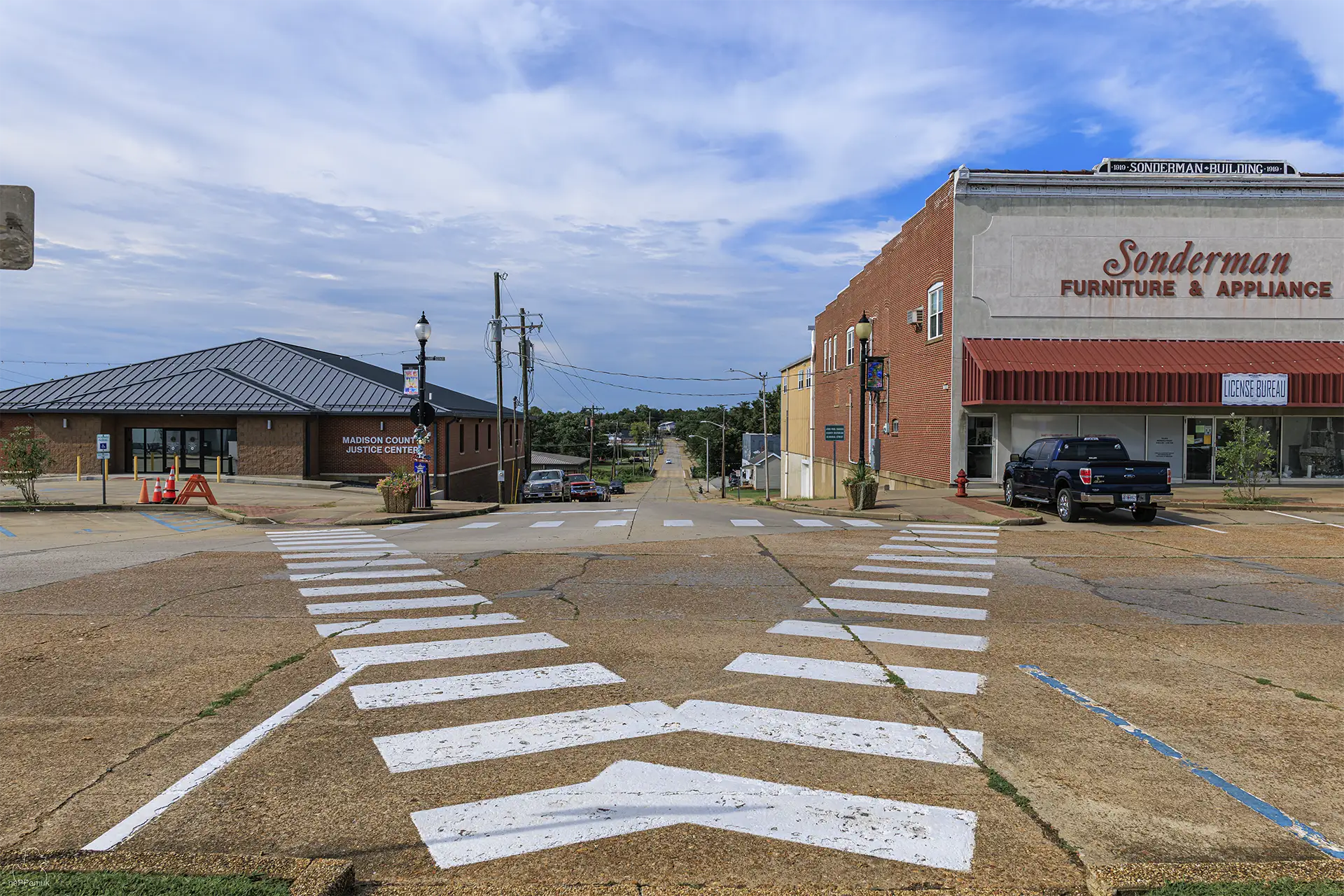
Eine wichtige Veränderung erfolgte 2023 mit der Verlagerung der gerichtlichen Funktionen in das benachbarte Madison County Justice Center. Das neue Gebäude befindet sich ebenfalls am Court Square und übernimmt unter anderem Aufgaben des Circuit Court sowie weitere justizbezogene Verwaltungsfunktionen.
Das historische Courthouse blieb dennoch ein wichtiger Verwaltungsstandort. Zu den dort untergebrachten Einrichtungen zählen weiterhin das County Clerk’s Office, die County Commission sowie verschiedene Behörden für Steuern, Eigentumsunterlagen und die Finanzverwaltung. Damit verbindet das Gebäude seine historische Bedeutung mit einer fortbestehenden öffentlichen Funktion.
Öffentliche Einrichtungen rund um den Court Square
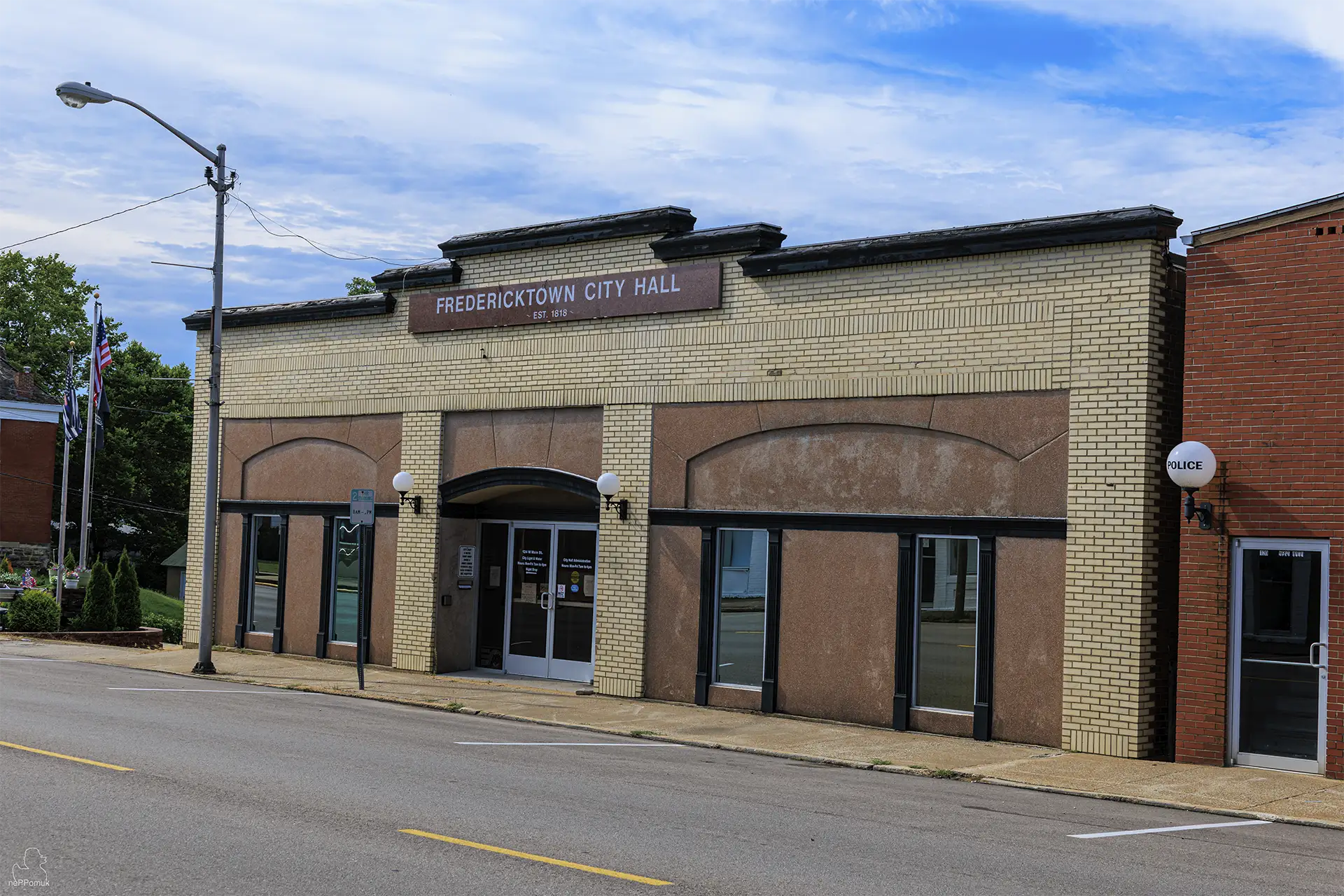
Neben dem Courthouse prägen weitere öffentliche Gebäude die unmittelbare Umgebung. Das Madison County Justice Centerergänzt die historische Verwaltungsarchitektur durch einen modernen Zweckbau. In den angrenzenden Straßen befinden sich kommunale Einrichtungen, darunter die City Hall von Fredericktown, sowie weitere Gebäude für Verwaltung und öffentliche Dienstleistungen.
Die unterschiedlichen Bauformen verdeutlichen, wie sich Fredericktown im Laufe seiner Entwicklung an veränderte Anforderungen angepasst hat. Während das historische Courthouse den repräsentativen Anspruch seiner Entstehungszeit widerspiegelt, stehen die jüngeren Einrichtungen stärker für funktionale Zweckmäßigkeit.
Der Court Square bleibt dadurch ein lebendiger Verwaltungsstandort und ist nicht lediglich ein historisches Ensemble ohne gegenwärtige Nutzung. Gerade diese Verbindung von Bewahrung und Weiterentwicklung gehört zum charakteristischen Erscheinungsbild des Stadtzentrums.
Fredericktown Courthouse Square Historic District – Geschützte Stadtgeschichte
Die historische Bedeutung des Ensembles wurde auch auf nationaler Ebene anerkannt. Bereits am 28. Dezember 2000wurde das Madison County Courthouse in das National Register of Historic Placesaufgenommen. Am 8. Juli 2009 folgte die Eintragung des umliegenden Fredericktown Courthouse Square Historic District.
Der historische Distrikt umfasst den Court Square sowie Teile der East Main Street, West Main Street und South Main Street. Bei der Aufnahme in das Denkmalverzeichnis wurden 26 historisch bedeutende Gebäude als beitragende Bestandteile des Ensembles erfasst. Sie dokumentieren unterschiedliche Phasen der Stadtentwicklung zwischen 1819 und der Mitte des 20. Jahrhunderts.
Der Denkmalschutz würdigt dabei nicht allein die architektonische Qualität einzelner Gebäude, sondern auch die historisch gewachsene Verbindung zwischen Verwaltung, Handel und öffentlichem Raum. Fredericktown besitzt damit ein Innenstadtbild, das wesentliche Strukturen seiner Entwicklung als Verwaltungs- und Handelszentrum bewahrt hat.
Für Besucher und Fotografen ist besonders das Zusammenspiel zwischen dem dominanten Courthouse, den umliegenden Backsteinfassaden und dem alltäglichen Straßenleben interessant. Die klare Geometrie des Gebäudes, die historischen Materialien und die unterschiedlichen Perspektiven entlang des Platzes eröffnen zahlreiche Möglichkeiten, die Architektur in ihrem städtischen Zusammenhang zu dokumentieren.
Das Madison County Courthouse und der Court Squarestehen damit beispielhaft für die Geschichte zahlreicher amerikanischer Kleinstädte: Öffentliche Architektur bildet den Mittelpunkt einer gewachsenen Stadtstruktur, die sich über Generationen verändert hat, ohne ihren historischen Charakter vollständig zu verlieren.

Main Street: Architecture and Business Life in Fredericktown
Main Street – The Economic Center of a Small American Town
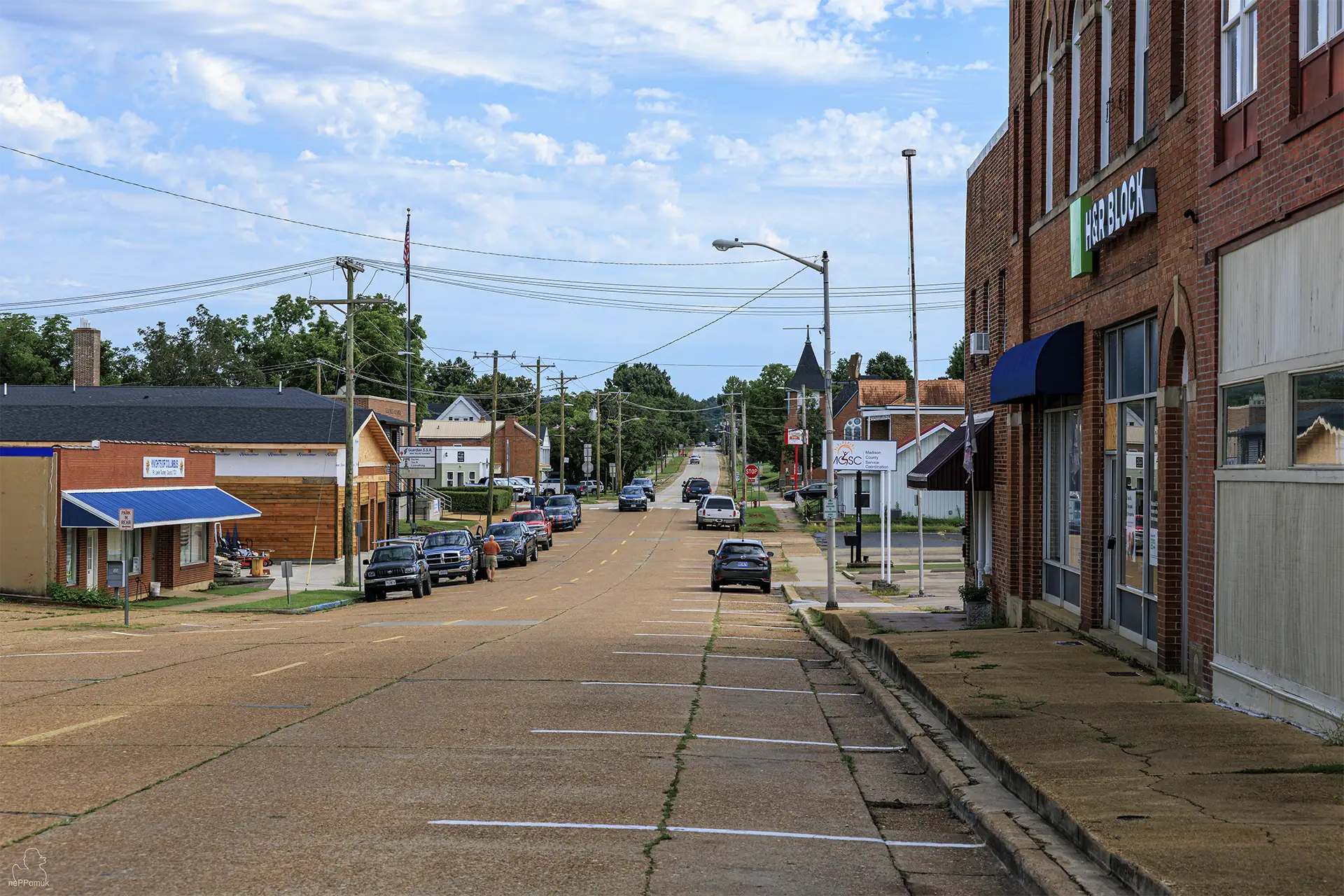
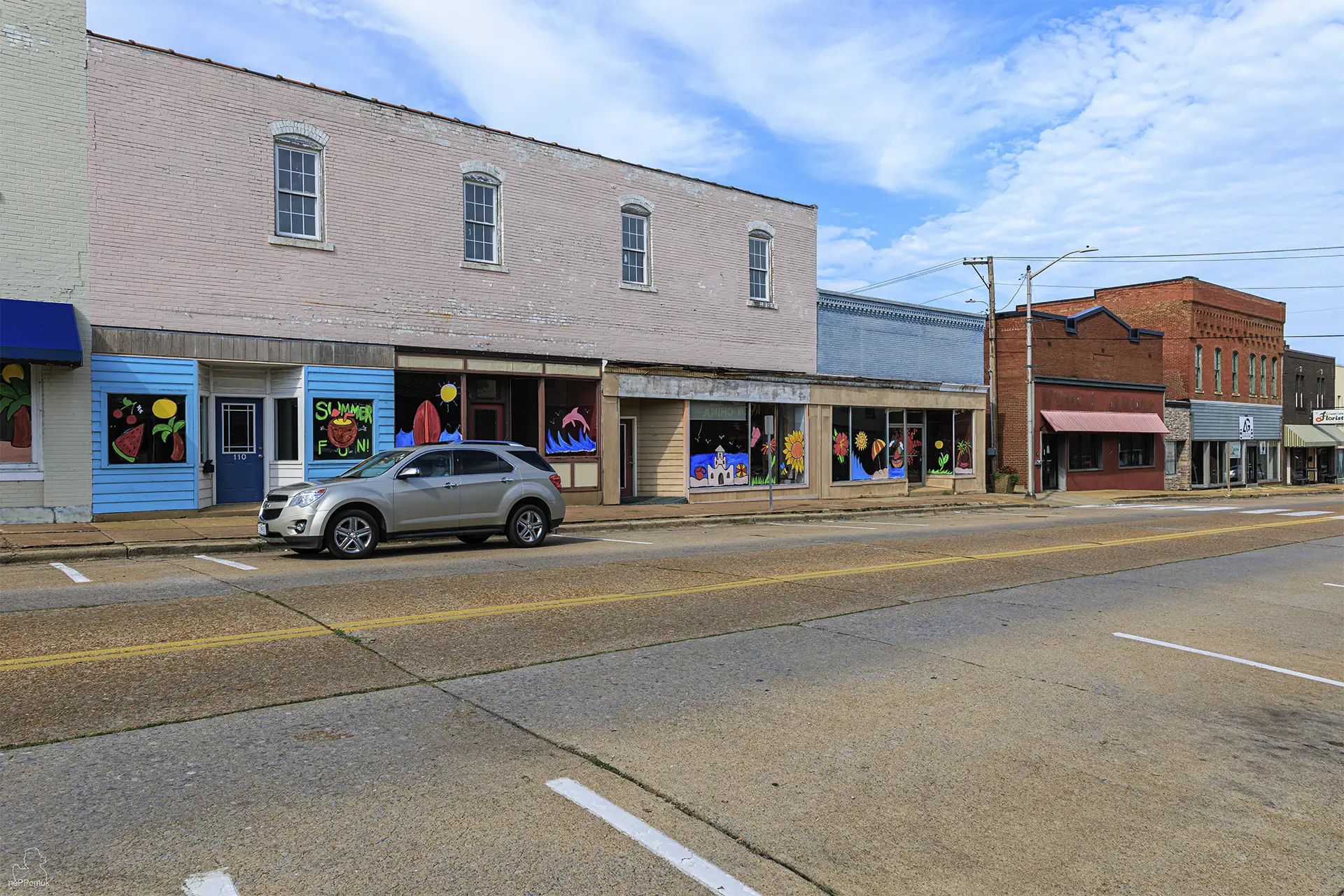
The Main Street of Fredericktownis far more than an ordinary commercial street. It documents the economic and social development of a small American town whose historic center was shaped over generations by trade, craftsmanship, and local services. Around the Court Square and along East Main Street, West Main Street, and South Main Street, an urban landscape has been preserved that retains essential features of American commercial architecture from the late 19th and early 20th centuries.
As early as the first half of the 19th century, Fredericktown developed into a regional trading center. The residents of Madison County needed shops for groceries, agricultural equipment, clothing, and household goods. Merchants, craftsmen, and service providers settled in the immediate vicinity of the public administration. As the town grew, larger commercial buildings increasingly appeared alongside simple wooden structures, with their ground floors intended for retail and their upper stories for apartments, offices, or other commercial uses.
Economic development was significantly influenced by the mining activities in southeastern Missouriinfluenced. In particular, the lead deposits of Mine La Motte provided employment and additional purchasing power. With the expansion of transport links and the railway, Fredericktown’s importance as a supply center for the surrounding communities grew. Hotels, grocery stores, pharmacies, banks, and workshops supplemented the existing offering.
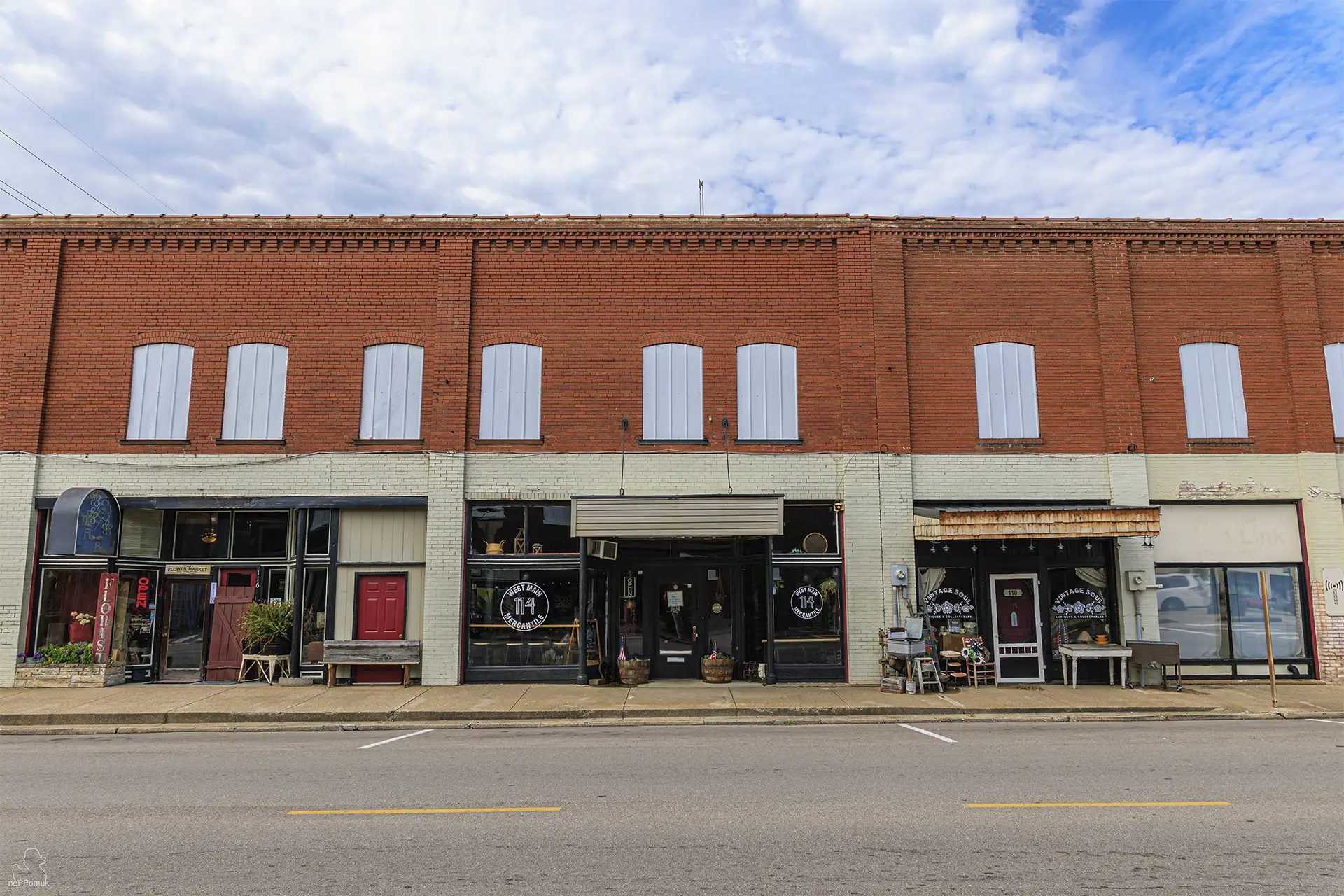
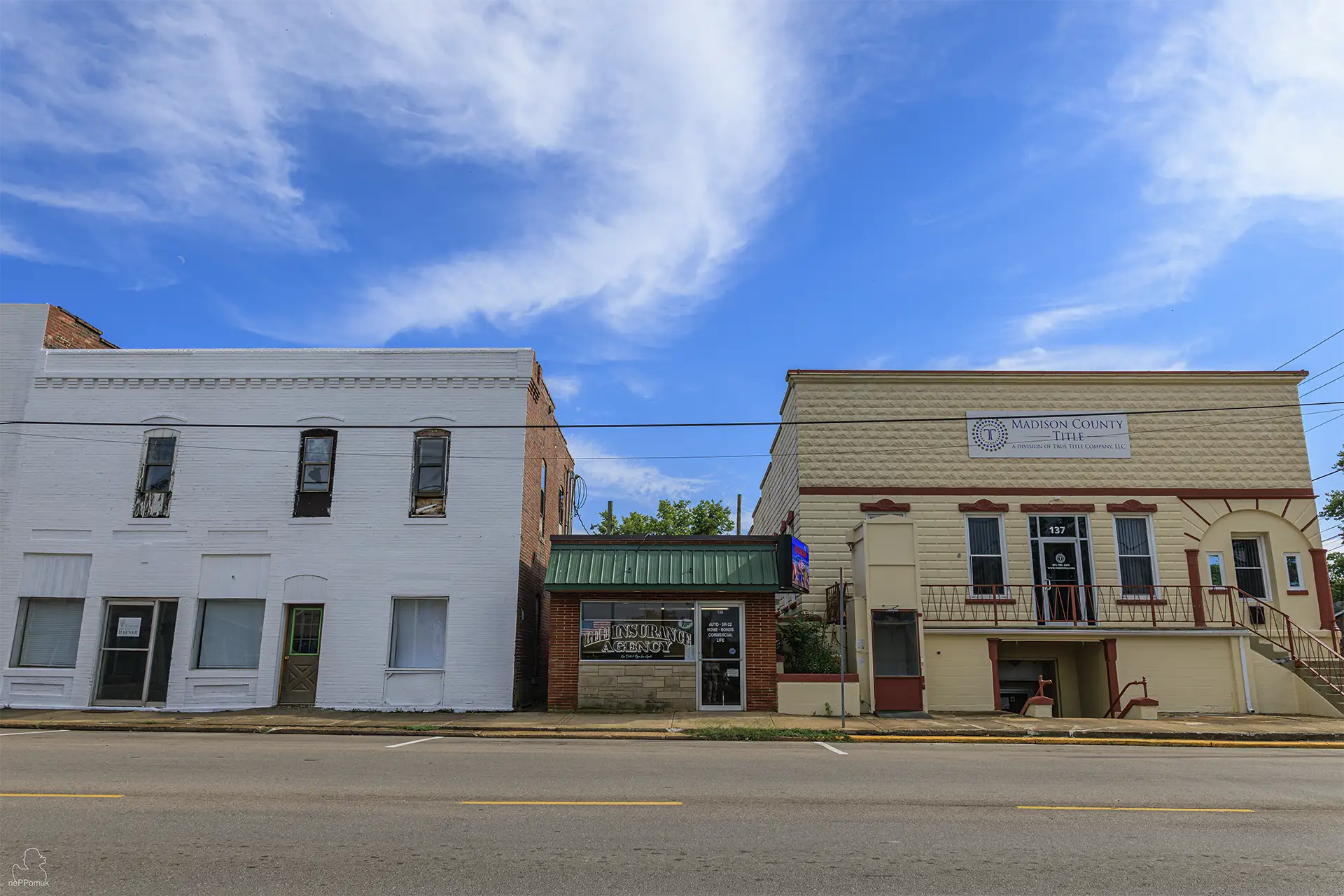
Even today, these historical structures are recognizable in the architecture of the business streets. Narrow lots, storefronts lined up side by side, and wide display windows characterize many buildings. The mostly two- to three-story brick buildings form a largely continuous street frontage, while their differently designed facades point to various construction phases and earlier uses.
Unlike in larger cities, where entire business districts were replaced by modern new buildings, in Downtown Fredericktowna remarkable part of this historic small-town architecture has been preserved. The town center thus conveys an impression of the era in which Main Street formed the economic and social center of American everyday life.
Read more
Backsteinarchitektur zwischen Historismus und Art déco
Das heutige Erscheinungsbild der historischen Geschäftsstraßen entstand überwiegend zwischen den 1890er-Jahren und der ersten Hälfte des 20. Jahrhunderts. Zuvor dominierten einfache Holzbauten, die jedoch durch wiederholte Brände zunehmend als problematisch galten. Besonders die fehlende städtische Wasserversorgung und die begrenzten Möglichkeiten zur Brandbekämpfung erschwerten den Schutz der dicht bebauten Geschäftsviertel.
Ein verheerender Brand zerstörte 1899 zahlreiche Gebäude am nordwestlichen Bereich des Court Square. Die wiederholten Feuer führten zu einem grundlegenden Wandel der Bauweise. Geschäftsinhaber investierten zunehmend in Gebäude aus Backstein und anderen widerstandsfähigeren Materialien. Dadurch erhielt Fredericktown schrittweise jene charakteristischen Straßenfronten, die das historische Zentrum noch heute prägen.
Italianate – Europäische Einflüsse in der amerikanischen Geschäftsarchitektur
In verschiedenen Gebäuden lassen sich Merkmale des Italianate-Stilserkennen, der im 19. Jahrhundert in den Vereinigten Staaten weit verbreitet war. Typisch sind hohe Fenster mit gerundeten oder aufwendig gestalteten Stürzen, dekorative Gesimse sowie eine vertikale Gliederung der Fassaden.
Diese Architektur entwickelte sich ursprünglich aus europäischen Vorbildern, wurde jedoch an die Anforderungen amerikanischer Geschäftsgebäude angepasst. Besonders in kleineren Städten entstanden vereinfachte Varianten, bei denen dekorative Backsteinelemente an die Stelle aufwendiger Steinmetzarbeiten traten.
In Fredericktown zeigen unter anderem historische Geschäftsgebäude an der West Main Street und South Main Street solche Gestaltungselemente. Ihre Fassaden vermitteln den repräsentativen Anspruch damaliger Geschäftsinhaber, ohne die funktionale Nutzung der Gebäude zu überdecken.
Commercial Blocks – Die typische Bauform amerikanischer Geschäftsstraßen
Noch stärker prägen die sogenannten One-Part und Two-Part Commercial Blocksdas Erscheinungsbild der Main Street. Dabei handelt es sich um funktionale Geschäftsgebäude, deren Fassaden meist klar in einen Verkaufsbereich und gegebenenfalls darüberliegende Geschosse gegliedert sind.
Ein One-Part Commercial Blockbesteht überwiegend aus einem eingeschossigen Geschäftsraum mit großflächiger Schaufensterfront. Beim Two-Part Commercial Blockbefindet sich über dem Ladenlokal ein weiteres Geschoss, das früher häufig als Wohnung, Büro oder Lager diente.
Kennzeichnend sind die großen Fensteröffnungen im Erdgeschoss, zurückversetzte Eingänge, durchlaufende Gesimse und dekorativ ausgeführte Backsteinabschlüsse. Diese Architektur ermöglichte eine wirtschaftliche Grundstücksnutzung und ließ sich flexibel an unterschiedliche Geschäftsarten anpassen.
Art déco und die Modernisierung der Innenstadt
Während der 1920er- und 1930er-Jahre erreichten auch modernere architektonische Einflüsse Fredericktown. Besonders an der East Main Street entstanden oder veränderten sich Geschäftsgebäude, deren Gestaltung Elemente des Art décoaufgreift.
Ein dokumentiertes Beispiel ist das Gebäude an der 113 East Main Street, das Anfang der 1930er-Jahre entstand und zeitweise das Hough’s Café beherbergte. Die Fassade verbindet geometrische Backsteinornamente mit dekorativen Terrakottaelementen und charakteristischen horizontalen und vertikalen Akzenten.
Solche Gebäude zeigen, dass sich auch kleinere amerikanische Städte an zeitgenössischen Architekturströmungen orientierten. Dabei wurden ältere Bauformen nicht grundsätzlich aufgegeben, sondern häufig durch neue Fassadenmaterialien, Schaufenster und Eingangsbereiche modernisiert.
East Main Street – Geschäfte und Dienstleistungen im historischen Zentrum
Die East Main Street von Fredericktowngehört zu den charakteristischen Geschäftsstraßen der Innenstadt. Ihre historische Bebauung dokumentiert die Entwicklung des örtlichen Handels vom ausgehenden 19. Jahrhundert bis in die Mitte des 20. Jahrhunderts. Unterschiedliche Fassadenhöhen, Backsteinfarben und Schaufensterformen lassen erkennen, dass die Gebäude nicht als einheitliches Ensemble geplant wurden, sondern über mehrere Jahrzehnte entstanden.
Historische Unterlagen belegen eine bemerkenswerte Vielfalt früherer Geschäfte. Entlang der Straße befanden sich unter anderem Apotheken, Lebensmittelhandlungen, Juweliere, Bekleidungsgeschäfte, Restaurants und kleine Dienstleistungsbetriebe. Hinzu kamen Räume für gesellschaftliche Organisationen und öffentliche Veranstaltungen.
Zu den älteren dokumentierten Gebäuden zählt die ehemalige Independent Order of Odd Fellows Hallan der 121 East Main Street. Das um 1890 entstandene Haus beherbergte neben den Räumen der Bruderschaft zeitweise einen Juwelier, eine Buchhandlung, einen Friseur und eine Arztpraxis. Noch heute ist die historische Nutzung an erhaltenen architektonischen Details nachvollziehbar.
Auch das Gebäude an der 125 East Main Street erzählt von früheren Formen des Geschäftslebens. Es wurde um 1890 errichtet und ursprünglich als Saloon genutzt. Spätere Fassadenveränderungen, darunter eine Verputzung während der 1940er-Jahre, spiegeln den Versuch wider, ältere Gebäude an veränderte gestalterische Vorstellungen anzupassen.
Von der Apotheke zum modernen Ladenlokal
Die Geschichte der East Main Street verdeutlicht, wie flexibel viele Geschäftsgebäude genutzt wurden. Ein einzelnes Ladenlokal konnte im Laufe mehrerer Jahrzehnte unterschiedliche Funktionen übernehmen. Aus einem Lebensmittelgeschäft wurde möglicherweise eine andere Einzelhandelsnutzung, während frühere Wohnräume in Büros oder gewerbliche Flächen umgewandelt wurden.
Bei zahlreichen Gebäuden blieben die tragenden Außenwände und wesentlichen Fassadenelemente erhalten, während Schaufenster, Eingänge und Innenräume wiederholt modernisiert wurden. Dadurch entstand eine architektonische Mischung, in der ursprüngliche Backsteinornamente neben neueren Verglasungen, Werbeschildern und Fassadenverkleidungen stehen.
Diese Veränderungen sind ein wesentlicher Bestandteil der Stadtgeschichte. Sie machen deutlich, dass die historische Innenstadt kein unveränderter Zustand aus einer bestimmten Epoche ist, sondern ein gewachsener Wirtschaftsraum, dessen Gebäude immer wieder neuen Anforderungen angepasst wurden.
West Main Street – Historische Hotels und traditionelle Geschäftshäuser
Auch die West Main Streetbesitzt eine vielschichtige Handelsgeschichte. Die Bebauung rund um den Court Square war über viele Jahrzehnte von Hotels, Banken, Geschäften und kleinen Handwerksbetrieben geprägt. Insbesondere für Reisende, die Fredericktown geschäftlich besuchten oder auf dem Weg in andere Gemeinden waren, besaßen die örtlichen Übernachtungsmöglichkeiten eine wichtige Bedeutung.
Ein interessantes Beispiel ist das ehemalige Madison Hotel. Das ursprüngliche Hotelgebäude aus dem Jahr 1886 fiel 1911 einem Brand zum Opfer. Wenige Jahre später entstand an der West Main Street ein neues Gebäude, das den traditionsreichen Namen weiterführte. Das 1915 errichtete Haus beherbergte im Laufe seiner Geschichte zahlreiche weitere Nutzungen, darunter Büros, eine Taxigesellschaft, ein Blumengeschäft und verschiedene Dienstleistungsbetriebe.
Solche Gebäude erfüllten über ihre eigentliche Hauptfunktion hinaus eine wichtige Rolle im gesellschaftlichen Leben der Stadt. Hotels waren nicht nur Übernachtungsorte, sondern boten häufig Restaurants, Versammlungsräume und Möglichkeiten für geschäftliche Begegnungen.
Das Womack Hotel – Ein Haus mit wechselvoller Geschichte
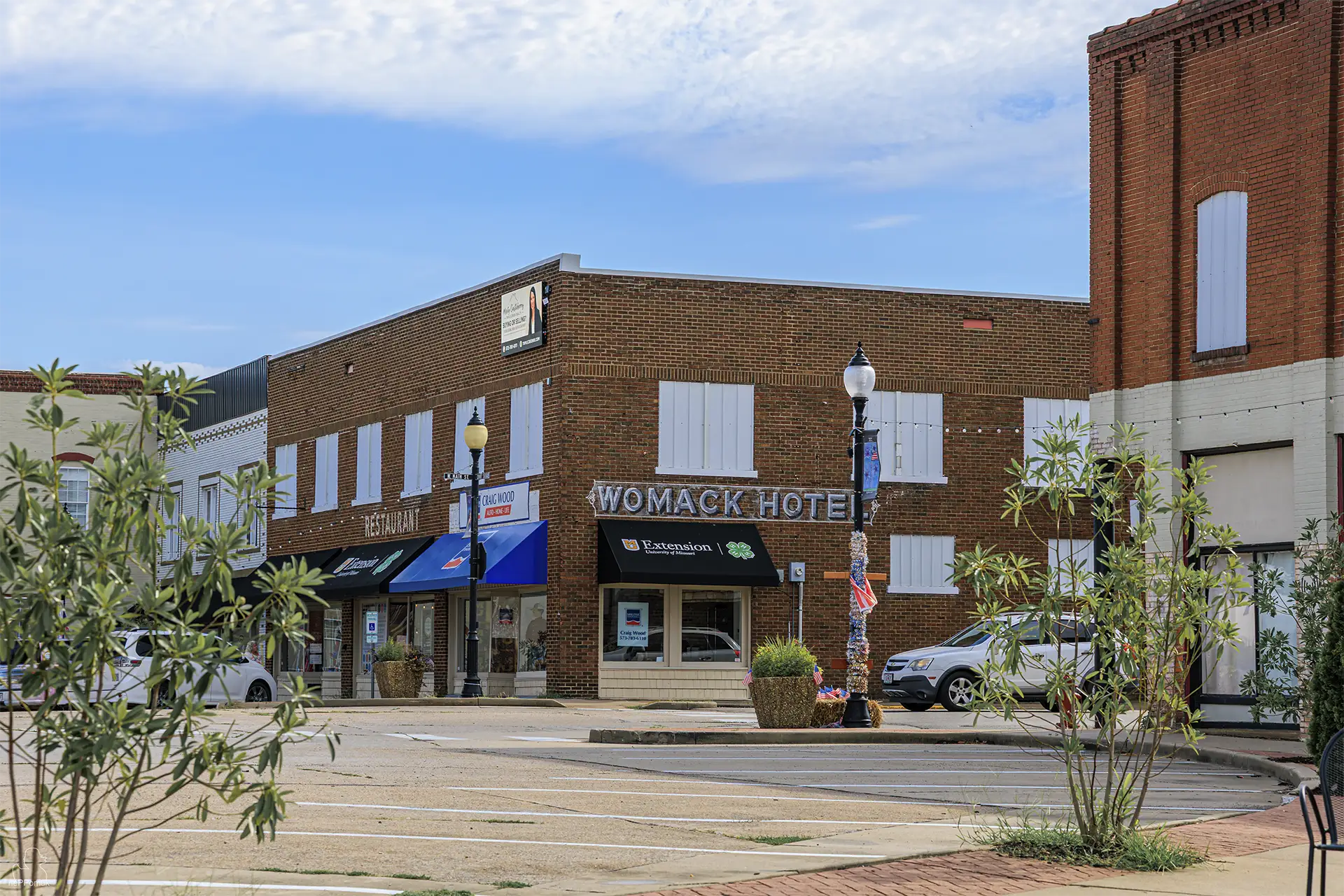
Besonders bemerkenswert ist das Womack Hotel, dessen Schriftzug noch heute an einem historischen Backsteingebäude zu erkennen ist. Das Gebäude am Court Square entstand um 1925 auf einem Grundstück, das zuvor bereits mit dem ursprünglichen Madison Hotel bebaut gewesen war. Die Familie Womack übernahm und modernisierte das Anwesen im Jahr 1929 und eröffnete dort ihr Hotel.
Das Womack Hotel war über mehrere Jahrzehnte Bestandteil des öffentlichen Lebens in Fredericktown. Neben den Gästezimmern befanden sich im Gebäudekomplex unterschiedliche Geschäfte und ein Café. Zeitweise diente das Haus auch als Haltestelle beziehungsweise Station für den überregionalen Busverkehr von Greyhound.
Diese Verbindung von Hotellerie, Gastronomie, Handel und Verkehr war typisch für amerikanische Kleinstädte des frühen 20. Jahrhunderts. Reisende benötigten zentrale Anlaufpunkte, an denen sie übernachten, essen und ihre Weiterreise organisieren konnten.
Mit dem Wandel der Verkehrsgewohnheiten verlor diese Form des Hotelbetriebs allmählich an Bedeutung. Der historische Hotelbetrieb des Womack endete um 1970. Das erhaltene Gebäude und sein Schriftzug erinnern jedoch weiterhin an jene Zeit, als Fredericktown stärker auf Geschäftsreisende und den regionalen Personenverkehr ausgerichtet war.
Einzelhandel und Handwerk – Die wirtschaftliche Identität der Main Street
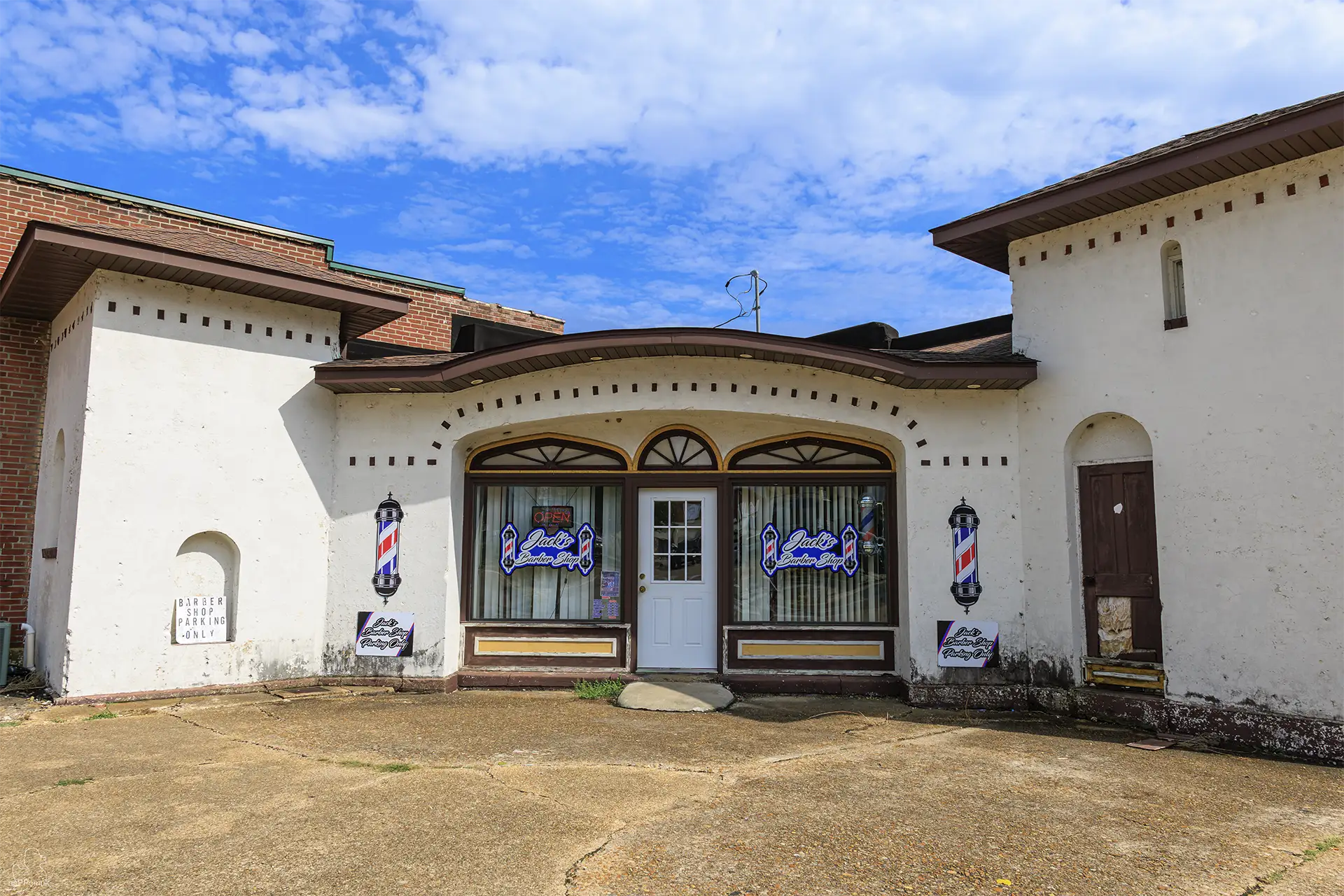
Die historischen Geschäftshäuser Fredericktowns stehen nicht ausschließlich für große wirtschaftliche Entwicklungen. Ebenso wichtig waren die zahlreichen kleinen Betriebe, die über Jahrzehnte hinweg den Alltag der Stadtbewohner bestimmten. Barber Shops, Lebensmittelgeschäfte, Handwerksbetriebe und Fachgeschäfteerfüllten grundlegende Versorgungsfunktionen und schufen zugleich persönliche Beziehungen zwischen Geschäftsinhabern und Kunden.
Ein traditioneller Friseursalon war beispielsweise nicht nur ein Ort für Haarschnitte, sondern auch ein regelmäßiger Treffpunkt. Ähnliches galt für kleine Lebensmittelgeschäfte, Eisenwarenhandlungen und Gemischtwarenläden, in denen Informationen ausgetauscht und Kontakte gepflegt wurden.
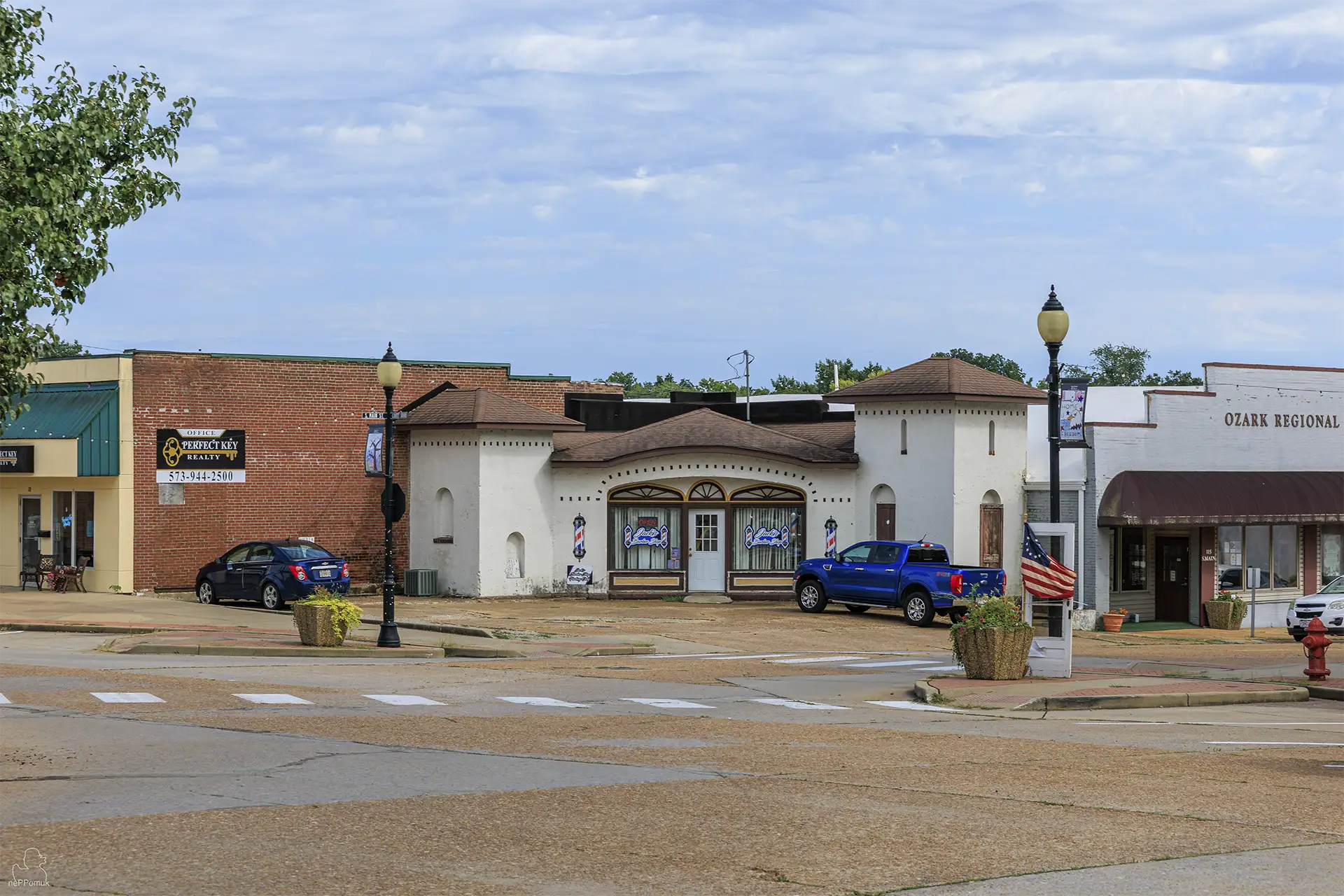
In Fredericktown erinnern verschiedene Geschäftsfronten an diese Tradition. Die Beschriftungen von Jack’s Barber Shop, West Main Mercantileoder anderen lokalen Geschäften sind sichtbare Bestandteile der gewachsenen Geschäftslandschaft. Ihre Fassaden zeigen, wie eng kommerzielle Nutzungen und die Gestaltung der Main Street miteinander verbunden sind.
Auch kleinere Details besitzen dabei eine historische Aussagekraft. Schaufensterformen, Eingangstüren, Markisen, Werbeschriftzüge und unterschiedlich alte Fassadenverkleidungen verdeutlichen, wie sich das örtliche Geschäftsleben verändert hat.
Historische Geschäftsnamen als Teil des Stadtbildes
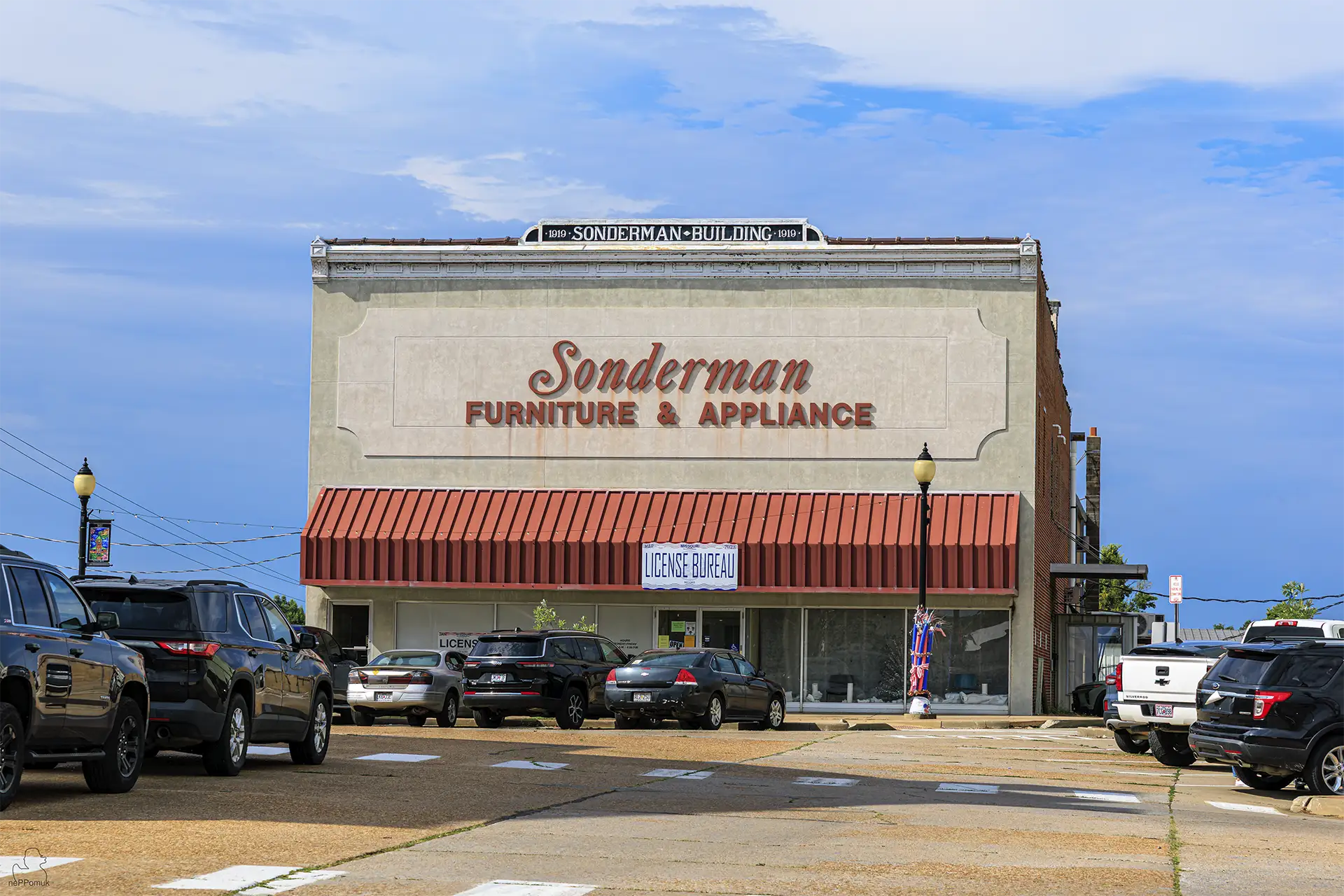
Ein besonders interessantes Merkmal amerikanischer Kleinstädte sind die sichtbaren Spuren früherer Unternehmen. Alte Schriftzüge, verblasste Wandwerbung oder erhaltene Firmenbezeichnungen überdauern mitunter die ursprüngliche Nutzung eines Gebäudes.
Solche Beschriftungen machen historische Veränderungen unmittelbar erkennbar. Sie zeigen, welche Branchen für die Stadt von Bedeutung waren und wie einzelne Geschäfte ihre Präsenz im öffentlichen Raum gestalteten.
Auch neuere Unternehmen greifen gelegentlich traditionelle Gestaltungsformen auf. Dadurch entsteht in Fredericktown ein Nebeneinander aus historischen und zeitgenössischen Geschäftsfassaden, das den individuellen Charakter der Innenstadt bestimmt.
Veränderungen im 20. Jahrhundert – Vom Handelszentrum zur modernen Downtown
Mit der zunehmenden Verbreitung des Automobils veränderte sich die wirtschaftliche Struktur amerikanischer Kleinstädte grundlegend. Während sich das Geschäftsleben zuvor stark auf die fußläufig erreichbare Innenstadt konzentrierte, entstanden neue Anforderungen an Straßen, Parkmöglichkeiten und größere Verkaufsflächen.
Auch Fredericktown war von dieser Entwicklung betroffen. Bereits in den 1920er-Jahren siedelten sich Unternehmen an, deren Geschäftsmodell unmittelbar mit dem Automobil verbunden war. An der 125 West Main Streetentstand um 1925 beispielsweise ein Automobilhandel, der später von der Wayland Ford Motor Company genutzt wurde.
Die zunehmende Motorisierung veränderte zugleich die Fassaden und Erdgeschosszonen der älteren Geschäftshäuser. Größere Schaufenster, neue Eingangsbereiche und modernisierte Verkaufsräume sollten die Gebäude an die Bedürfnisse ihrer Nutzer anpassen. Besonders in den 1950er- bis 1970er-Jahren wurden zahlreiche historische Ladenfronten umgestaltet.
Der wirtschaftliche Strukturwandel wirkte sich jedoch nicht nur auf die Architektur aus. Größere Einkaufsstandorte außerhalb der Innenstadt, veränderte Einkaufsgewohnheiten und die rückläufige Bedeutung traditioneller Industriezweige stellten den lokalen Einzelhandel vor neue Herausforderungen.
Dennoch blieb die Main Street ein wichtiger Teil der städtischen Identität. Ihre historische Bebauung bot weiterhin Raum für kleine Unternehmen, Dienstleister und gastronomische Betriebe. Die unterschiedlichen Nutzungen zeigen, wie sich das Zentrum einer Kleinstadt trotz veränderter wirtschaftlicher Bedingungen weiterentwickeln kann.
Die Main Street heute – Zwischen historischem Stadtbild und alltäglichem Leben
Das heutige Fredericktown in Missouribesitzt eine Innenstadt, in der sich die wirtschaftlichen und architektonischen Veränderungen mehrerer Generationen überlagern. Historische Backsteingebäude stehen neben modernisierten Geschäftsfronten, traditionelle Schriftzüge ergänzen jüngere Werbeanlagen, und die Straßen werden gleichermaßen von Anwohnern, Kunden und Durchreisenden genutzt.
Besonders charakteristisch ist die verhältnismäßig niedrige Bebauung. Die meist ein- bis dreigeschossigen Gebäude erlauben weite Blicke entlang der Straßen, während einzelne Fassaden, Ecktürme und dekorative Backsteinelemente die ansonsten funktionale Architektur auflockern.
Auch die unterschiedlichen Erhaltungszustände der Gebäude gehören zum Erscheinungsbild. Manche Häuser präsentieren sich mit sorgfältig gepflegten Fassaden, andere zeigen Spuren von Umbauten und jahrzehntelanger Nutzung. Diese Unterschiede machen den gewachsenen Charakter der Stadt sichtbar.
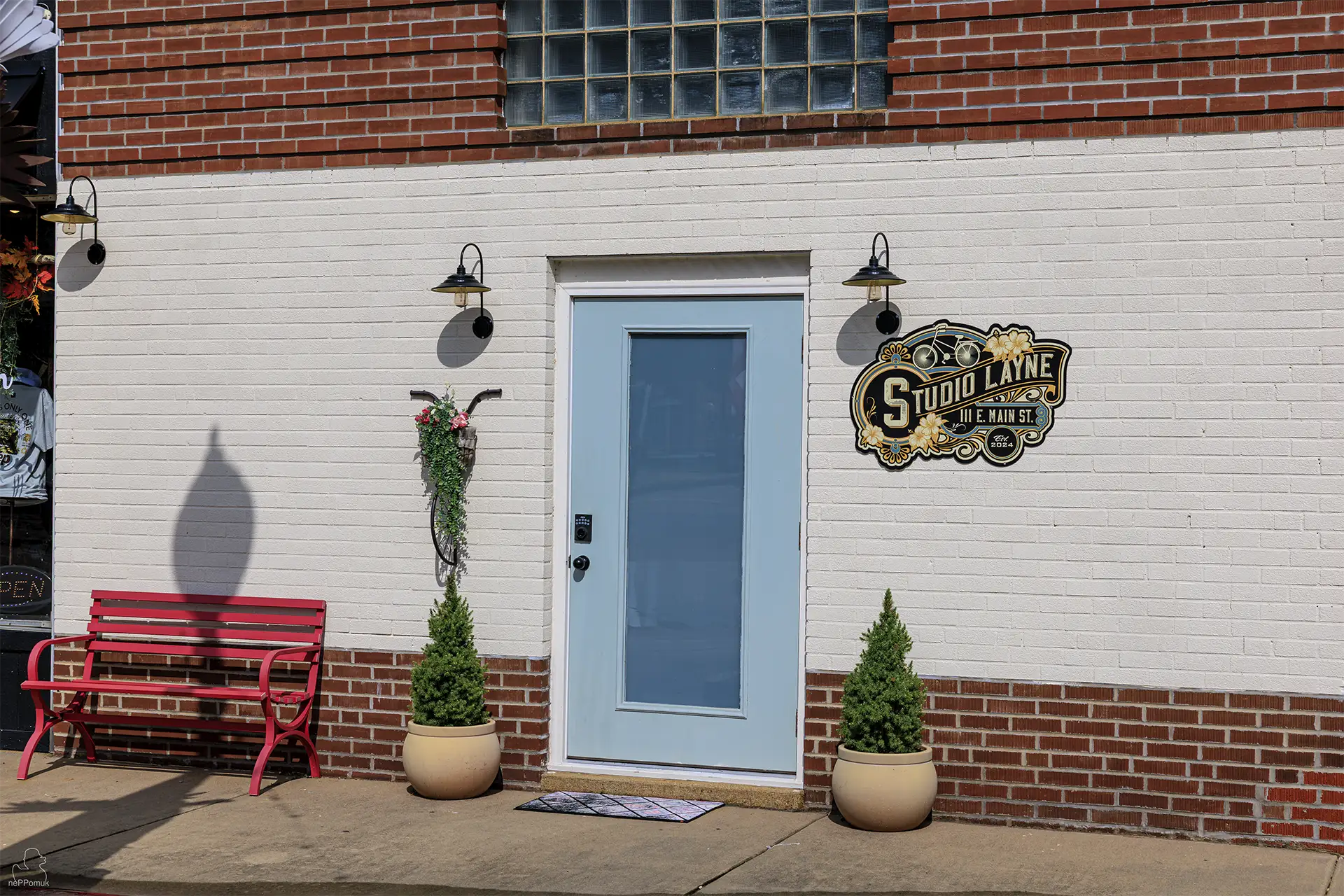
Für die dokumentarische Stadtfotografieist gerade diese Mischung interessant. Eine historische Ladenzeile lässt sich ebenso als geschlossenes Architekturmotiv festhalten wie ein einzelner Eingang, ein Friseursalon oder eine charakteristische Gebäudeecke. Die Fotografien zeigen nicht nur Gebäude, sondern auch das Verhältnis zwischen Architektur, Nutzung und öffentlichem Raum.
Damit vermittelt die Main Street von Fredericktown einen anschaulichen Eindruck vom amerikanischen Kleinstadtleben. Ihre Bedeutung liegt weniger in spektakulären Sehenswürdigkeiten als in der historischen Kontinuität eines Geschäftsviertels, das sich über mehr als ein Jahrhundert hinweg immer wieder verändert hat und dennoch wesentliche Teile seines ursprünglichen Charakters bewahren konnte.
Railroad and mining
Mining in Madison County – The economic foundations of a region
Die wirtschaftliche Entwicklung von Fredericktown in Missouriist eng mit der Rohstoffgewinnung verbunden. Schon lange bevor sich die Stadt zu einem regionalen Verwaltungs- und Handelszentrum entwickelte, waren die mineralischen Bodenschätze des südöstlichen Missouri bekannt. Besonders Blei, Kupfer, Nickel und Kobaltspielten im Laufe der Jahrhunderte eine wichtige Rolle. Die Lagerstätten im Madison County gehörten zu einem ausgedehnten Bergbaurevier, das heute als Southeast Missouri Lead Districtbezeichnet wird.
Nördlich des heutigen Fredericktown befindet sich das historische Bergbaugebiet Mine La Motte, dessen Ursprünge bis in das frühe 18. Jahrhundert zurückreichen. Französische Expeditionen untersuchten die dortigen Erzvorkommen, und ab den 1720er-Jahren begann eine systematischere Gewinnung von Blei. Die Förderung erfolgte zunächst unter vergleichsweise einfachen Bedingungen. Oberflächennahe Erzvorkommen wurden in kleinen Gruben abgebaut, bevor mit zunehmender technischer Entwicklung auch tiefer liegende Lagerstätten erschlossen werden konnten.
Während des 19. Jahrhunderts entwickelte sich daraus ein bedeutender Wirtschaftszweig. Die Nachfrage nach Blei für industrielle Anwendungen, Munition und verschiedene Metallprodukte schuf neue Absatzmöglichkeiten. Rund um Fredericktown entstanden weitere Bergwerke und Verarbeitungsbetriebe, die Arbeitsplätze schufen und das wirtschaftliche Wachstum der Region unterstützten. Besonders nach dem Amerikanischen Bürgerkrieg wurde der Bergbau in mehreren Bereichen des Madison County ausgeweitet.
Die Förderung verlief allerdings nicht kontinuierlich. Schwankende Rohstoffpreise, technische Schwierigkeiten und die unterschiedliche Ergiebigkeit einzelner Lagerstätten führten immer wieder zu Produktionsunterbrechungen. Wirtschaftliche Aufschwünge wechselten sich mit Phasen ab, in denen Bergwerke geschlossen oder ihre Aktivitäten erheblich reduziert wurden. Diese Abhängigkeit von wenigen industriellen Wirtschaftszweigen beeinflusste die Entwicklung Fredericktowns über Generationen hinweg.
Read more
Mine La Motte – From Lead Ore to Cobalt and Nickel
The Mine La Motteis one of Missouri’s historically most significant mining sites. For more than two centuries, ores were extracted and processed there, with interruptions. While lead was initially the main focus, other metals later moved into the economic spotlight.
The deposits contained, in addition to lead minerals, copper, nickel, and cobalt compounds. This combination in particular made processing technically demanding. The various metals had to be separated from one another using suitable beneficiation methods in order to obtain economically usable concentrates.
In the second half of the 19th century, the technical possibilities for ore beneficiation improved significantly. As a result, the mining of cobalt and nickelincreasingly gained importance. Around Fredericktown, facilities were built in which complex ores were crushed, concentrated, and in some cases further processed.
The Mine La Motte – Fredericktown mining district was one of the few regions in the United States where cobalt was actually extracted over long periods as an economically usable raw material. The special geological conditions made it possible to mine various metals from the same deposits.
The historic mining operations at Mine La Motte ended in 1959. Other facilities in the immediate vicinity of Fredericktown remained in operation until 1961. This brought to a close an industrial era that had influenced the development of the region for centuries.
The geology of the Ozarks – Why Fredericktown was rich in mineral resources
The mineral deposits around Fredericktown are closely linked to the geological development of the Ozarksconnected. The region belongs to the geologically complex setting of the St. Francois Mountains, where very old igneous rocks are overlain by younger sedimentary layers. These different rock formations created favorable conditions for the formation of metal-bearing ore deposits.
An important role is played by the Bonneterre Formationand the underlying Lamotte Sandstone. In these Cambrian rock layers, mineral-rich solutions could circulate and, under suitable chemical conditions, deposit metals. In this way, deposits formed in which lead, copper, nickel and cobalt occur together in some places.
In the mining district of Mine La Motte and Fredericktown, many ore deposits were located at comparatively shallow depths of around 75 to 120 meters. These geological conditions facilitated the early development of the deposits and explain why the region aroused the interest of European mining companies as early as the beginning of the 18th century.
Mineralogical diversity and industrial significance
A key difference from many classic lead mining districts lies in the composition of the ores. In addition to the widespread lead mineral Galenathere are also copper-bearing minerals as well as cobalt-nickel sulfides such as siegenite in the Fredericktown district.
This mineral diversity was both an opportunity and a challenge economically. On the one hand, various raw materials could be extracted from a single deposit. On the other hand, complex processing and separation methods were required to produce marketable products.
The importance of individual metals changed with technological progress. While lead was particularly important for construction, industry, and military applications for a long time, nickel and cobalt gained importance through their use in special alloys and other technical products.
The historical development of mining therefore also shows how closely a region’s economic opportunities are linked to the technical processes and industrial raw material demand of its era.
The railroad reaches Fredericktown – connection to the American economy
Besides mining, the railroad was one of the decisive factors in Fredericktown’s economic development. With the expansion of the American rail network in the second half of the 19th century, transport conditions for raw materials, agricultural products, and commercial goods improved significantly.
The St. Louis and Iron Mountain Railroadopened up southeastern Missouri and connected various mining and industrial towns with regional trade centers. In the year 1869Fredericktown received its first railway station. The town subsequently developed into an important operational location on the line, where locomotives could be supplied, maintained, and used for further journeys.
For the local economy, the rail connection meant a fundamental advance. Raw materials could now be transported in larger quantities, while goods from other parts of the United States reached Fredericktown much more easily. Trade, which had previously depended heavily on road connections and regional transport options, thus gained new opportunities for development.
Particularly important was the connection to the economic center St. Louis, which shaped Missouri’s interstate goods traffic as an industrial, commercial and transportation hub. Fredericktown was more strongly integrated into these economic ties through the railroad.
Freight transport and regional supply
The original station from 1869 served both passenger and freight traffic. In addition to industrial raw materials, agricultural products, livestock and other merchandise were transported by rail. This created a central transshipment point for the surrounding communities.
Farms were able to sell their products over greater distances while also obtaining machinery, tools, building materials or other goods they needed. Merchants and craftsmen benefited from more regular delivery options and an expanded sales area.
The railroad also influenced the development of local commerce. Warehousing areas, workshops and businesses dependent on freight transport emerged nearby. This changed not only Fredericktown’s economic importance, but also the spatial organization of the town.
The station became a place where economic processes and daily life met directly. Travelers, merchants, railway workers and employees of local businesses used the connection, while the arrival and departure of trains helped shape the daily rhythm.
Missouri Pacific Railroad Depot – A railroad station from the early 20th century
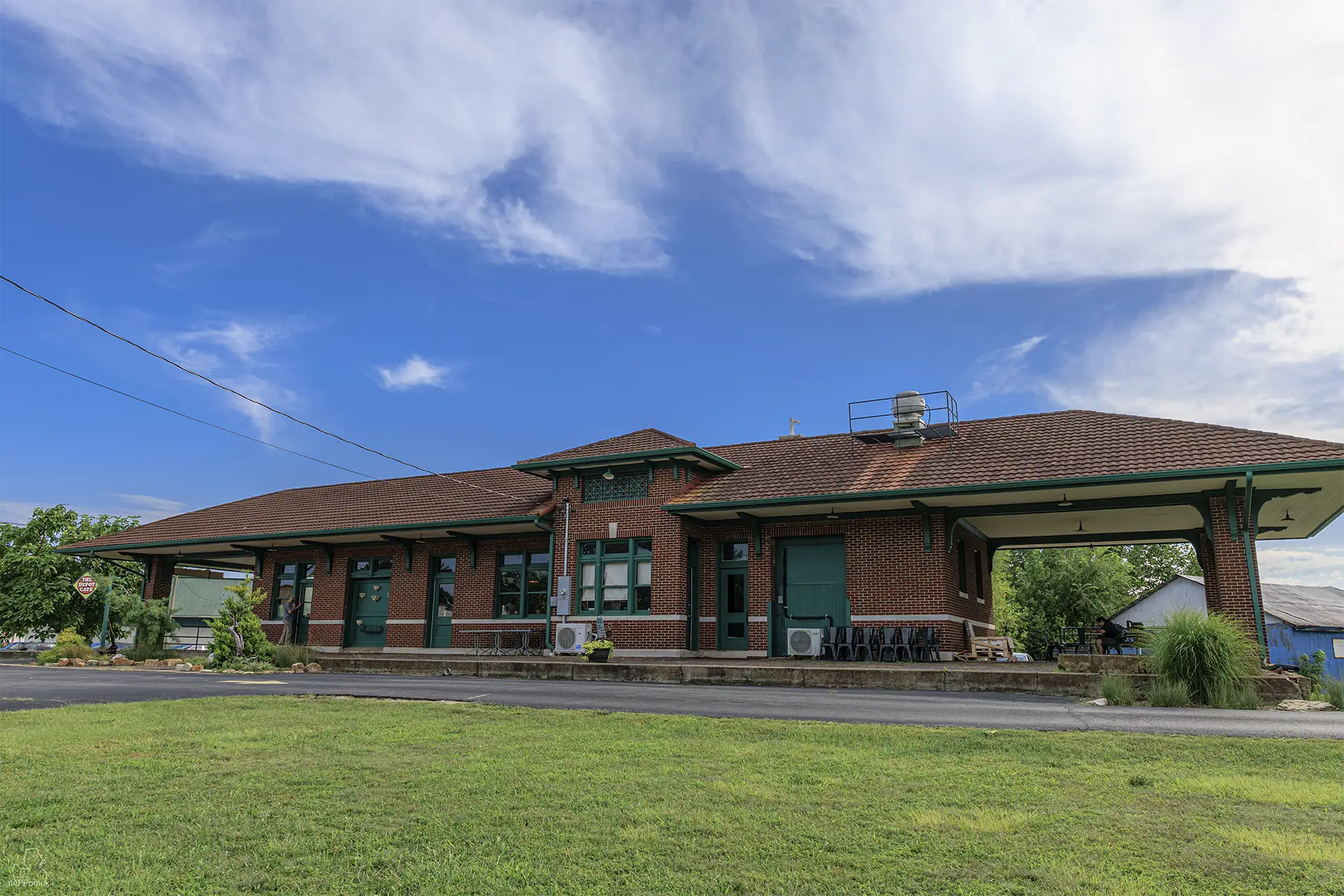
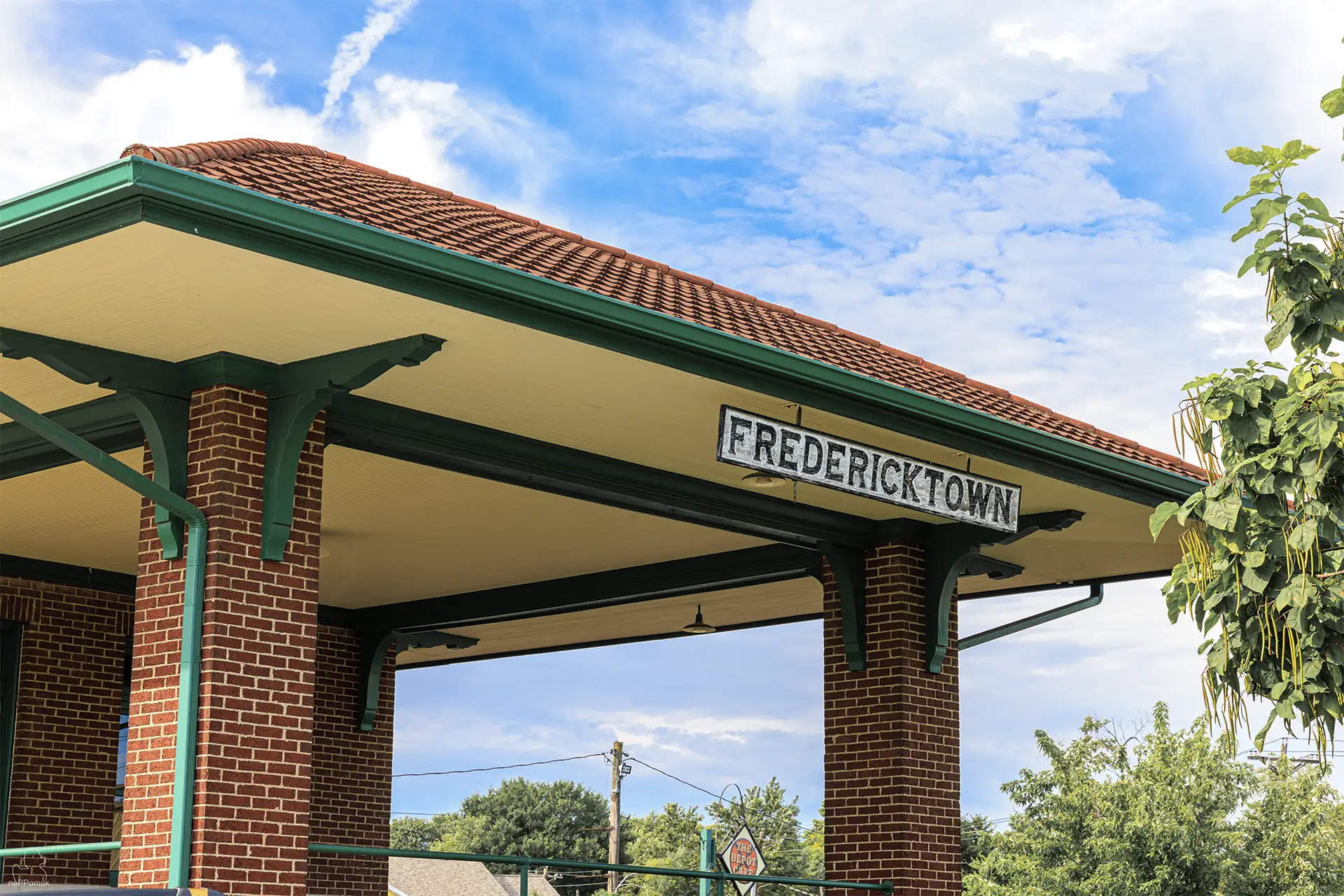
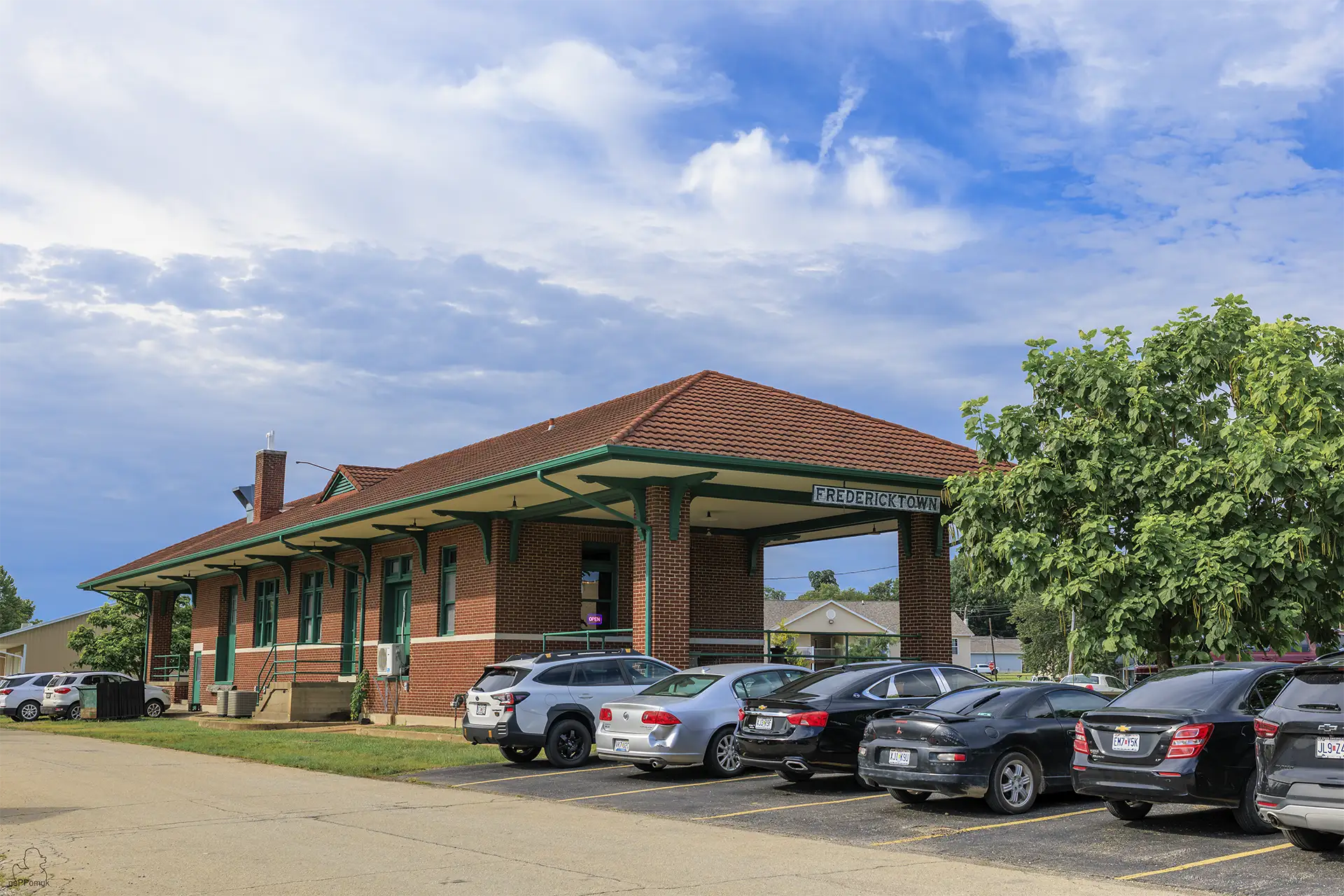
The today preserved Fredericktown Missouri Pacific Railroad Depoton Villar Street was built around 1917. It was erected as a replacement or supplement to the older station, whose capacity no longer met the demands of increasing passenger traffic.
The railway company commissioned the building contractor George H. Gassmah from Dexter, Missourito carry out the construction of the new building. A largely fireproof structure of brick and concrete was planned. The new station was intended primarily for passenger traffic, while the older wooden station building would from then on be used exclusively for freight traffic.
This distinction is important for the history of Fredericktown: the brick depot, which is well preserved today in photographs, should not be confused with the original station from 1869. For a time, both buildings served different functions within the same railroad system.
The new building was constructed during a period in which the railway companies increasingly standardized their facilities. Stations were meant to be functional, economical to operate, and at the same time recognizable as part of a unified corporate identity.
Architecture between Prairie School and Craftsman style
The Missouri Pacific Depotis a single-story, elongated brick building with a low-pitched hipped roof. The wide overhanging roof surfaces, the sturdy supporting brackets, and the horizontal articulation of the facades recall design elements of the American Prairie School. At the same time, influences of the Craftsman stylerecognition, which was especially common at the beginning of the 20th century for residential buildings and functional structures.
The rectangular building is about 39 meters long and just under seven meters wide. Characteristic features are the covered waiting areas at both ends of the building, which offered passengers protection from sun and precipitation. A protruding window section gave station staff a good view of the platform and the line.
Inside, the building was originally divided into a waiting room, an office for ticket sales and operations processing, and a baggage area. This clear spatial organization corresponded to the requirements of a smaller American passenger station.
What is particularly remarkable is the largely preserved historic design. The brick facades, the original roof form, and numerous architectural details still reveal its former function today. The green-painted wooden elements also belong to the traditional appearance.
From transport hub to historic architectural monument
For more than five decades, the depot served as a station for passenger transport. The line brought travelers to Fredericktown and gave residents access to the wider rail network. The station was thus both a transport structure and a social meeting place.
However, with increasing motorization and the shift of traffic to the roads, the railroad gradually lost importance. Rail service through Fredericktown was discontinued in 1972.This marked the end of the depot’s original use.
In the following decades, the building was used for other purposes at times. Between 1983 and 1985, it housed a Mexican restaurant, and later it was used, among other things, as a shop for riding and harness supplies. These subsequent uses show how former transport buildings could continue to remain part of local economic life even after rail operations had ended.
On February 10, 2000the Fredericktown Missouri Pacific Railroad Depot was added to the National Register of Historic Places. The listing recognizes both its transportation history significance and its architectural quality.
The former railway station building is now an important testament to that era in which the railroad significantly influenced the economic and social development of American small towns.
Agriculture and farm trade – The rural economy around Fredericktown
In addition to mining and the railroad, agriculture in Madison Countyhas always played an important role. The rural areas around Fredericktown are characterized by farms, pastureland, and smaller communities whose economic ties are closely linked to Fredericktown as the administrative and commercial center.
In particular, livestock farming developed into a significant component of regional agriculture. Cattle raising and other forms of animal production required a reliable supply of feed, tools, machinery, and agricultural equipment.
This gave rise to businesses that specialized in the needs of agricultural enterprises. Such establishments remain an important part of small American regional centers to this day. They perform functions that go far beyond traditional retail and connect the farming businesses of the surrounding area with local economic life.
Madison County Farm Supply – From feed trading to a regional supply business
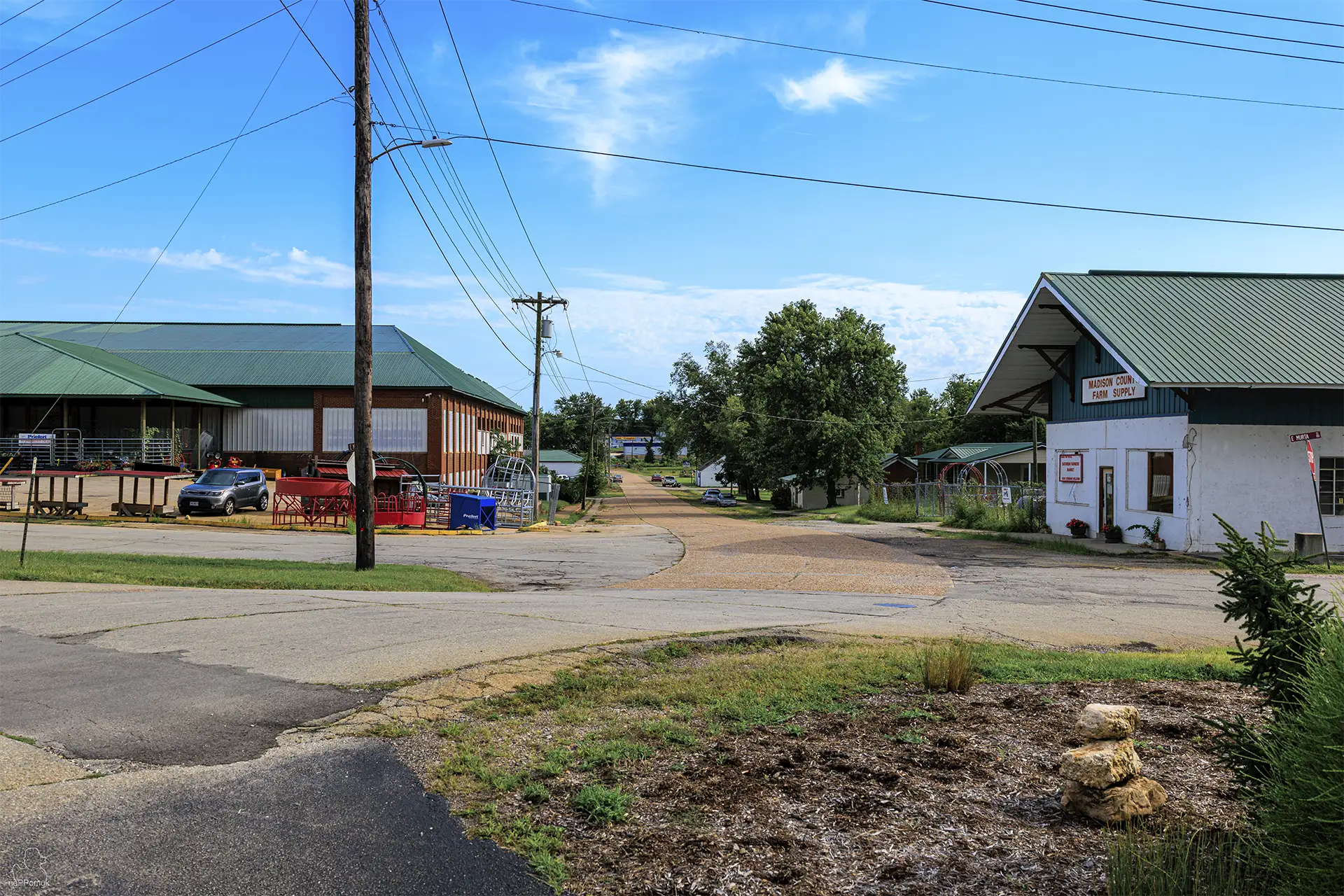
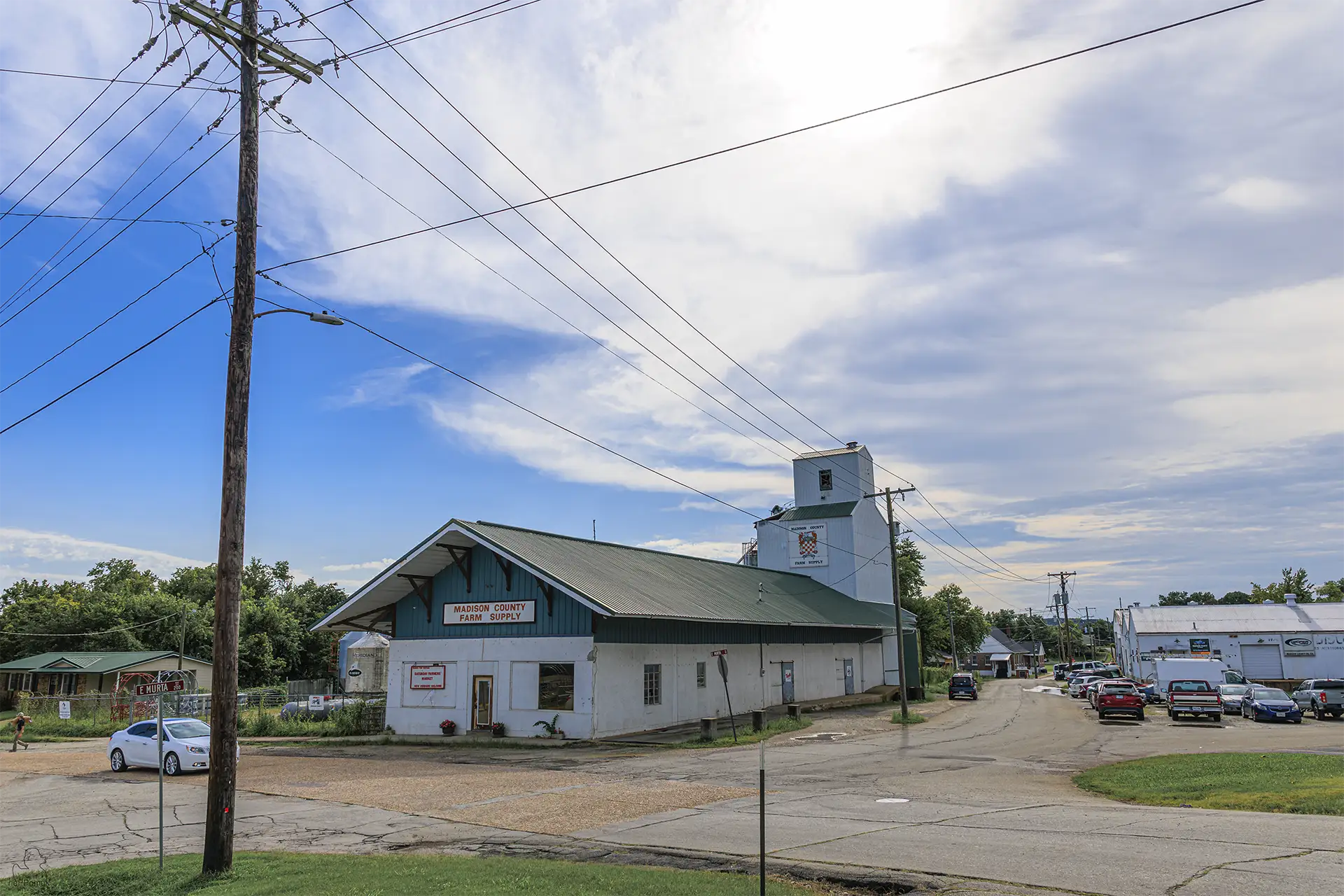
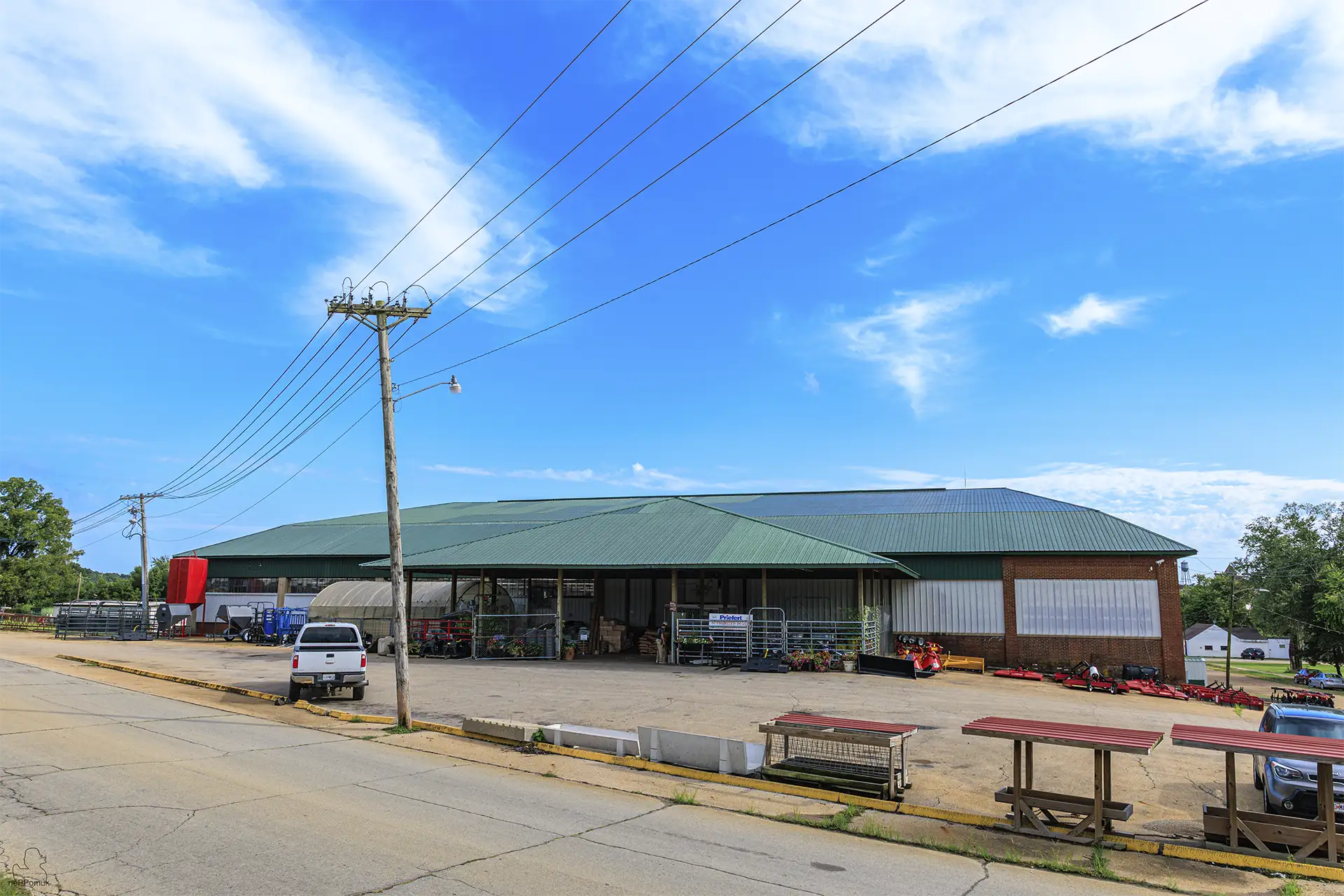
A vivid example is Madison County Farm Supply, whose origins date back to 1982. Back then, Ivan Kranjec founded a feed business in Fredericktown that initially started with a very small stock of goods. According to the company, the first sale consisted of eight sacks of shelled corn.
In the following years, the business was gradually expanded. An in-house feed production supplemented the original trading offering, while additional products for agriculture, animal husbandry, and everyday needs were added to the range.
A significant change occurred 2008with the relocation of the expanded retail store into the renovated former Brown Shoe Company building. This gave a building formerly used for industrial purposes a new economic function. At the same time, this development shows the transition from the traditional shoe industry to an economic location more strongly shaped by trade and regional supply.
The in-house feed production remained an important part of the company. The buildings and facilities of Madison County Farm Supply thus stand as an example of the close connection between agriculture, processing, and trade in southeastern Missouri.
Craftsmanship, timber trade, and regional infrastructure
Fredericktown’s economy consists not only of historic industries and agricultural businesses. Also the timber trade, the construction industry, and local service businesseshave a long tradition. In a region with smaller communities, agricultural estates, and predominantly low-rise development, there is a continuous need for building materials, repair services, and technical infrastructure.
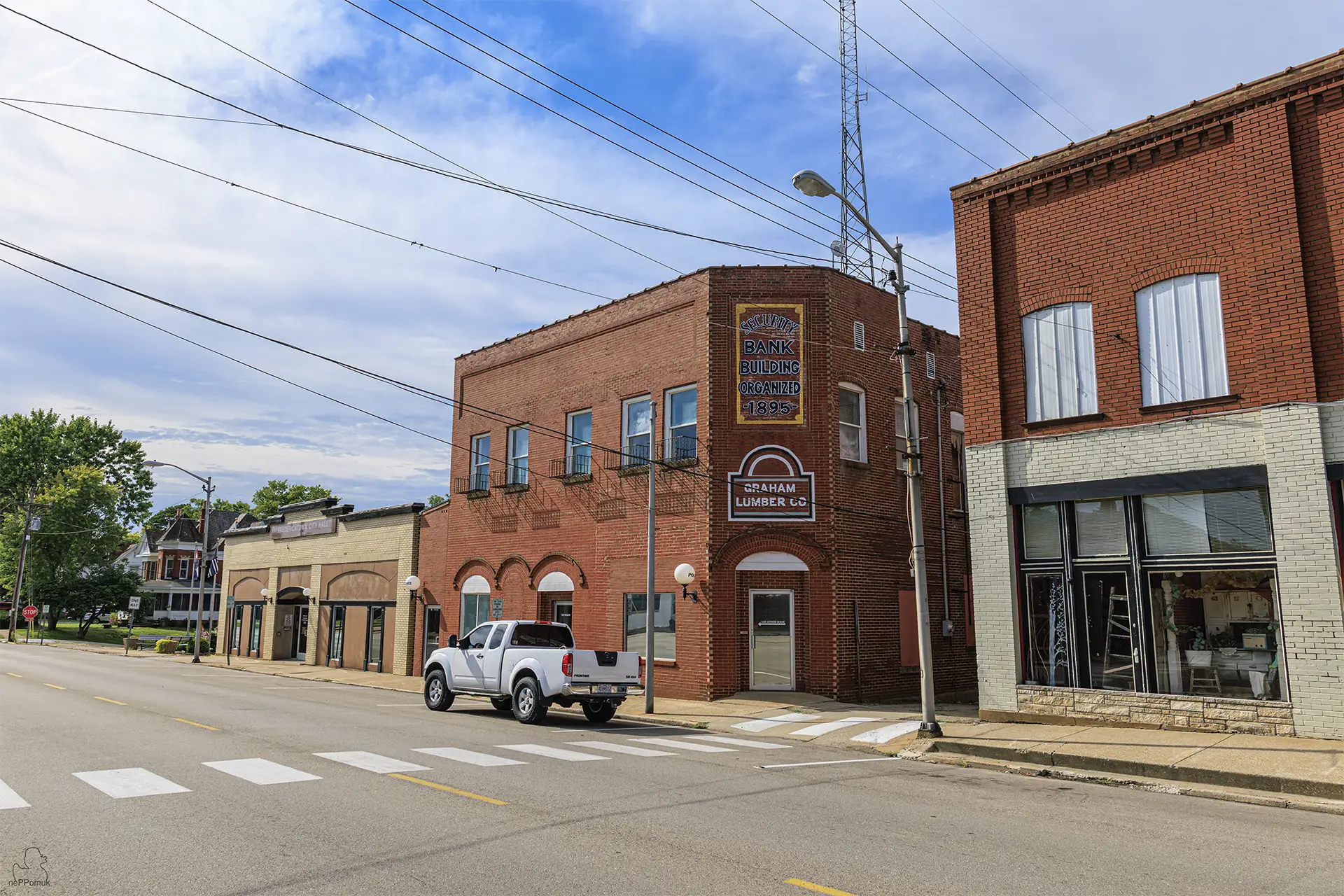
Historic companies such as the Graham Lumber Companywere part of this economic environment. The company was at times located in a former bank building on West Main Street. The adaptive reuse of such buildings shows how flexibly Fredericktown’s commercial architecture could adapt to different economic requirements.
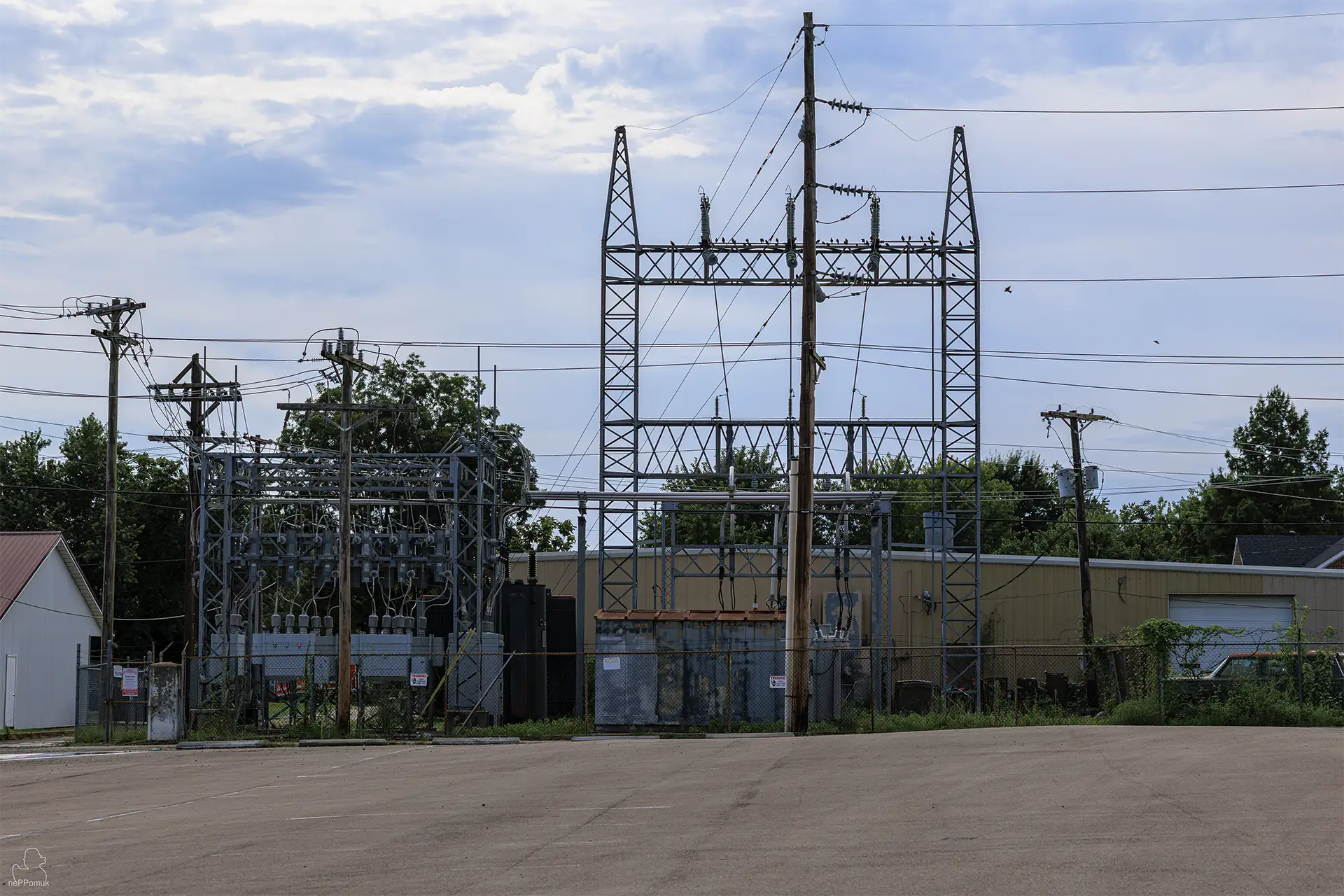
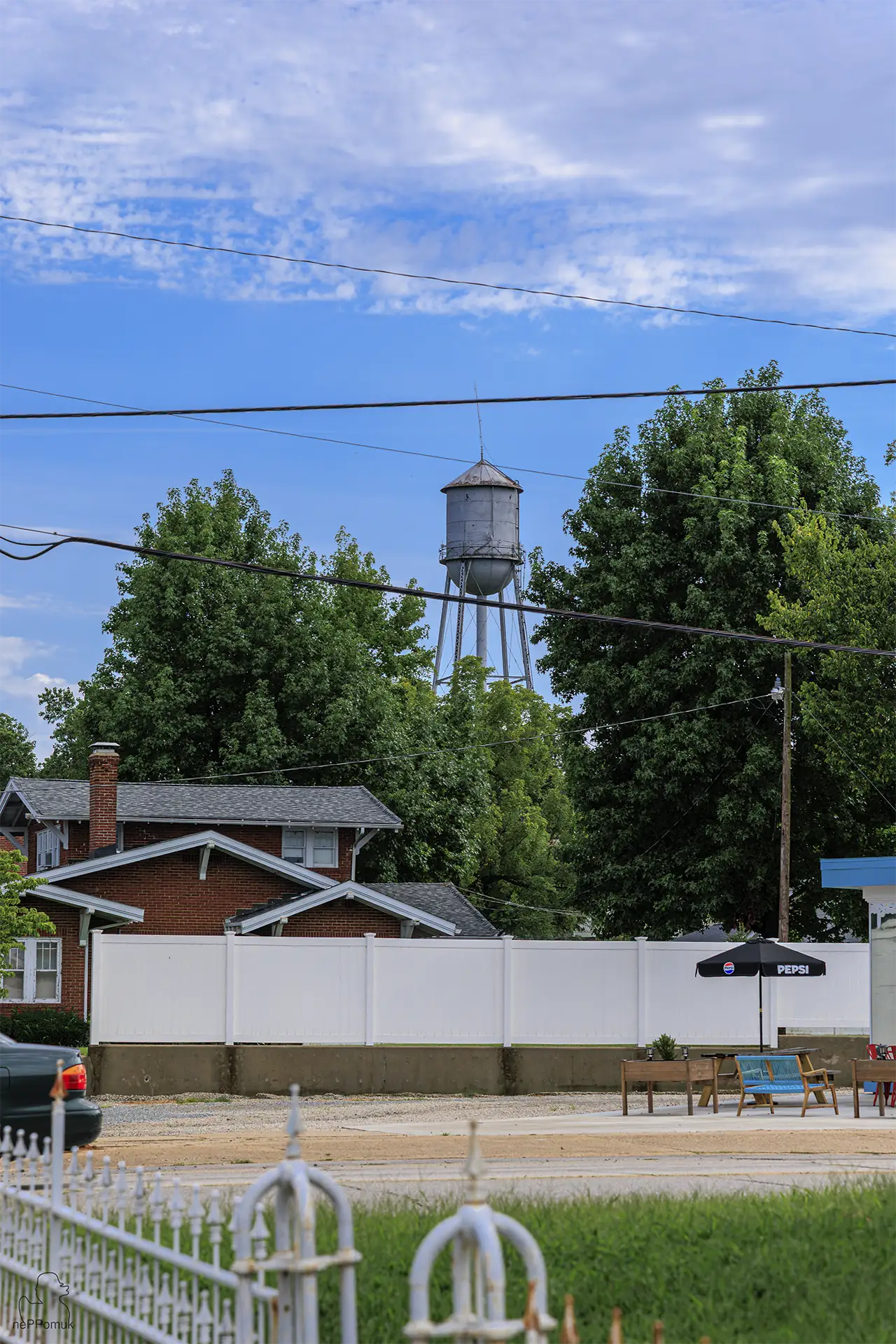
Technical utility facilities are also part of this cityscape. Power lines, substations, and water towers perform essential tasks for households and businesses. They are often scarcely noticed in everyday life, yet they are a prerequisite for the operation of a modern small town.
Especially in Fredericktown, this infrastructure is not completely separated from the residential and commercial areas. Utility lines, smaller commercial yards, and technical facilities are in some cases located in the immediate vicinity of the historic buildings.
The transition between residential areas, retail, and commercial uses is therefore fluid. This spatial structure distinguishes smaller American towns from larger metropolitan areas, where industrial and commercial zones are often more strongly separated from one another.
Economic structural change and the consequences of historical mining
With the decline of mining and the end of railway operations, Fredericktown’s economic base changed significantly. The town increasingly had to rely on other industries. The shoe industry in particular gained importance during the Great Depression, when several manufacturers created new jobs in the region.
For decades, Brown Shoe Companywas one of the town’s important employers. Its later significance as a former industrial site is evident, among other things, in the repurposing of former company buildings. The shift from industrial manufacturing to trade, services, and regional supply was not a single event, but a long-term process.
However, the historical extraction of raw materials left not only economic and structural traces. Former mining sites and processing facilities led to contamination with heavy metals, especially lead, at various locations in Madison County.
The U.S. environmental agency Environmental Protection Agency (EPA)records these contaminated sites under the Madison County Mines Superfund Site. These include former spoil heaps, ore-processing residues, as well as contaminated soils and waters. For various subareas, investigation and remediation measures have been planned or carried out.
These environmental impacts are just as much a part of the region’s industrial history as the economic successes of historic mining. They show that raw material extraction can have long-term effects on the landscape and settlements beyond the end of actual production.
Fredericktown between industrial past and rural present
Today’s Fredericktown is no longer a classic industrial location. Its economic structure is shaped more by trade, agriculture, smaller businesses, and services. However, the historical connections between raw material extraction, transport, and regional supply remain recognizable.
The former Missouri Pacific Railroad Depotrecalls the importance of the railroad, while agricultural supply businesses and traditional commercial buildings document the economic changes of recent decades. Even inconspicuous facilities such as a water tower or an older commercial building belong to this development.
The juxtaposition of different uses provides an objective impression of the economic history of an American small town. Fredericktown shows how a place has developed from a trade center shaped by mining and railroads into a community whose economic importance today lies primarily in serving its rural surroundings.
Everyday life and urban society
Fredericktown away from the historic downtown
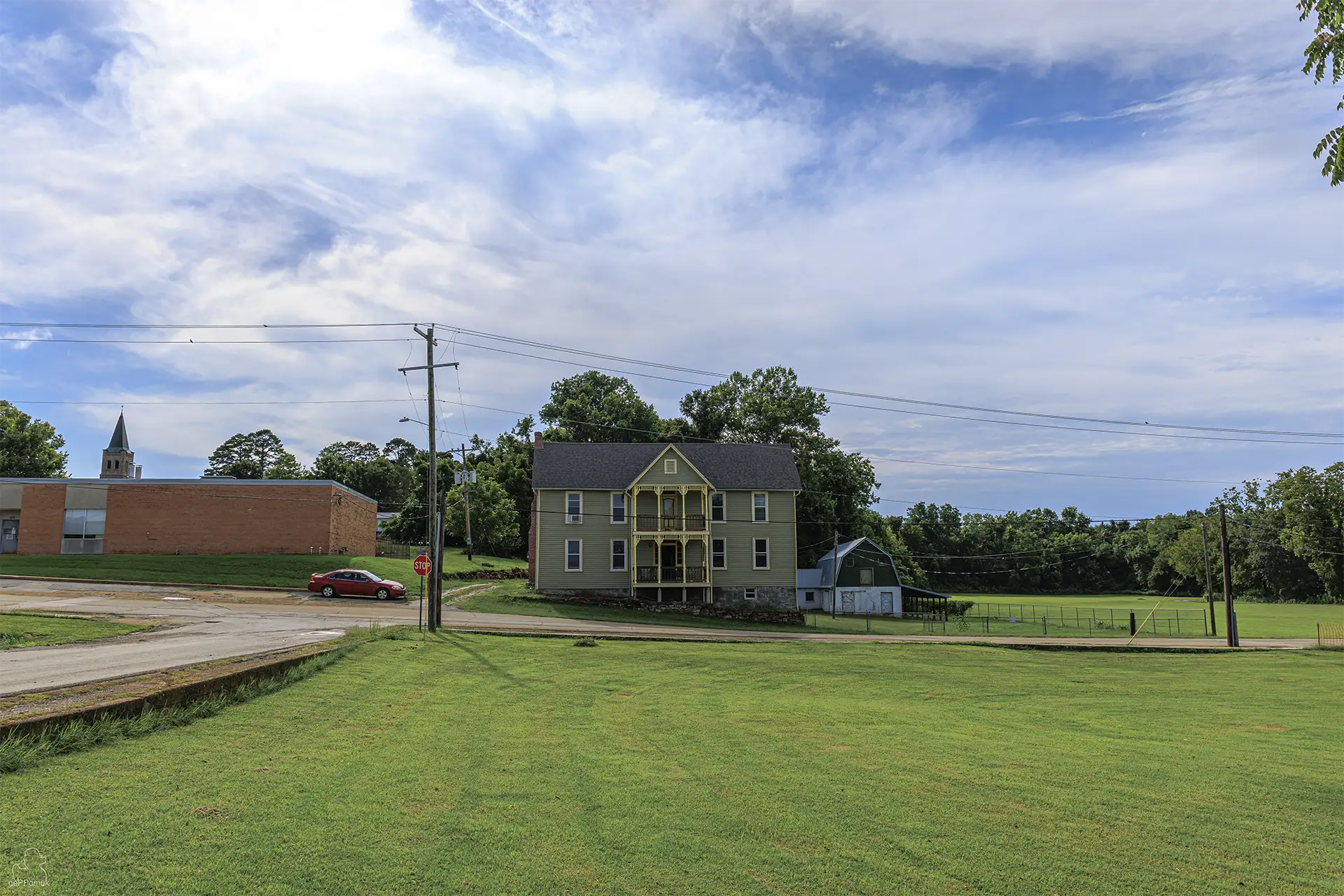
Away from the historic business streets and the Madison County Courthouse, Fredericktown in Missourianother side of American small-town life. Residential houses with spacious porches, small craft businesses, churches, gas stations, and auto repair shops shape the streetscape in many places. While the historic center tells above all of the city’s economic and political past, the adjoining residential and commercial areas convey an impression of its present living conditions.
With 4,429 inhabitants at the 2020 censusFredericktown is one of the smaller towns in Missouri. Nevertheless, as the county seat of Madison County, the town fulfills numerous functions for the surrounding rural communities. Schools, medical facilities, shopping opportunities, and various service businesses create an infrastructure whose importance extends far beyond the actual city limits.
The spatial structure is typical of many smaller towns in the American Midwest. Along the main roads, shops and commercial uses are concentrated, while residential neighborhoods with relatively loose development follow behind them. Between older single-family homes, smaller commercial areas, and public facilities, there are fluid transitions. The functional separation known from larger American cities is less pronounced here in many places.
Life in Fredericktown is therefore shaped not only by a central business district. Rather, the daily activities are spread across different areas of the city. Jobs, schools, churches, and shops are connected by a road network designed for individual vehicle traffic.
This structure also shapes Fredericktown’s visual character. Well-kept front yards stand next to larger properties, older brick buildings alternate with modern utilitarian structures, and workshops or smaller commercial facilities can be found between residential houses. The city thus shows a grown coexistence of different uses that has developed over generations.
Read more
Residential houses and porches – American residential culture in Missouri
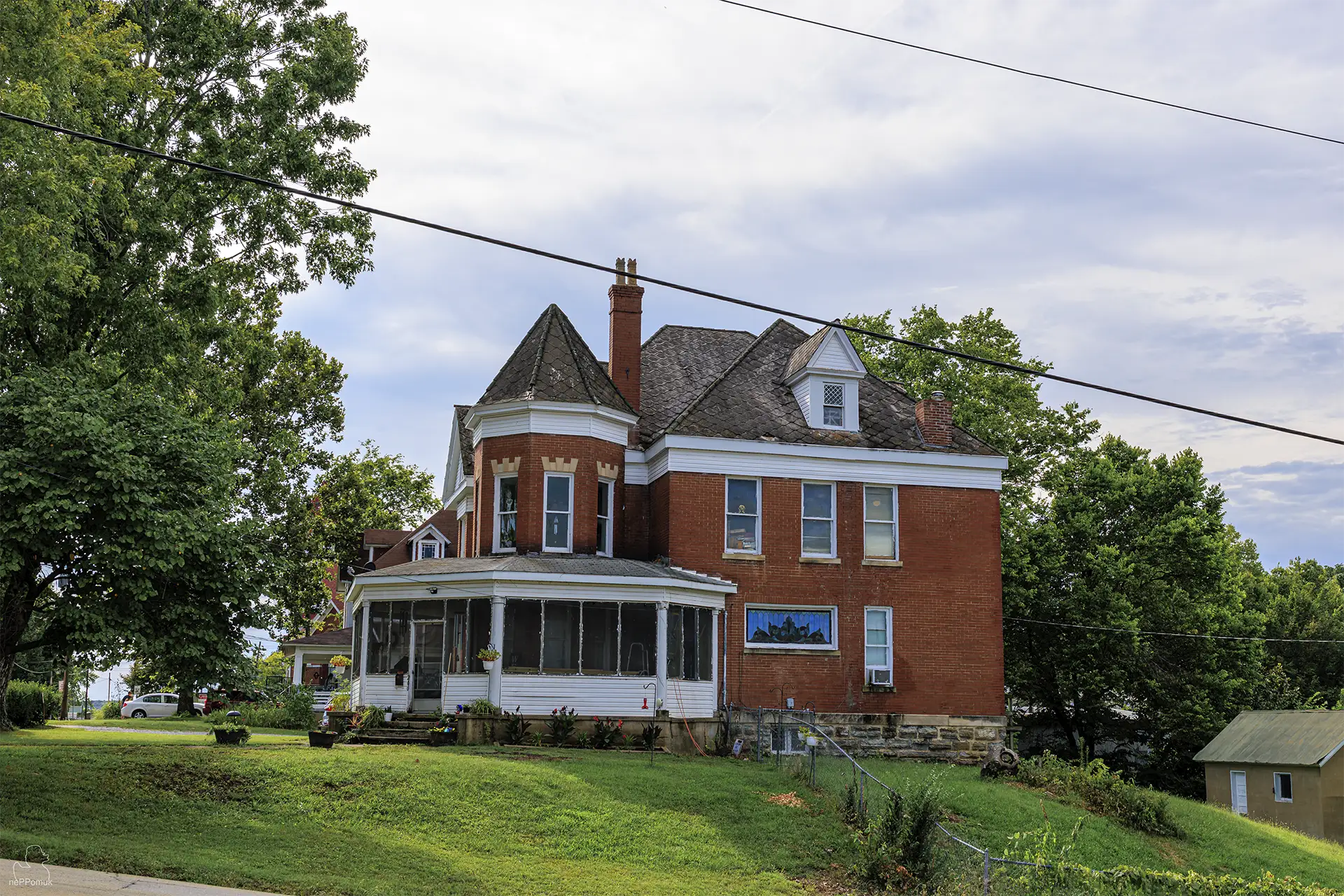
Fredericktown’s residential areas are predominantly characterized by detached single-family houses. The architecture ranges from older wooden houses and traditional brick buildings to simpler bungalows and newer residential buildings. Different roof shapes, facade materials, and plot sizes document the town’s architectural development.
Particularly characteristic are the Front Porches, the covered porches at the front of many American residential houses. They form a transition between private living space and the public street. Originally, they offered a shaded place to stay, especially during the warm summer months. Before the widespread use of modern air conditioning, such covered outdoor areas played an important role in daily life.
Porches also had a social function. They made it possible to spend time outdoors without leaving one’s own property and created opportunities for brief conversations with neighbors or acquaintances passing by. In this way, they combined the practical requirements of the residential building with a special form of neighborhood public life.
From the Victorian house to the American bungalow
In Fredericktown, various stages in the development of American residential architecture can be observed. Older houses sometimes feature decorative facades, elaborately designed roof forms, or spacious porches that recall the architectural ideas of the late 19th century.
Alongside them stand simpler residential buildings from the 20th century. In particular, the American Bungalowspread from the early 20th century as a compact and comparatively economical house type. Its mostly single-story construction, pitched roof, and the often present porch enabled functional use with manageable construction effort.
The different building types in Fredericktown often stand side by side without major spatial separation. This creates a varied streetscape in which individual building decisions and later modernizations can be read directly.
Front gardens, lawns, garages, and driveways also belong to this appearance. While older houses are usually more oriented toward the street, younger residential buildings often have larger parking areas for vehicles and property access more geared toward car traffic.
Automobile culture – mobility as part of everyday life
The automobile plays a central role in Fredericktown’s everyday life. The city lies on US Route 67 and Missouri Route 72, two important road connections in southeastern Missouri. They provide access to surrounding communities, workplaces, and larger shopping destinations.
For many residents of the rural surroundings, regular trips to Fredericktown are a matter of course. Conversely, the city’s residents also rely on connections to other places for certain services, jobs, or additional offerings.
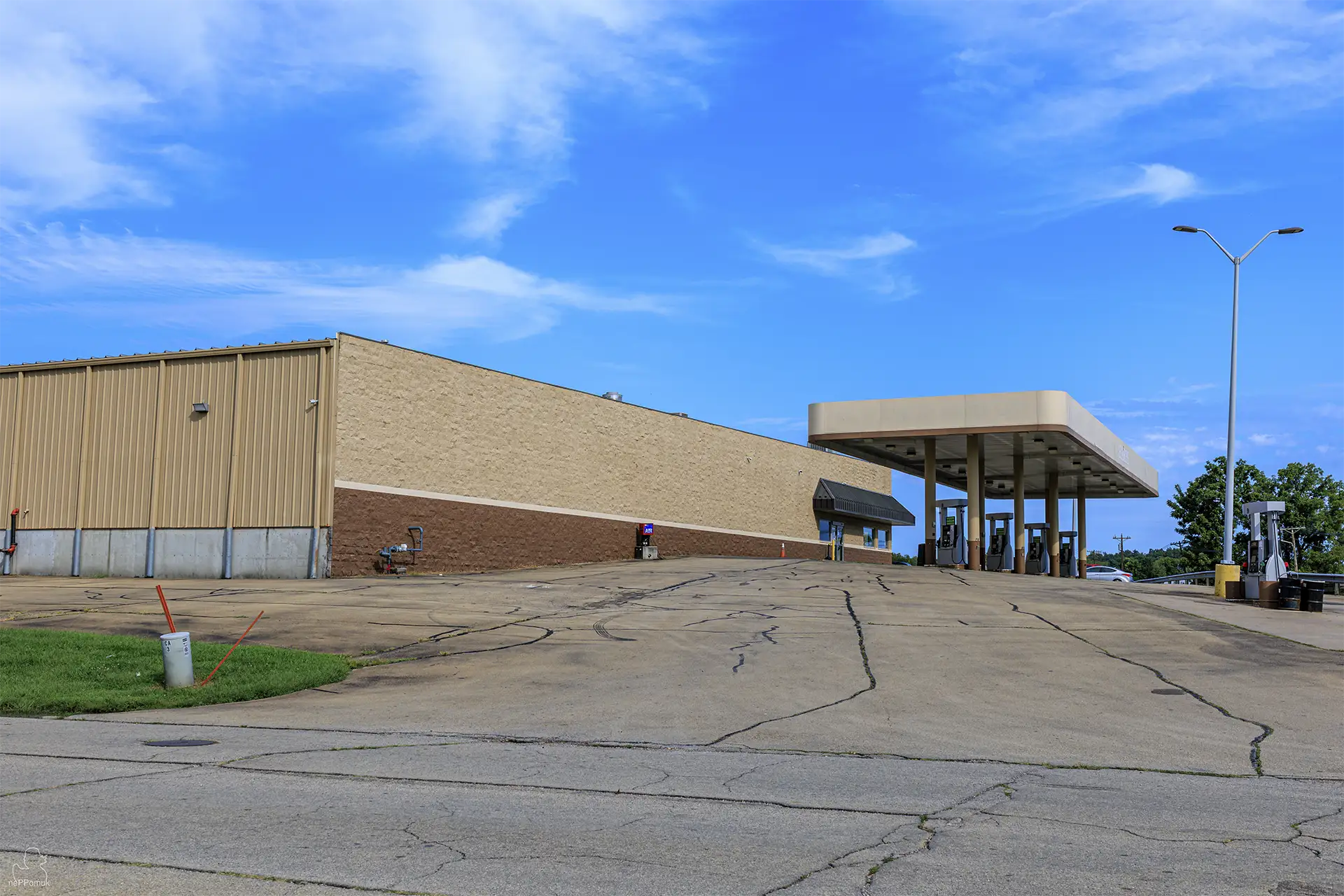
The importance of private transport is immediately visible in the cityscape. Parking areas, gas stations, tire dealers, and repair shops are just as much a part of it as wider access drives to commercial buildings and parking spaces in front of residential houses. Even in the historic downtown area, the coexistence of pedestrians and vehicular traffic is a defining element.
Pick-up trucks, classic cars and American road culture
Especially in rural regions of the United States, pick-up trucksas part of the everyday street scene. They serve not only for private transport, but also fulfill practical tasks in trades, agriculture, and the transport of tools and materials.
In addition, classic American automobiles have a special cultural significance. Vehicles such as the Ford Mustang, which has been produced since 1964, have long since become symbols of American automotive history. Their significance goes beyond technical transportation and touches on topics such as design, individual mobility, and personal car culture.
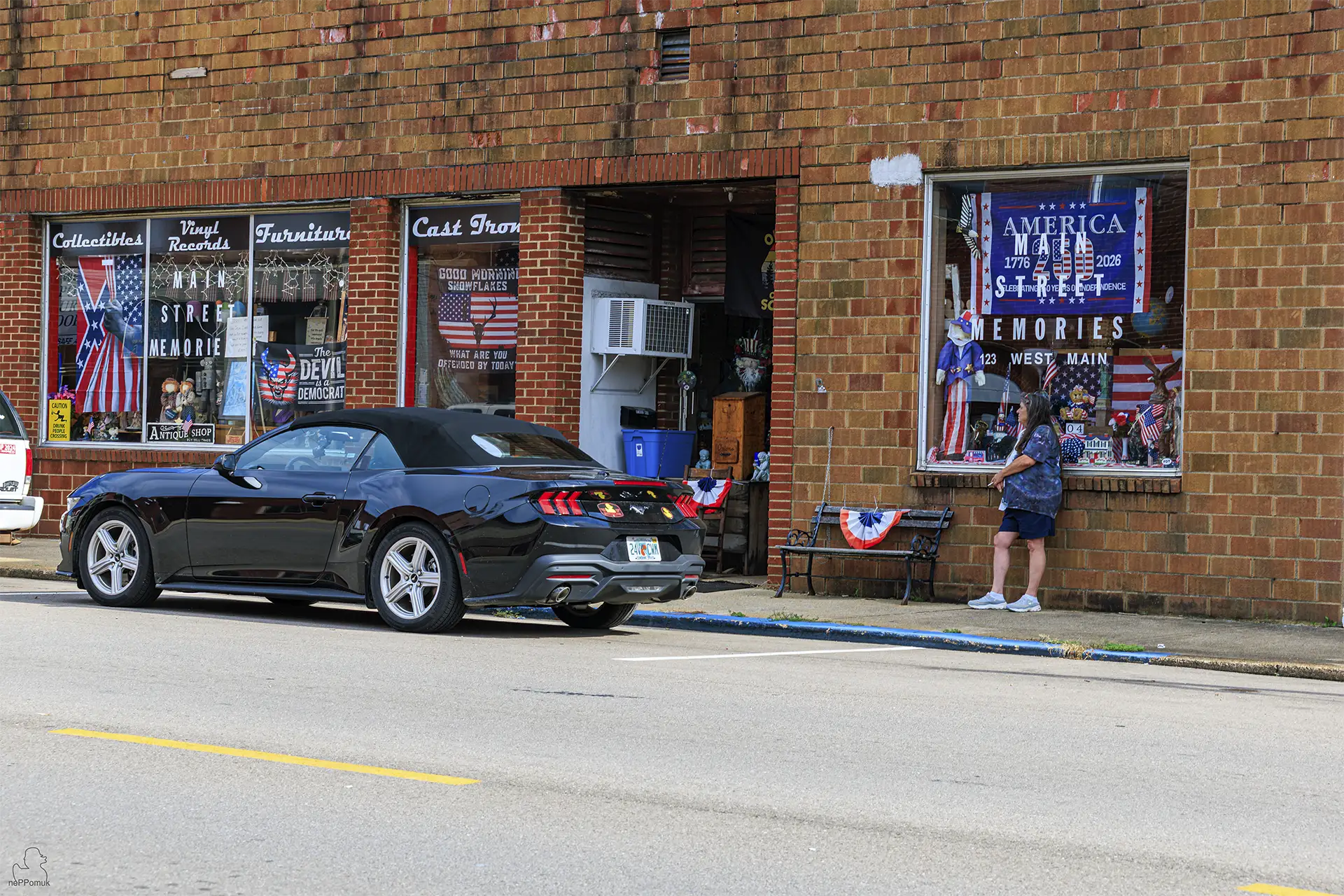
This connection between everyday use and interest in automotive history can also be observed in Fredericktown. A Ford Mustang parked in front of the store Main Street Memoriesshows how naturally modern and classic elements of American street culture come together in the townscape.
Such vehicles do not necessarily have to be part of an organized classic-car scene. Their presence in everyday traffic or in front of a shop already illustrates the special presence of the automobile in American society.
Auto repair shops and local services
The high importance of individual motor vehicle traffic simultaneously creates a continuous demand for repair shops, tire dealers, and technical service providers. In smaller towns like Fredericktown, such businesses fulfill an important supply function, since repairs and maintenance work are indispensable for many households.
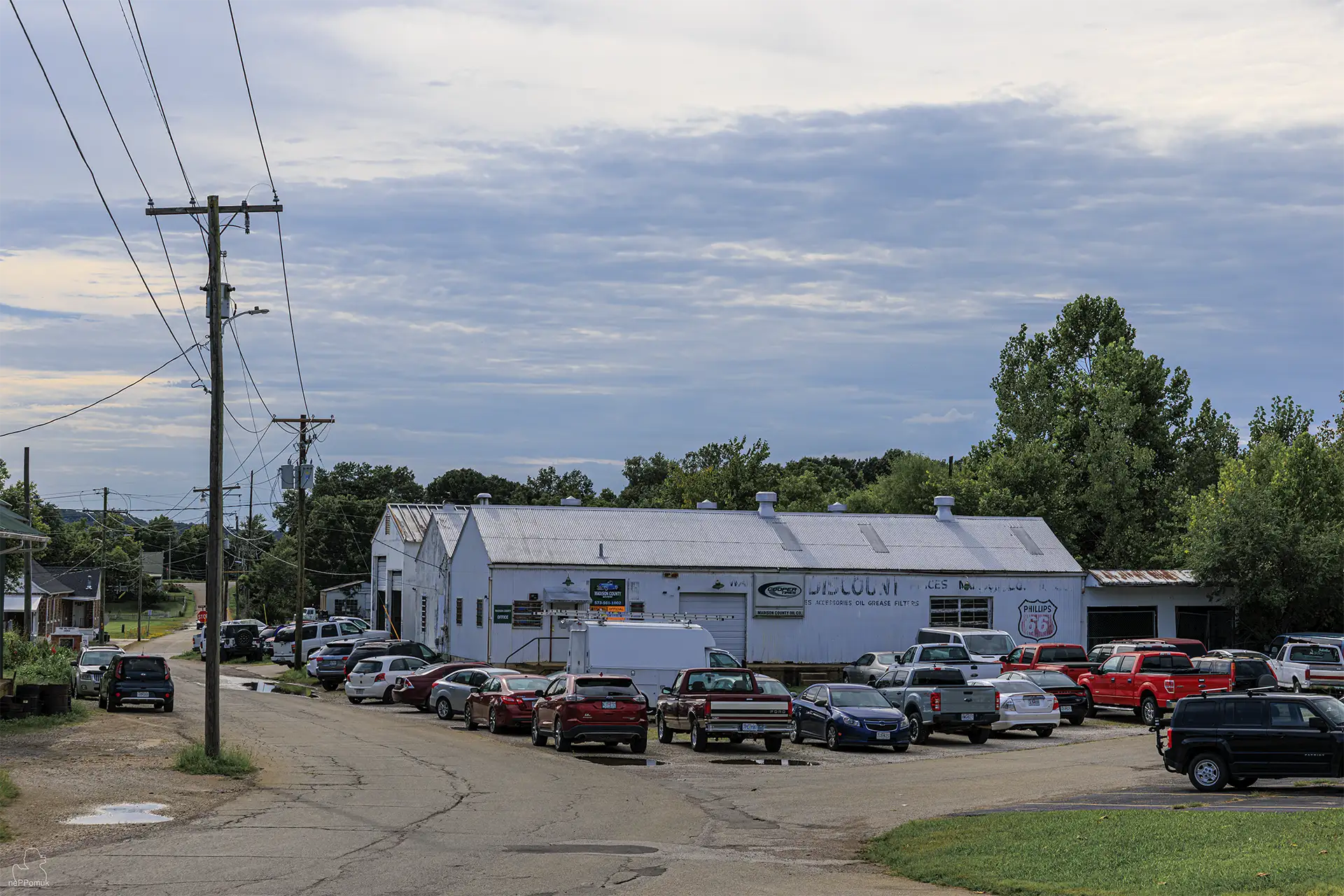
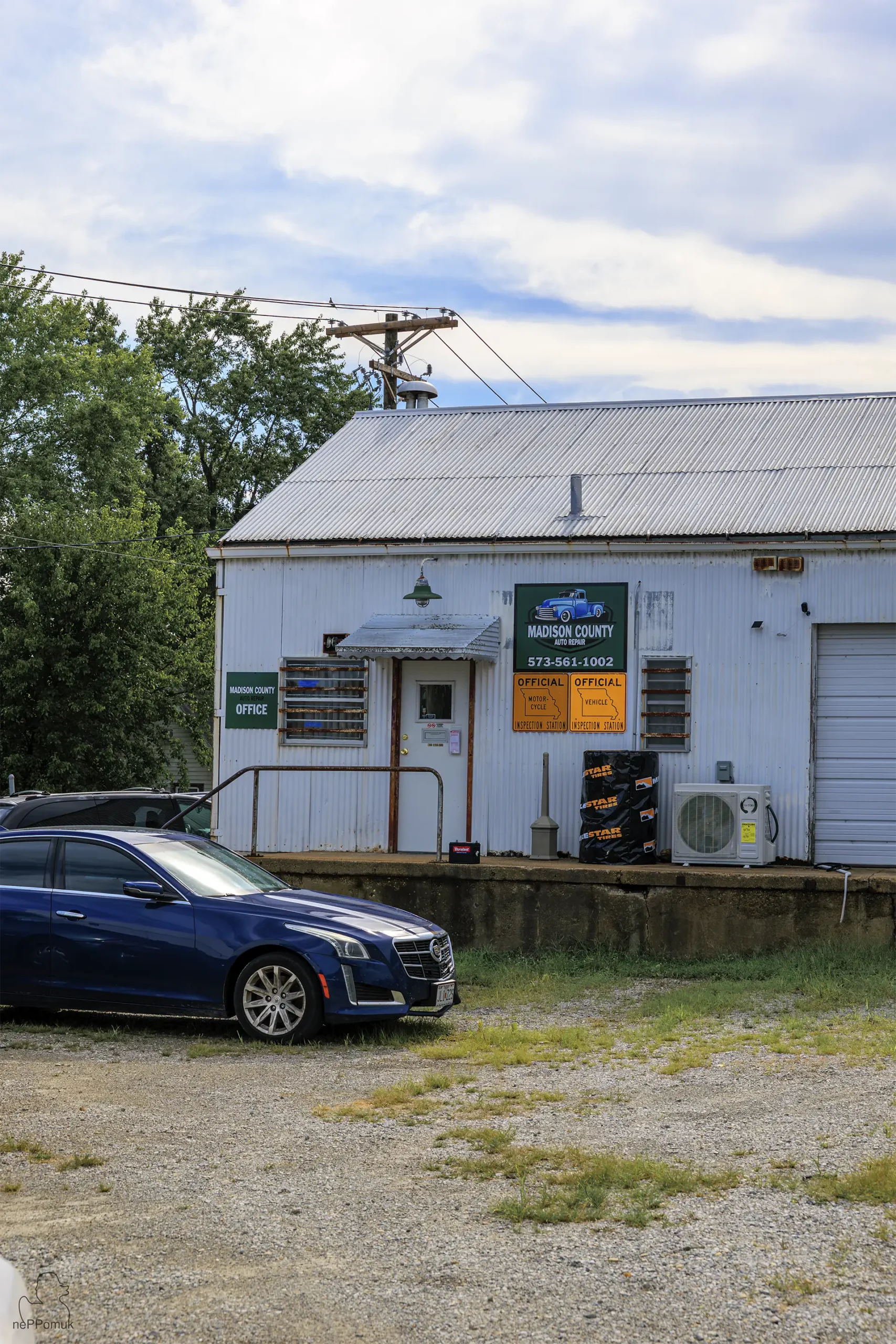
One example is Madison County Auto Repairon Murta Street. The workshop is part of the local offering for vehicle repairs and is listed in the directory of authorized vehicle inspection stations in the state of Missouri. Its commercial outdoor areas and the parked vehicles illustrate a functional side of the townscape that differs clearly from the representative architecture of the historic downtown.
The buildings of such businesses are primarily geared toward practical requirements. Workshop access roads, gates, paved yards, and parking spaces shape their design. Architectural representation takes a back seat to operational functionality.
Small businesses as part of the local economic structure
Workshops and smaller commercial businesses in Madison County serve a dual function. On the one hand, they provide services for private customers and businesses. On the other hand, they create jobs and complement the economic offering of a town whose history has been shaped by mining, industry, and agriculture.
The commercial structures differ clearly from large industrial facilities. Smaller workshops can be operated on comparatively compact properties and are often located in the immediate vicinity of other uses.
It is precisely this mix of residential, service, and commercial uses that is a characteristic of the cityscape. Repair businesses, storage areas, and craft enterprises are not concentrated exclusively in large, enclosed industrial zones, but are in part directly integrated into the established urban structure.
Churches and religious communities – social life in Fredericktown
In addition to trade and craftsmanship, churches and religious communitieshave belonged to Fredericktown’s social institutions since the early settlement period. The French-Creole settlers already brought their Catholic traditions with them, while various Protestant congregations became established in the 19th century.
The present city area is home to different Christian denominations, including Catholic, Methodist, Baptist, and Pentecostal congregations. The diversity of these churches reflects the religious development of a region whose population was shaped by different European immigration traditions and American revival movements.
Churches do not serve exclusively religious purposes. Many congregations organize educational offerings, community events, and social activities. In this way, they complement public institutions and create additional places for social gathering.
One example of the long history of local religious communities is the Fredericktown United Methodist Church. Its origins date back to the early 19th century. As early as 1837, the congregation acquired a property on South Main Street, where several church buildings were later erected. The current building fabric largely dates from the new building of 1903 and later extensions.
Corner Stone Tabernacle – A Church in the Everyday Cityscape
Another religious institution is the Corner Stone Tabernacleon North Mine La Motte Street. The Pentecostal congregation stands for the diversity of Protestant denominations in southeastern Missouri.
Unlike large historic cathedrals or representative church buildings, many smaller American parish houses are comparatively plain in their architecture. Their significance lies primarily in their use by the respective congregation and less in outstanding architectural design.
The photograph of Corner Stone Tabernacle at a street intersection illustrates this integration of religious institutions into the ordinary urban space. The church building does not appear as an isolated monument, but as part of the everyday buildings of Fredericktown.
Public institutions and social infrastructure
Community life in Fredericktown is shaped not only by private businesses and religious communities, but also by various public institutions. Schools, libraries, recreational areas, and social services perform tasks that are of central importance to the quality of life in a smaller town.
The Ozark Regional Libraryon South Main Street, for example, offers not only books and digital media, but also educational programs, events, and opportunities to explore regional history and genealogy. As a publicly accessible institution, it combines classic library functions with contemporary information and learning services.
The local school system also has an important social function. In smaller towns, schools are not only places of education, but often also venues for sporting events, school activities, and community gatherings.
For people with special support needs, additional services are available. These include the East Missouri Action Agency, which offers assistance in Madison County in areas including housing, energy supply, and family support.
These facilities show that community life is not determined solely by the visible shops and public buildings. Just as important is the network of educational, care, and support services that connects the city and the surrounding communities.
Parks and recreational opportunities for the population
Another role in daily life is played by the public green and recreational areas. The city of Fredericktown maintains, among other things, the City Lake Park, Memorial Park, and Azalea and Wanda Priest Park.
The facilities offer a range of opportunities for exercise, sports, and recreation. These include playgrounds, sports fields, picnic areas, and walking paths. At City Lake, fishing and kayaking opportunities add to the recreational offerings, while Memorial Park also features a public swimming pool and sports facilities.
Especially in a rural region, such municipal amenities complement the expansive natural areas of the Ozarks. They create local opportunities for families, children, and leisure activities without the need for long trips.
Vehicles between civilian use and military origins
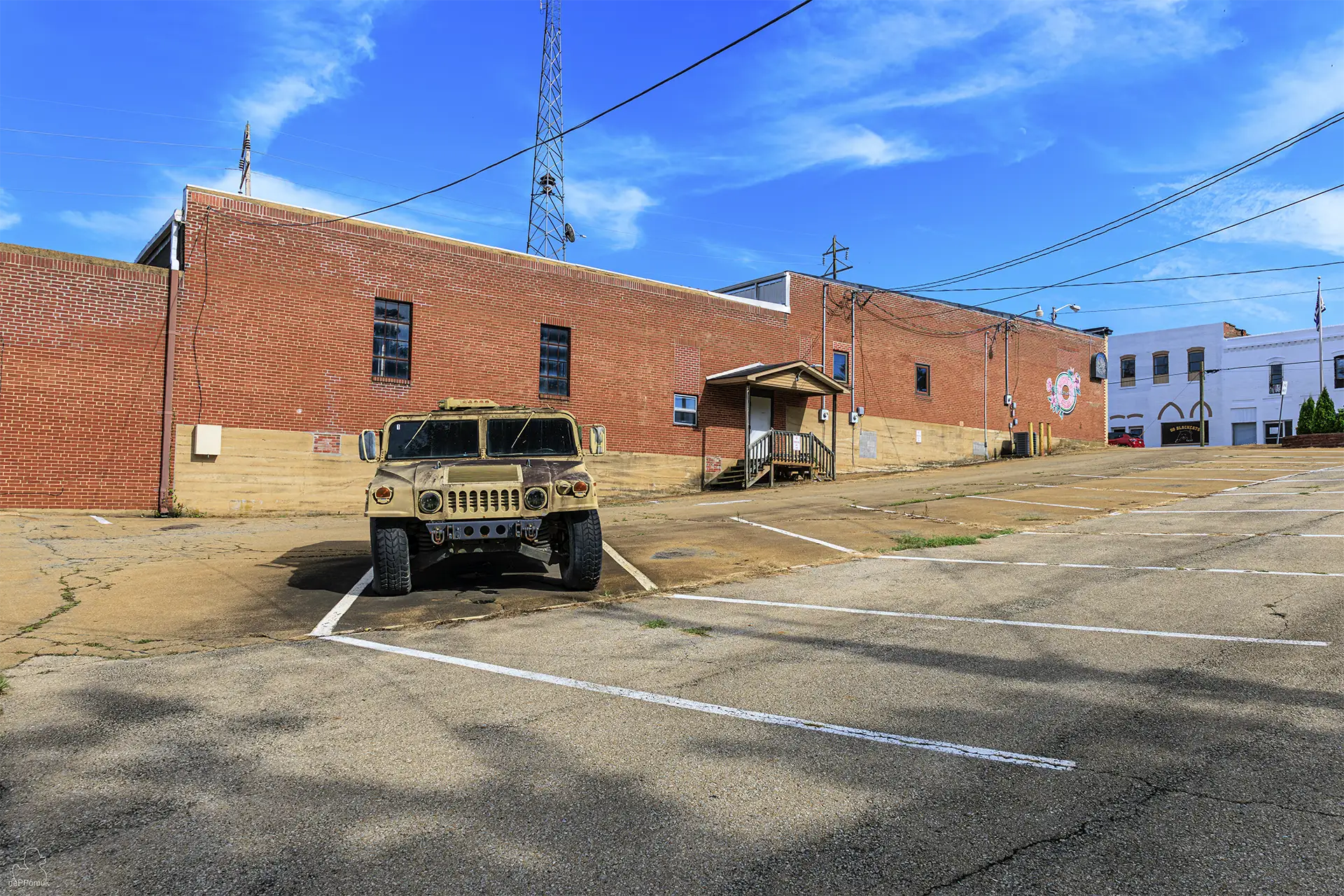
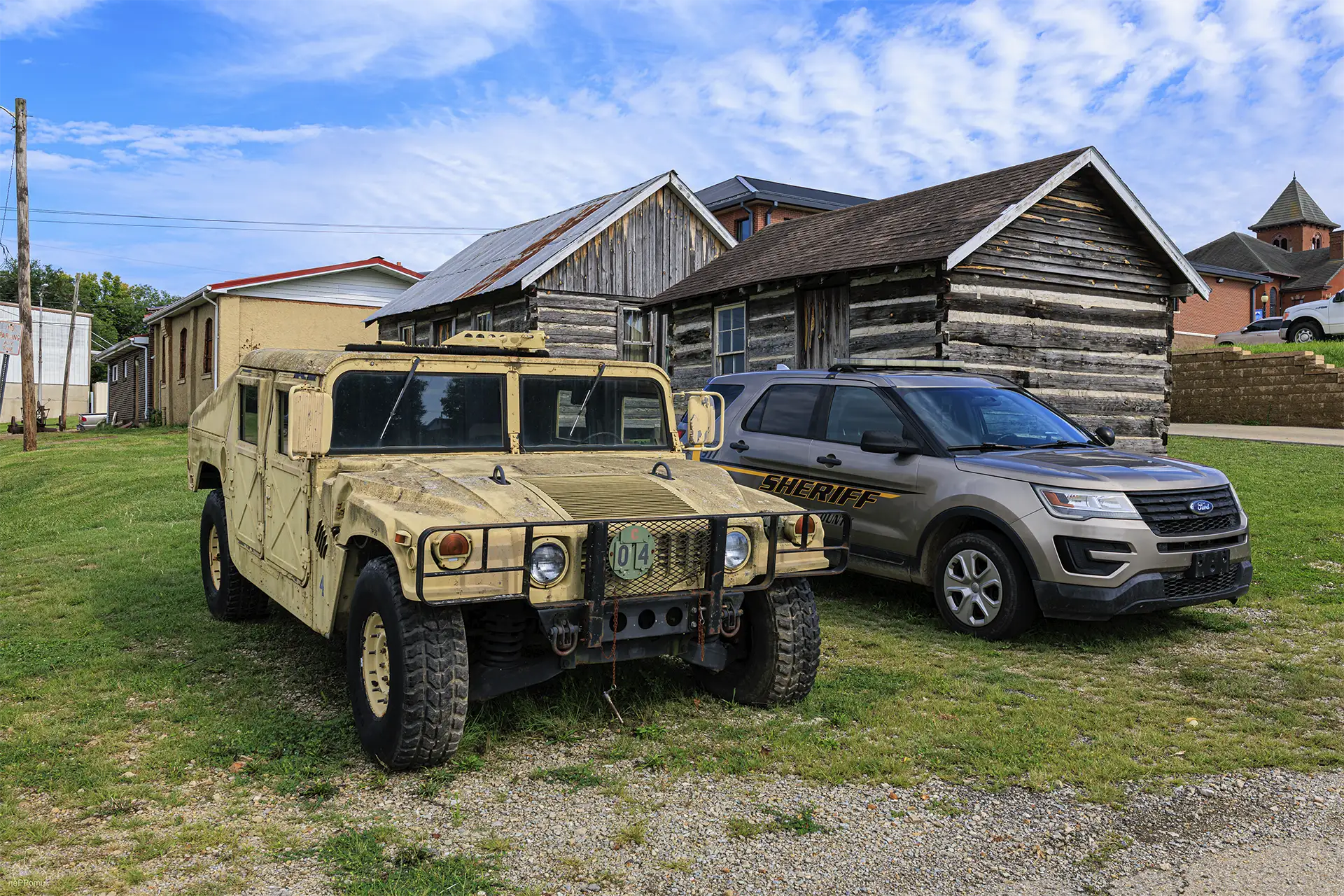
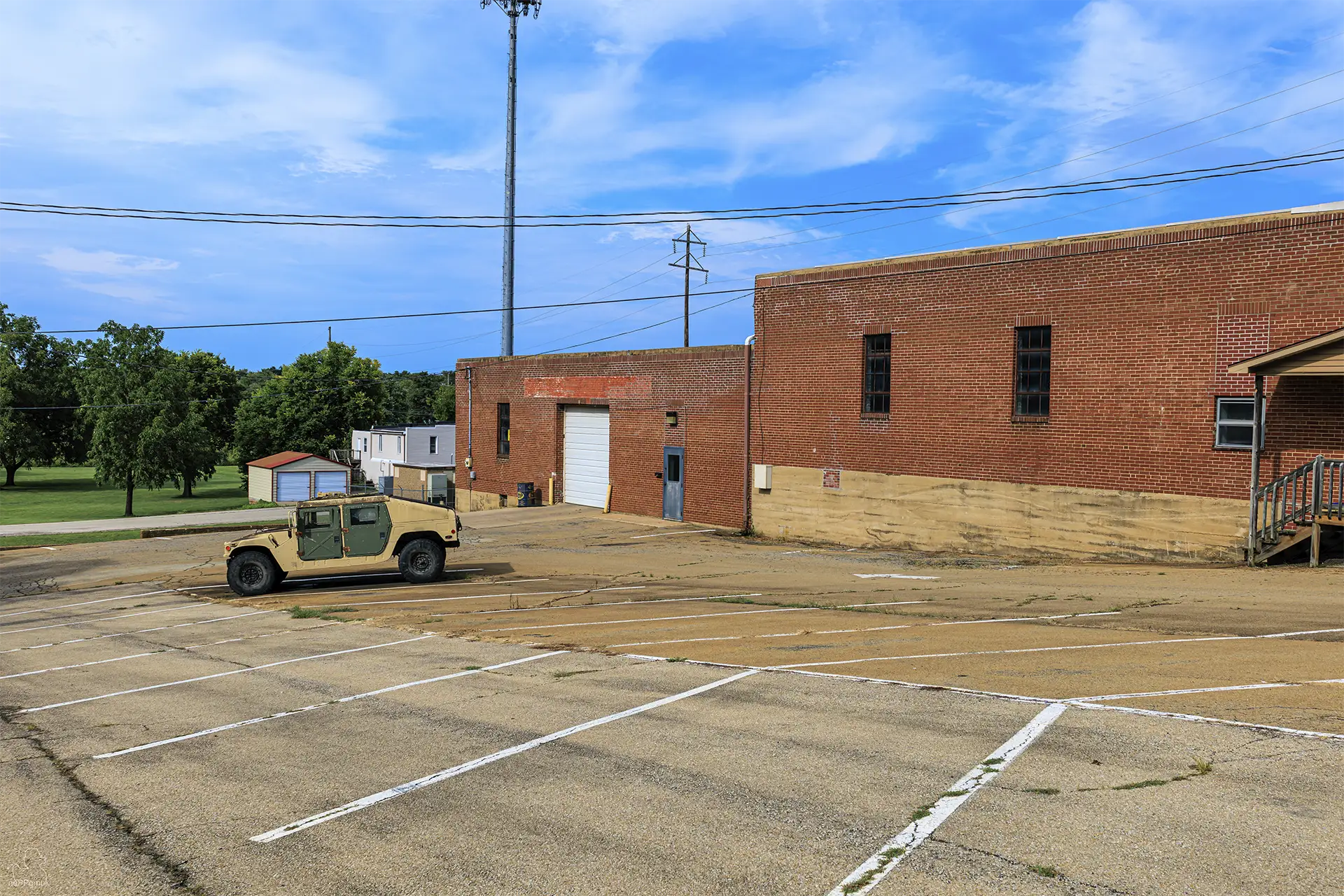
A striking motif among the images from Fredericktown is a militarily designed off-road vehicle of the Humvee type. The vehicle is in an urban setting and, with its wide body, high ground clearance, and functional design, differs clearly from ordinary cars or pickup trucks.
The Humvee, officially High Mobility Multipurpose Wheeled Vehicle(HMMWV), was originally developed for the American armed forces. The vehicle concept combines a robust off-road design with the ability to transport different military equipment. From the 1980s onward, the Humvee replaced various older light military vehicles and became a widely recognized part of American military technology.
Vehicles used for military purposes can also enter civilian or government fleets after being decommissioned. In the United States, for example, retired military off-road vehicles were handed over to public institutions or acquired by private owners.
The images from Fredericktown show such a vehicle type from different perspectives. However, a precise connection to a local authority, a collection, or a specific former use cannot be reliably inferred from the visible vehicle alone.
A technical motif in ordinary urban space
The image series is therefore of particular interest as documentation of an unusual vehicle within the cityscape. The front view shows the distinctive structural features of the Humvee, while the side and wider shots illustrate its dimensions in relation to the surrounding buildings.
In particular, the combination of military vehicle technology and ordinary streets, parking lots, or historic buildings creates a visual contrast. In this setting, the vehicle appears less like part of a military installation and more like an unusual object of the American streetscape.
For the portrayal of Fredericktown, a factual classification is appropriate. The Humvee does not stand in for the town’s entire social life, but it does complement the photographic documentation with a characteristic example of American vehicle technology.
Fredericktown as a place to live – The character of a small town that has grown over time
The everyday life in Fredericktownis the result of a long-term development. The historic commercial streets, residential areas, and industrial sites emerged at different times and served changing purposes. Many buildings were remodeled, modernized, or adapted to new uses, while the basic structures of the townscape have remained intact.
This is especially evident in the transition between the central streets and the surrounding residential areas. Just a few blocks can be enough to go from historic brick facades to simple single-family homes, small workshops, or agriculturally influenced areas.
The significance of such places cannot be measured solely by their well-known sights. For residents, everyday needs are the priority: housing, work, shopping, education, mobility, and the use of public facilities. The city fulfills these functions within a regional environment that remains distinctly rural to this day.
Fredericktown thus conveys a nuanced impression of life away from the major American metropolises. The architecture is predominantly functional, the economic structures are manageable, and the different spheres of life lie close together in spatial terms.
It is precisely this coexistence that defines the character of the city. Historic homes, churches, auto repair shops, and ordinary street scenes together tell the story of a community whose present appearance is no less interesting than its past.


Barbecue, diner and American food culture
Between the Midwest and the American South
The cuisine in Fredericktown, Missouri, is closely linked to the rural traditions of the American Midwest and the culinary influences of the Southern states. In southeastern Missouri, different regional eating habits overlap. Hearty meat dishes, simple side dishes, traditional breakfast foods, and American barbecue culture are part of the region’s gastronomic environment.
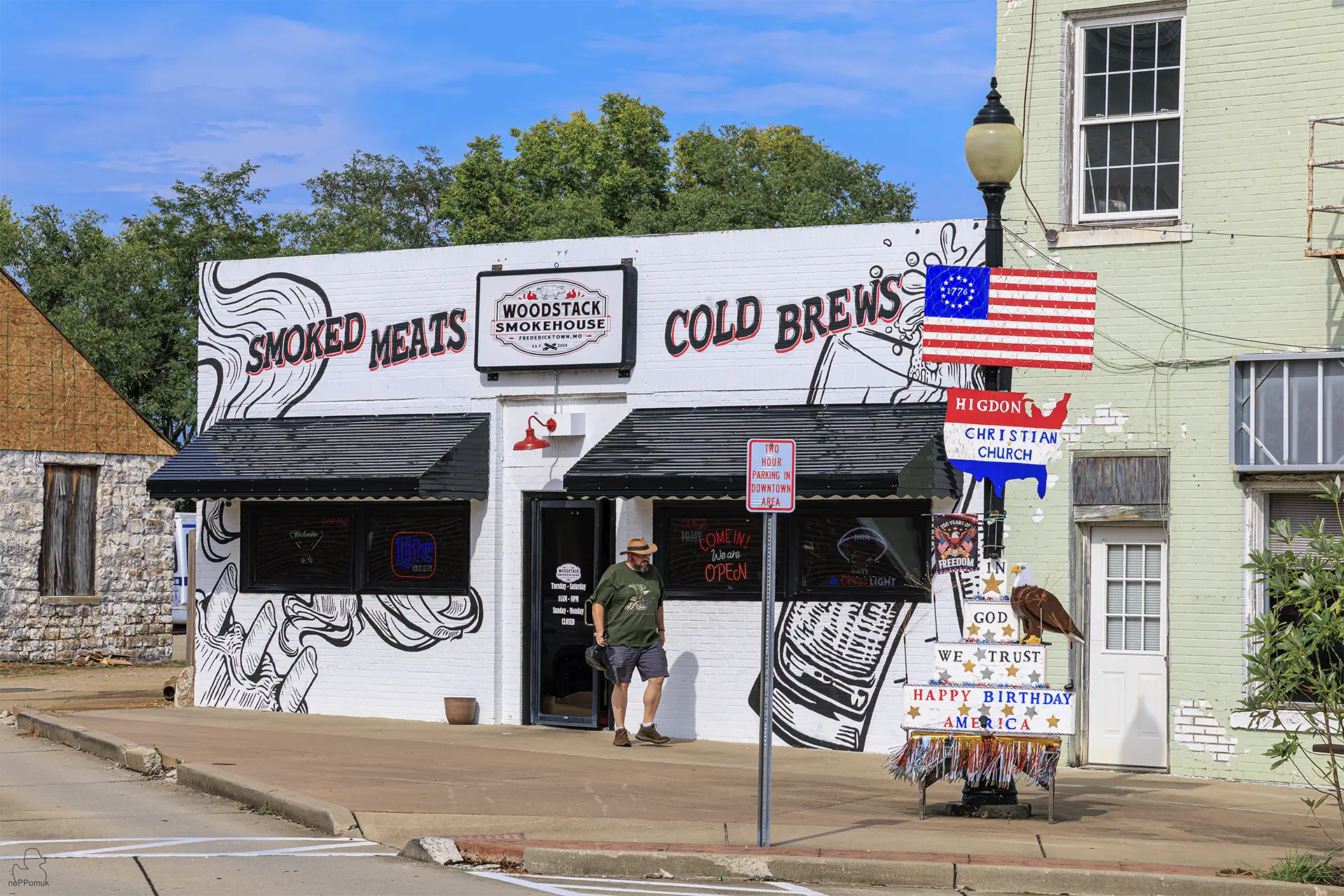
Unlike in larger cities, where international restaurant concepts and upscale dining often dominate the offerings, Fredericktown is mainly characterized by uncomplicated restaurants, small diners, and traditional barbecue establishments. They cater not only to visitors but are also part of the local population’s everyday needs. A lunch during work, an extended breakfast, or a shared dinner are typical occasions in which the local gastronomy plays a role.
What is particularly interesting is Fredericktown’s geographic location. Although Missouri belongs to the American Midwest, the cuisine of the southeastern part of the state shows numerous parallels to traditional Southern Cuisine. This applies above all to the preference for pork, slow-cooked dishes, and filling side dishes. Breakfast classics such as Biscuits and Gravy, pancakes or eggs with bacon and potatoes are widely common in the regional restaurant culture.
The differences between the culinary traditions of St. Louis, Kansas City and rural Missouriremain recognizable. While Kansas City is known for its diverse barbecue culture and strong, often sweet sauces, St. Louis has its own specialties such as pork steaks and a distinctive preparation of pork ribs. Fredericktown adopts elements of these larger regional traditions without having produced a distinct, clearly defined barbecue style of its own.
It is precisely the combination of familiar American dishes and local specialties that makes the gastronomy of a small town interesting. Not every restaurant has an extraordinary history, but the individual establishments show which foods and forms of communal dining play a role in everyday life in the region.
Read more
American Barbecue – One of Missouri’s most important culinary traditions
Barbecue in Missouriis more than ordinary grilling of meat. In the traditional American understanding, the term refers to a cooking method in which larger cuts of meat are cooked over a longer period at comparatively low temperature. Often, smoke from hardwoods is used, giving the meat a distinctive flavor.
This preparation differs significantly from quick grilling over high heat. In the so-called Low and Slowmethod, the meat is cooked over several hours. This allows the connective tissue, especially in shoulder and brisket cuts, to slowly transform, while a flavorful crust develops on the surface. In addition to temperature, the cooking time, the type of meat used, and the composition of the spices are crucial.
Typical types of meat are Pork Shoulder, Pulled Pork, Beef Brisket and Spare Ribs. Pulled Pork is made from pork that has been cooked for a long time and can be pulled into individual fibers after cooking. Brisket comes from the beef breast and also requires a long cooking time due to its firm structure. Pork ribs can be dry-rubbed, smoked, grilled, or coated with sauce, depending on regional tradition.
Hickory, spices and the importance of smoke
For traditional American barbecue preparation, different types of wood are used. In particular Hickoryis one of the classic smoking woods in the Midwest and the Southern states. Its strong smoky aroma is especially suitable for pork and beef. In addition, oak, applewood or cherry wood are often used.
The choice of wood influences the aroma just as much as the composition of the spice blend, the so-called Dry Rub. Salt, black pepper, paprika, garlic and other spices can be combined with one another. The exact recipes vary between regions and businesses.
There are also significant differences in barbecue sauces. While some preparations rely more heavily on vinegar and acidity, others are characterized by tomato, molasses or sugar. In Missouri, the influences of Kansas City and St. Louis meet in particular. There is no uniform recipe for the entire region.
Therefore, for the quality of a classic barbecue, the sauce is not the only deciding factor. Especially with slowly smoked meat, the correct doneness, balanced seasoning, and the ratio between smoky aroma and meat flavor play a central role.
Woodstack Smokehouse – Barbecue at the historic Court Square
In the middle of Fredericktown’s historic center is the Woodstack Smokehouseon 24 Court Square. The restaurant is thus located directly in the vicinity of the Madison County Courthouse and combines local gastronomy with the historic commercial architecture of downtown.
The menu is based on the American smokehouse tradition. The focus is on different smoked meat dishes, especially brisket and pork. Also Burnt Ends, which are especially well known from the barbecue tradition of Kansas City, are part of the menu.
Burnt Ends are particularly intensely seasoned and smoked pieces of meat that traditionally come from the fattier part of the beef brisket. Their surface is richly browned, while the inside remains juicy when prepared properly. What originally emerged as a by-product of cutting up smoked briskets developed over time into an independent barbecue specialty.
The decor and menu at Woodstack Smokehouse follow the concept of an uncomplicated American barbecue restaurant. Different meat dishes, side dishes, and sauces allow guests to put together their meal individually. The preparation is based on the typical characteristics of a smokehouse, without being limited to the regional cuisine of Fredericktown.
A smokehouse in the historic commercial district
The location of Woodstack Smokehouse is also interesting from an urban-planning perspective. Unlike many modern restaurants located along major arterial roads or in shopping areas, the restaurant is situated directly in the historic center.
Around Court Square, there are commercial buildings from different phases of the town’s development. The restaurant industry thus makes use of an urban space that has been shaped by trade and public institutions since the 19th century. Restaurants and cafés are among the uses that can help keep such historic commercial districts attractive even after the economic transformation of retail.
The photograph taken in front of Woodstack Smokehouse shows a man wearing a hat in the restaurant’s surroundings. It is precisely this connection between an everyday scene involving a person and the restaurant business that underscores the documentary character of the Fredericktown photographs. The focus is not solely on the restaurant itself, but on its integration into the ordinary life of the town.
The Pig Barbecue – A Fredericktown tradition since 1948
The history of local barbecue goes back much further than the more recent dining scene at Court Square. One particularly important example is The Pig Barbecue, which has existed in Fredericktown since 1948and is therefore one of the city’s long-established restaurants.
The establishment is located on State Highway OO west of the historic center. Its location points to another chapter in American culinary history: the increasing importance of the automobile and the development of restaurants suited both for dine-in meals and for quickly serving motorists.
Over the decades, The Pig developed its own distinctive menu, focusing above all on smoked pork. According to the restaurant, it still uses hickory wood and traditional recipes that have been part of the restaurant’s identity for several generations.
The Combination Sandwich – A local specialty
The particularly characteristic item is the Combination Sandwich, which is considered the house specialty. It consists of smoked pork shoulder on toasted white bread, a homemade hot sauce, and a likewise homemade cheese preparation.
The combination differs clearly from the better-known pulled-pork sandwiches, in which the meat is often served on a soft burger bun with coleslaw. At The Pig, the focus is instead on the smoked pork, melted cheese, and spicy sauce.
Another variation is the so-called Brown Combination Sandwich. For this, especially heavily smoked, dark end pieces of the pork shoulder are used. These are known as Browndesignations of meat cuts have a more intense crust due to the longer contact with smoke and heat.
Such specialties show that regional food culture does not always have to be characterized by elaborate dishes or a large number of different ingredients. Often, it is simple dishes, prepared largely unchanged over decades, that have a special recognition value for the local population.
The Pig is thus an important example of the culinary history of Fredericktown. The restaurant combines American barbecue tradition with a very specific local specialty whose origin and development date back to the postwar period.
American Diner – A Piece of American Everyday Culture
In addition to the barbecue restaurants, the classic diner cultureone of the best-known forms of American cuisine. Originally, diners developed from mobile lunch wagons and simple restaurants that offered quickly prepared meals at affordable prices.
Especially during the 20th century, the concept spread throughout the United States. Typical features were long opening hours, a manageable menu, and the option of getting both breakfast and hot main dishes. Establishments with a counter, fixed booths, and a functional design became a common part of American street scenes and small-town landscapes.
Culinarily, the classic diner is closely associated with so-called Comfort Foods. These are familiar, usually simply prepared dishes that are valued above all for their filling qualities and everyday character.
These include pancakes with syrup, egg dishes, bacon, hash browns, burgers, sandwiches, and various hot main dishes. Milkshakes, ice cream, and simple desserts are also part of traditional diner culture. The offerings vary from restaurant to restaurant, but the basic idea remains the same: a wide selection of familiar dishes in a casual setting.
Udderz Diner – Traditional restaurant concept on South Main Street
On the 200 South Main Streetis located at the Udderz Diner, whose striking turquoise-and-white facade creates a distinct splash of color within the surrounding buildings.
The business uses a building that was formerly associated with the local company Hocker Oil. This repurposing is typical of the development of many small American towns, where former commercial and industrial spaces are given new functions.
The design of the diner consciously draws on elements of classic American restaurant culture. The contrasting facade colors recall the visual tradition of 20th-century diners, where striking color schemes, signs, and easily recognizable entrances played an important role.
Culinarily, Udderz Diner is oriented toward familiar American cuisine. Breakfast offerings, hot dishes, and ice cream are part of the concept. In this way, the business combines various gastronomic functions that were once partly distributed among separate restaurants, cafés, and ice cream parlors.
From breakfast to ice cream
A key characteristic of American diners is the comparatively great importance of breakfast. While in many European countries breakfast is mainly eaten at home, the American Breakfastalso has a long tradition in restaurants.
Typical components include eggs prepared in different ways, bacon or sausage, pancakes, and potato side dishes. In the southern states and neighboring regions, Biscuits and Gravyare also among the common breakfast dishes. Soft, unsweetened American biscuits are served with a hearty milk gravy, often based on pork sausage.
Ice cream also has a permanent place in the diner. It can be offered as dessert, in a sundae, or as part of a milkshake. This combination of warm meals and sweet specialties is part of American restaurant tradition and can still be found today in different variations.
At Udderz Diner, this tradition is especially evident. The establishment combines the function of an ordinary restaurant with an independent ice cream offering. In this way, the concept appeals both to guests looking for a full meal and to visitors who simply want a sweet treat.
Dairy Bars and Drive-ins – The History of an American Form of Gastronomy
Another special feature of American small towns are the so-called Dairy Bars. They developed especially during the 20th century into popular places for ice cream, milkshakes, and simple hot meals.
Unlike traditional restaurants, many Dairy Bars were geared toward quick service and sales through service windows. They often emerged on easily accessible roads, had parking facilities, and also offered their food to go.
Their development is closely linked to the increasing motorization of American society. Especially during the 1950s and 1960s, simple fast-food restaurants, drive-ins, and ice cream parlors became characteristic elements of everyday American life.
The menus were usually straightforward. In addition to soft serve, sundaes, and milkshakes, hamburgers, hot dogs, French fries, or other quickly prepared dishes were often offered. The concept appealed equally to families, young people, and motorists.
The Dairy Bar on West College Avenue
Also in Fredericktown, a Dairy Bar at 104 West College Avenuereminds us of this culinary tradition. The photographed roof sign is a characteristic example of the eye-catching signage of small American fast-food restaurants.
The location was known for ice cream and simple restaurant dishes. In particular, the combination of sweet desserts and uncomplicated hot meals corresponds to the traditional concept of a Dairy Bar.
Regardless of the building’s continued use, the preserved lettering documents a form of American gastronomy that for decades was closely linked to car culture and the social life of small towns.
For the photographic depiction of Fredericktown, the motif is therefore also interesting beyond the actual restaurant operation. The striking roof sign stands as a representative of a design tradition in which food establishments presented themselves in the street scene through large lettering visible from a distance.
Local gastronomy as part of social life
The significance of small restaurants cannot be explained solely by their menus. In American small towns, they fulfill Diners, cafés and traditional barbecue establishmentsoften also have a social function. They are places where people eat together, talk, or take a short break from everyday life.
This role differs from the strongly tourist-oriented gastronomic offerings of larger travel destinations. While in the historic city centers of major cities restaurants are often geared toward changing groups of visitors, many small businesses in rural towns are part of the regular everyday life of their surroundings.
In Fredericktown, different gastronomic concepts come together. Traditional businesses such as The Pig stand alongside more modern restaurants such as Woodstack Smokehouse and classic diner concepts. The businesses differ in terms of their menu selection and design, but fulfill comparable functions within the local offering.
At the same time, they have economic significance. They use existing commercial buildings, employ staff, and help ensure that the historic streets and smaller commercial sites continue to fulfill publicly accessible functions.
The gastronomy is thus part of that small-town infrastructure that characterizes Fredericktown beyond the well-known sights.
Fredericktown from a culinary perspective – A reflection of regional traditions
The Food culture in Fredericktownis shaped above all by the combination of different American traditions. Barbecue restaurants recall the long history of meat preparation in the Midwest and the Southern states. Diners stand for a form of gastronomy whose development is closely linked to the automobile and the changing lifestyles of the 20th century. Small ice cream shops and fast-food restaurants complete this picture.
The local distinctiveness becomes particularly clear in the history of The Pig Barbecue. The Combination Sandwich, offered since 1948, is a concrete example of how a simple dish can become a regional specialty over generations.
With the Woodstack Smokehouse and the Udderz Diner, it also becomes clear that these traditions do not belong exclusively to the past. Classic preparation methods and gastronomic concepts are still being taken up and adapted to contemporary requirements.
The restaurants and their buildings are therefore not just places to eat. They document different phases of everyday American culture and add a culinary perspective to the historic townscape that is directly connected to life in Fredericktown.
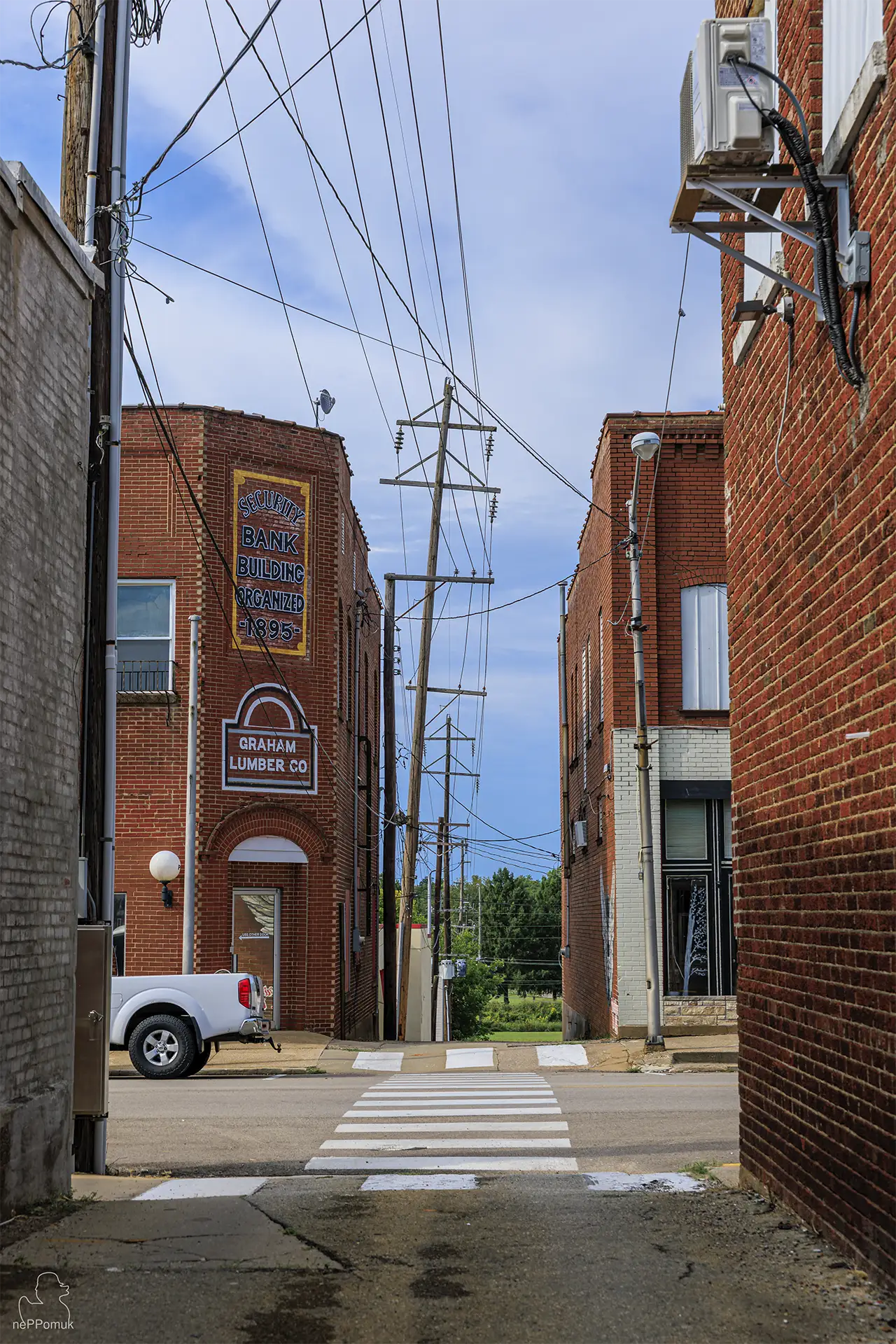
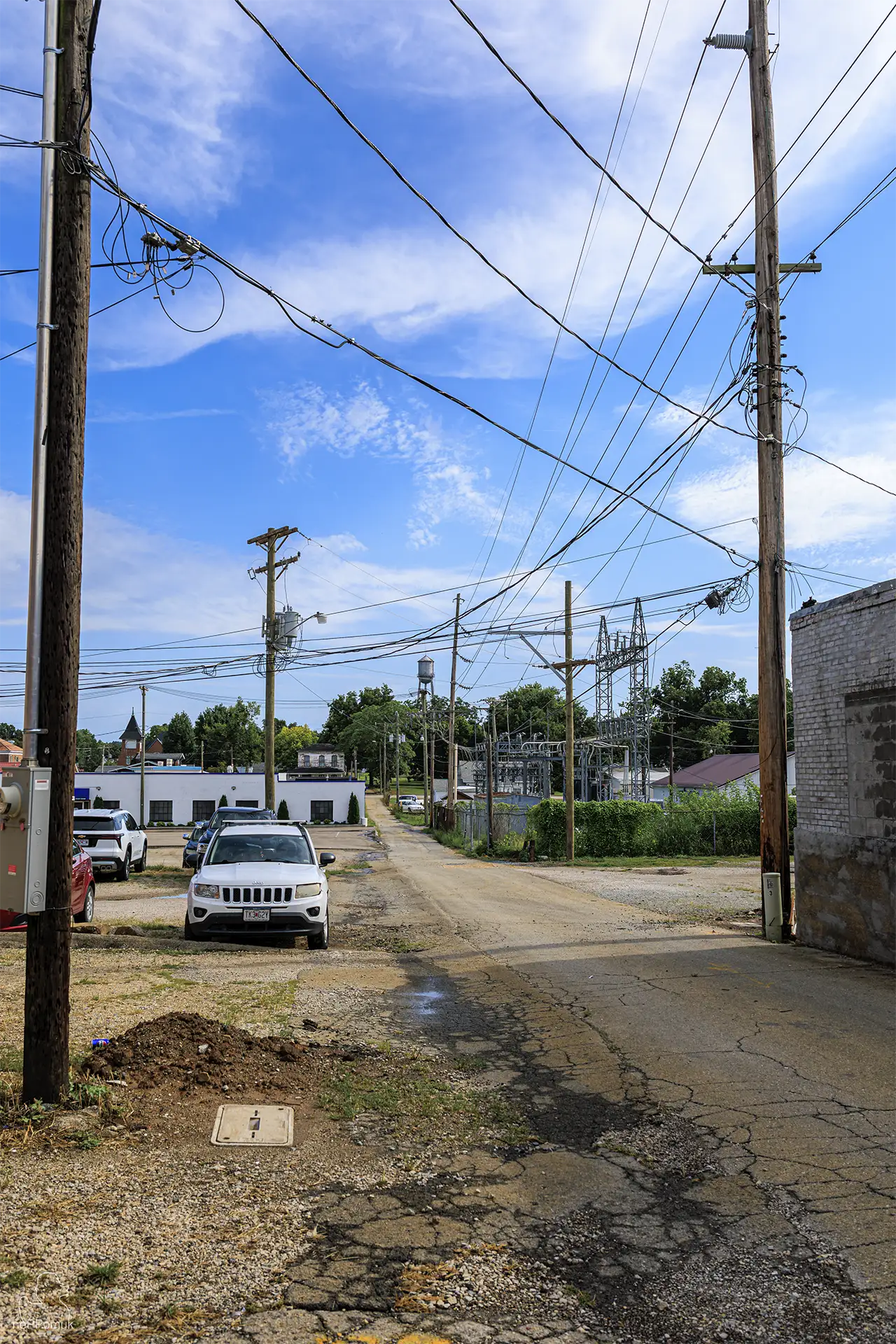
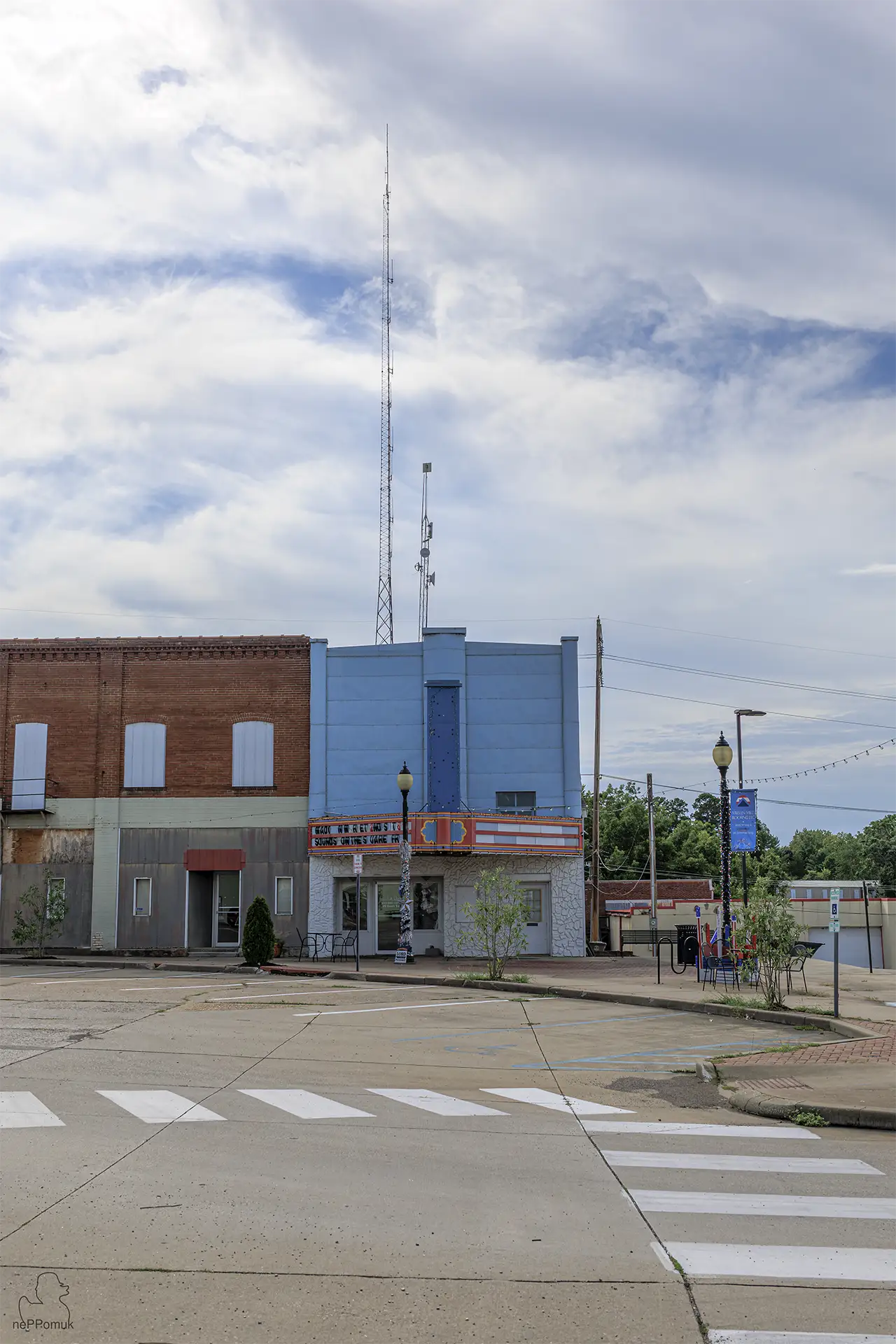
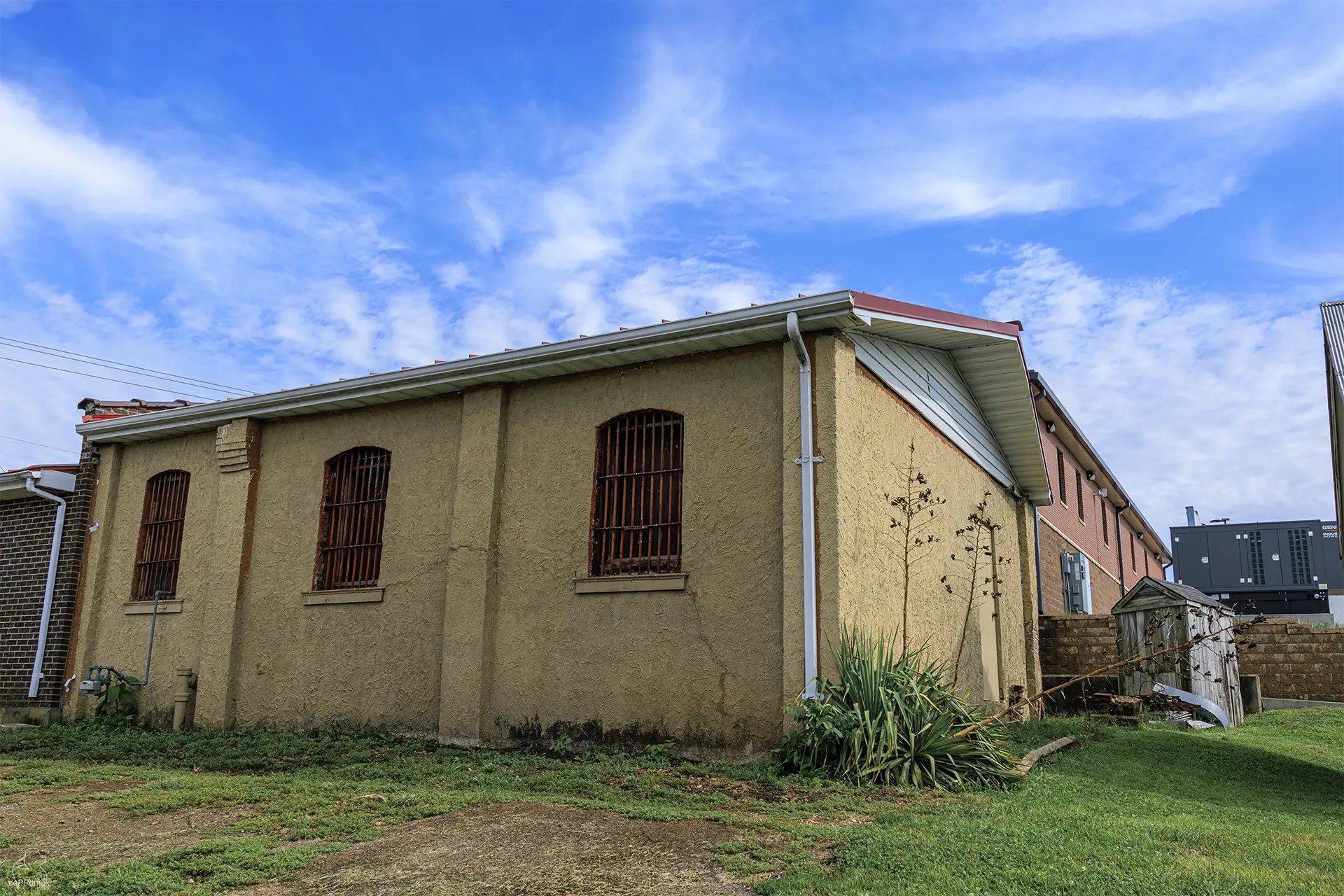
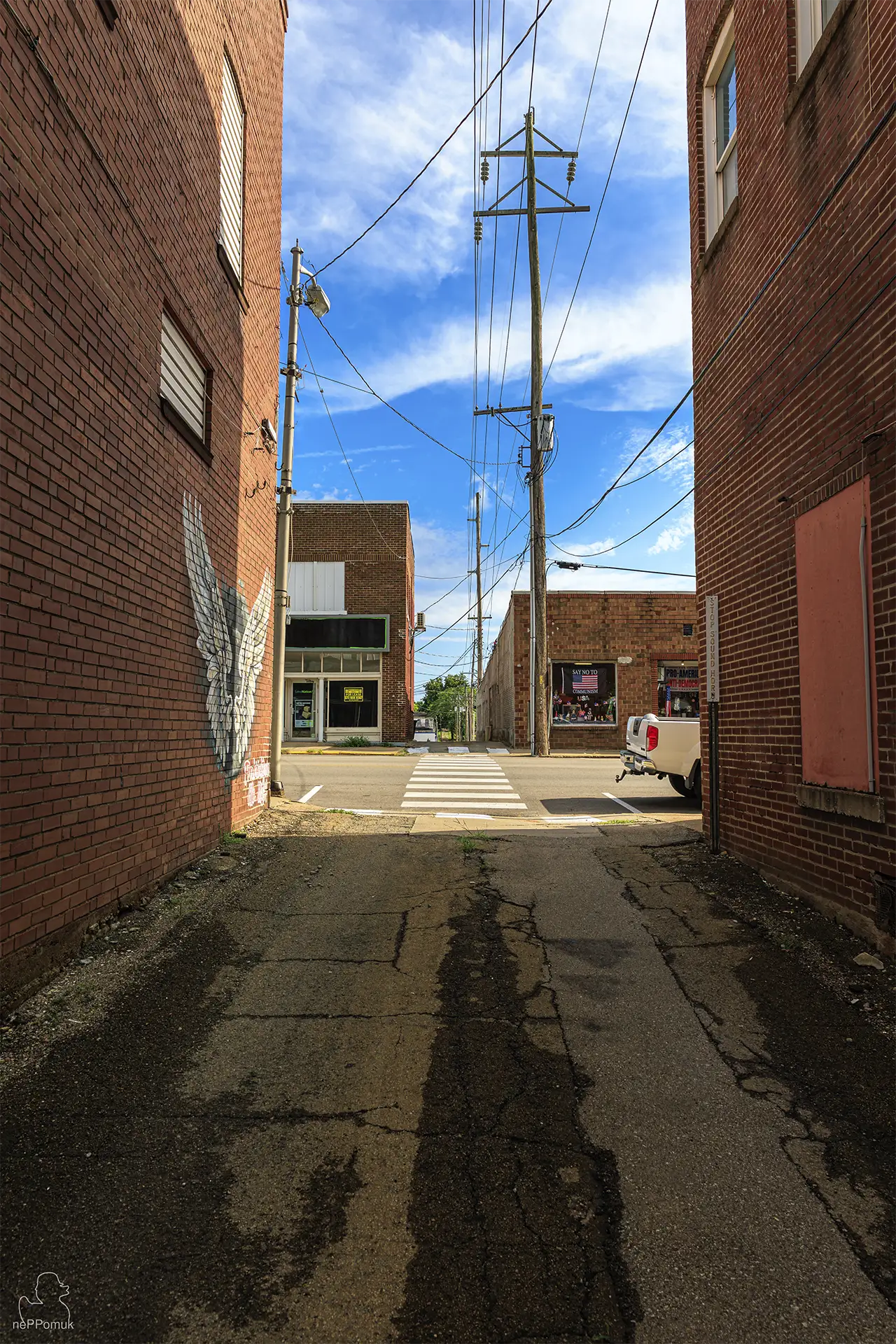
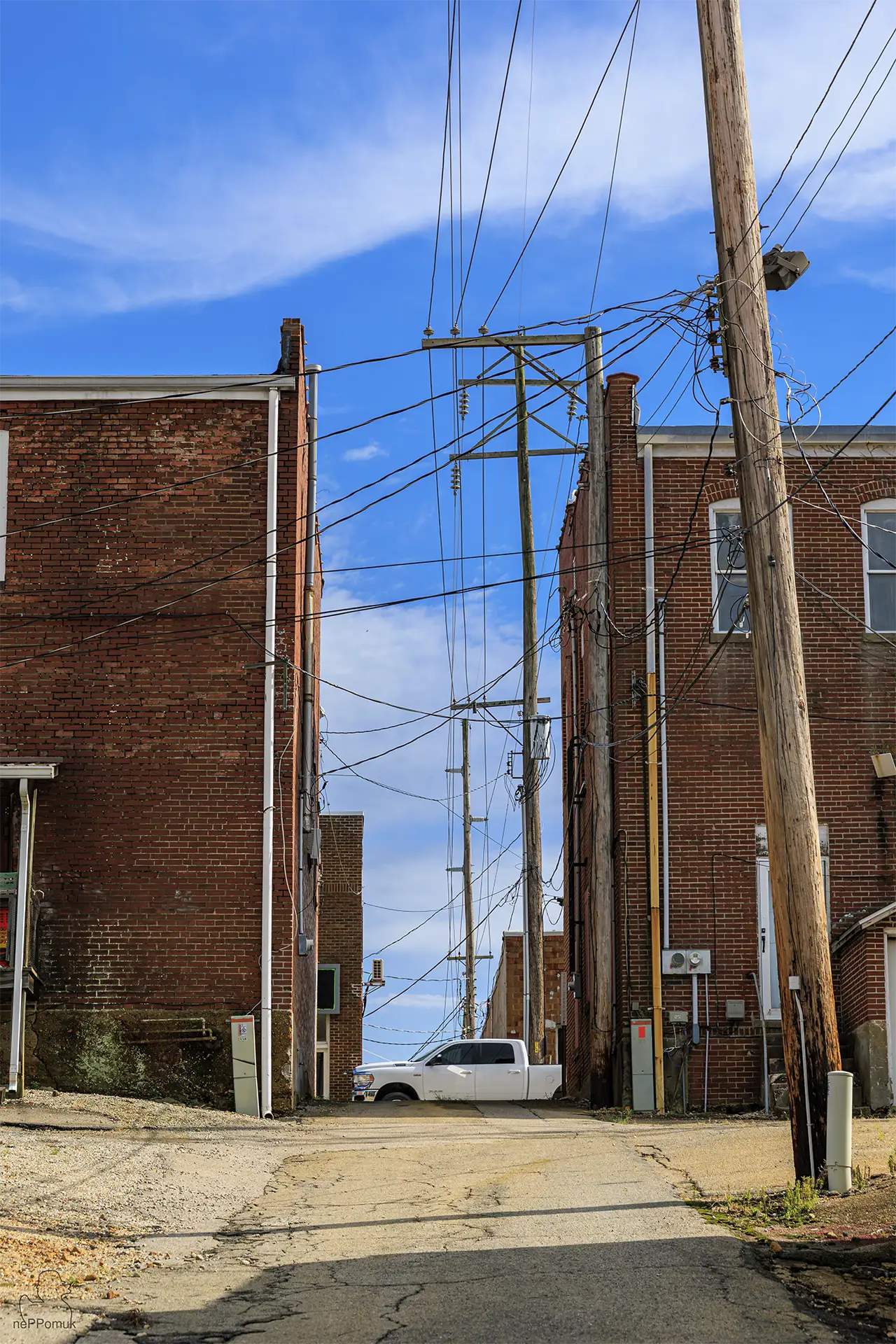
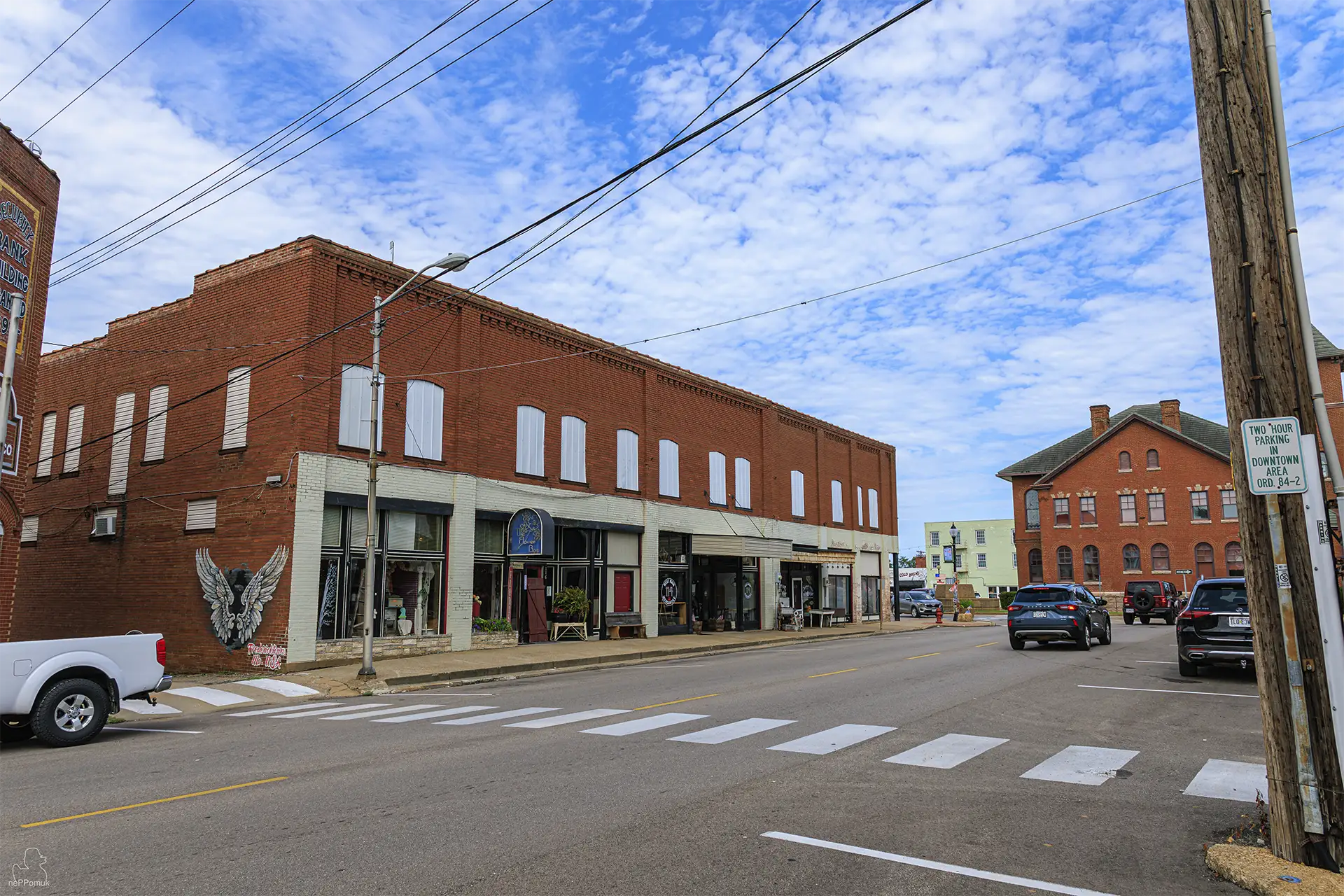
Perspectives away from Main Street
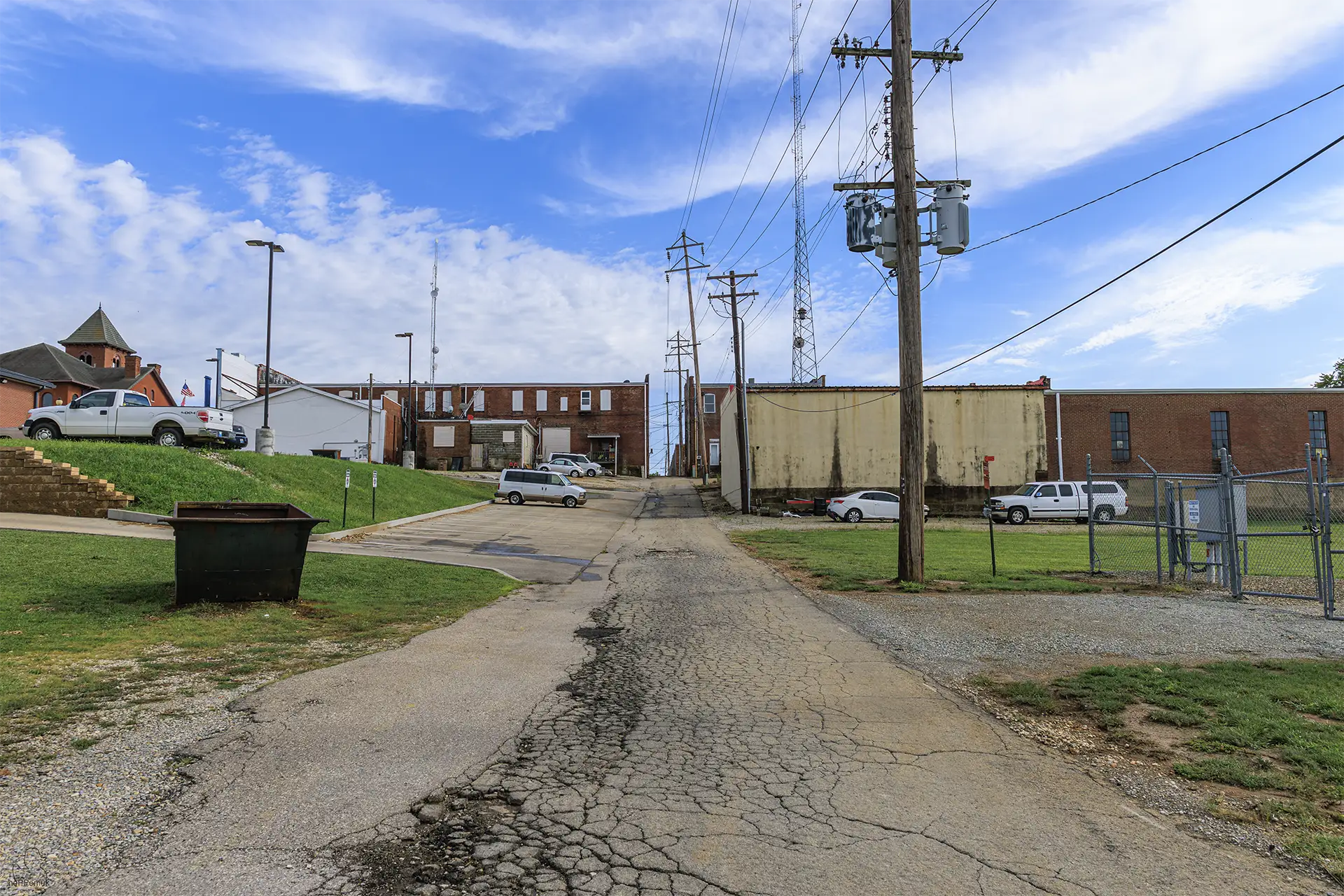
Fredericktown beyond the classic sights
The Photography in Fredericktown, Missouri, offers a view of the city that goes beyond its well-known historic buildings. While the Madison County Courthouse and the commercial buildings along Main Street document the small town’s grown architecture, very different motifs appear in the adjoining streets and back alleys. Brick walls, narrow passages, power lines, facade lettering, and colorful murals shape an urban space whose photographic appeal often becomes visible only on closer inspection.
Especially in smaller American towns, what makes them distinctive is not necessarily extraordinary buildings. Rather, their appearance is created by the combination of historic building fabric, everyday infrastructure, and the visible changes of different decades. Buildings are repurposed, facades repainted, lines added, and properties adapted to changing requirements. In this way, cityscapes emerge that are less planned than grown over a long period of time.
In Fredericktown, this development can be observed particularly well. Just a few steps away from the main streets, the perspectives change. Instead of representative front entrances, building backs, plain utility structures, and technical facilities now shape the view. The materials remain partly the same, but their arrangement and function become more apparent.
For documentary travel photographysuch motifs are interesting because they describe a place not solely by its best-known features. An ordinary back alley can convey as much about the character of a town as a historic administrative building. What matters is the interplay between architecture, use, and the traces of everyday life.
Continue reading
Back alleys and building rear sides – The less visible downtown
The historic commercial buildings of Fredericktown have two different sides. While their main facades with shop windows, entrances and advertising signs face the public street space, the rear often contains simpler building sections, delivery access points and technical facilities.
These Back alleys of Fredericktown Downtowndiffer clearly from the orderly facades along Main Street. Narrow lanes, irregular asphalt surfaces and brick walls of varying heights create a distinct spatial structure. Power lines run between buildings, while wall projections, window openings and utility facilities interrupt the facades.
Especially noticeable is the coexistence of different materials. Historic brick walls stand next to newer additions or altered window openings. Repaired surfaces meet older building elements, some of whose original design is still recognizable.
These areas are not independent sights, but functional components of the downtown area. They provide access to the properties and house facilities that should remain as little visible as possible on the representative street-facing sides.
Cracked asphalt and historic brick walls
A characteristic motif shows a back alley with cracked asphalt and towering utility poles. The damaged road surface forms an irregular foreground, while the vertical lines of the poles and the horizontal runs of cable structure the perspective.
It is precisely the differences between straight architectural edges and irregular surfaces that give such scenes their photographic character. For this, the street does not need to be especially old or exceptionally designed. Its visible use and the technical additions are enough to create an independent image of the urban space.
Another motif shows the rear of a building with barred windows. The openings interrupt the closed facade surface and create a recurring geometric rhythm. At the same time, they point to functional requirements that would be less obvious on a storefront.
Both shots document ordinary areas of downtown. Their photographic value lies not in special staging, but in the precise observation of existing structures.
Brick architecture as a photographic design element
Brick is one of the defining building materials of Fredericktown’s historic downtown.Numerous commercial buildings were constructed between the late 19th century and the middle of the 20th century. Their facades show different brick colors, masonry bonds, and construction details. Many of these buildings are part of the Fredericktown Courthouse Square Historic District, whose historical significance is recognized by its listing in the National Register of Historic Places.
For photography, the material offers special possibilities. The even rows of bricks create recurring lines, while joints, window frames, and cornices divide the facades. At the same time, older and newer masonry surfaces often differ in color, surface texture, and condition.
From a greater distance, such buildings appear as contiguous architectural bodies. From a closer perspective, however, individual materials and construction details become visible. This allows the same group of buildings to be photographed both as a city view and as a graphically shaped architectural motif.
Building edges, passages and changing perspectives
A particularly interesting element are the narrow passages between adjacent buildings. They connect different areas of the downtown and create sightlines that are not always immediately visible from the main streets.
The photograph of a brick alley with a view toward Main Street shows this spatial relationship. The side walls of the buildings frame the field of view, while the opening at the end of the passage establishes the connection to the public street space. The perspective thus combines two different areas of the city within a single motif.
The photographed passage with the sign of Graham Lumberalso uses this spatial effect. Historic business signage and functional architecture appear together without the building having to be shown as a complete street view.
It is precisely such details that convey the scale and structural layout of a grown downtown. They show how closely the buildings stand together and how different lots are separated from one another by narrow gaps.
Street Art in Fredericktown – Color between historic facades
In addition to the traditional architecture, murals and colorful facade designsalso belong to Fredericktown’s appearance. They add visual accents within the downtown area, which is largely characterized by brick, plaster, and functional building surfaces.
Unlike the classic architectural details of the 19th century, such images are often designed for immediate perception. Larger areas of color, clearly recognizable motifs, and the inclusion of the existing facades create a contrast with the historic building fabric.
The design ranges from decorative facade paintings to murals that are particularly well suited for photographs with unusual perspectives. These are not necessarily street art in the narrower sense of an independently emerged urban art movement. Many murals are created specifically to beautify commercial buildings or to enhance public spaces.
In Fredericktown, such designs can be observed in the immediate surroundings of the historic downtown area. The colorful wing motifs in particular form a clear contrast to the traditional brick facades.
Wing murals and the historic Courthouse Square
Two of the photographs show a mural on wings in Fredericktownfrom different perspectives. In one view, the motif is combined with the Madison County Courthouse in the background, while the other shot places greater emphasis on the painted facade of a brick corner building.
The wings are the most striking design element. Their symmetrical form differs clearly from the linear facade structures. At the same time, the different shooting positions open up various ways of placing the mural within its architectural context.
The shot with the Courthouse in the background in particular combines two design eras: modern facade painting and a historic administrative building from around 1900. The contrast makes it clear that downtown Fredericktown is not made up exclusively of preserved historic architecture, but is also continually being altered by contemporary interventions.
The second perspective focuses more strongly on the brick building itself. Here it becomes clearer how the mural complements the existing architecture and turns an ordinary facade surface into a striking part of the streetscape.
The photographs therefore document not only the painting, but also its impact within public space.
Mural painting as part of the local cultural history
Public art has a long tradition in Fredericktown as well. As early as 1939the mural The Lead Beltby the artist James Baare Turnbullwas created for the local post office. Commissioned as part of the American New Deal by the Treasury Section of Fine Arts, the work deals with the mining region and its economic and landscape conditions.
The painting is located in the historic post office on South Main Street and belongs to a larger group of government-funded artworks that were installed in American post office buildings during the 1930s and early 1940s.
Thus, in addition to its newer murals, Fredericktown also has a culturally and historically significant example of public art. While the modern murals stand out primarily for their immediate effect in the urban space, Turnbull’s work is more closely connected to regional history and American arts patronage during the Great Depression.
Power lines and technical infrastructure – The geometry of everyday life
Another recurring motif in the Fredericktown photographs is the visible technical infrastructure. Utility poles, overhead lines, supply alleys, and radio installations are among the everyday features of American small towns.
While in some European city centers large parts of the utility lines have been laid underground, in many American communities overhead line networks still run above ground. Wooden poles, crossarms, transformers, and cables running in different directions create a characteristic appearance.
In Fredericktown, such installations can be found both along the streets and at the back of commercial buildings. Their practical function is beyond question: they ensure the supply of energy and communication. From a photographic perspective, however, they also create distinctive graphic structures.
Vertical poles and horizontal lines
This effect becomes particularly clear in the photograph of a utility alley with power poles and a white SUV. The portrait-format image combines the vertical alignment of the poles with the spatial depth of the street perspective. The parked vehicle provides an additional sense of scale and places the technical infrastructure within the everyday urban space.
Another shot shows a backyard with brick walls and power lines running overhead. The massive facade surfaces contrast with the thin lines of the cables, which run through the space at different heights.
The lines are not a random distracting element, but an essential part of the motif. Their courses document how the historic buildings were supplemented by technical installations.
Such images can also be seen as graphic architectural photography. Recurrent lines, right-angled building edges, and differently textured surfaces create a visual order that only becomes visible through the deliberate choice of framing.
Facade colors, radio masts and modern additions
In addition to the historic brick surfaces, colorfully designed facades also shape the cityscape of Fredericktown. A particularly striking shot shows a blue building facade with radio masts.
The comparatively large area of color creates a different visual impression than the small-scale historical architecture. While brick walls consist of a multitude of individual elements, a uniformly painted facade initially appears as a closed geometric surface.
The radio installations visible above or behind it add technical structures to the motif. This creates a contrast between architecture and infrastructure, which is characteristic of the present-day appearance of many small American towns.
Color and surfaces as motifs in their own right
For urban photography, buildings do not always have to be shown in full. Often, sections of facades, window openings, or striking building edges are enough to make a spatial situation understandable.
A strong wall color can be just as much a defining design element as the color difference between old bricks and a newly plastered surface. Particularly interesting are places where different materials touch directly or where structural changes remain visible.
In Fredericktown, these surfaces meet in a small area. Historic facades, modernized commercial buildings, simple functional structures, and painted walls stand side by side. Their differences create a variety that could only be incompletely represented in a pure overview of the city’s sights.
The photographic perspective changes the view of the city
The photographic documentation of Fredericktown shows how differently the same urban space can be perceived. A wide street view initially provides orientation and makes the basic structure of the buildings visible. A tight crop, by contrast, focuses on individual materials, lettering, or architectural details.
The choice between portrait and landscape orientation also influences the visual effect of an image. Horizontal street views often emphasize the course of a street and the relationships between several buildings. Portrait-format shots, by contrast, are particularly suited to narrow passages, rising power poles, or elevated facade details.
The deliberate selection of such perspectives makes it possible to portray a place in a differentiated way without limiting it to its representative views.
Between documentary accuracy and photographic design
In documentary photography, image composition and the content of the image are closely connected. The choice of vantage point, the framing, and the lighting conditions influence which characteristics of a subject stand out.
This connection is especially important in ordinary urban scenes. An alleyway can appear as a purely functional passageway or, through the targeted inclusion of lines and surfaces, develop its own visual structure. The visible elements remain the same; their photographic weighting changes.
Color and contrast also contribute to perception. The warm tones of the brick facades, colorful murals, and more neutral surfaces of the technical infrastructure create different visual effects. The photographed urban space does not have to be artificially altered in order to make its design qualities visible.
What matters more is that the image section retains a recognizable connection to the actual place. In this way, both precise architectural photographs and casually appearing street scenes can contribute to a coherent photographic portrayal of Fredericktown.
Fredericktown as a photographic city portrait
The photographic distinctiveness of Fredericktown does not lie in the number of exceptional sights. What is more interesting is the variety of a grown small town, whose historical and present-day structures exist directly side by side.
The courthouse, the commercial buildings on Main Street, and the former railroad depot document important chapters in the town’s history. Back alleys, power lines, painted facades, and inconspicuous passagewayscomplement these familiar motifs with perspectives that place the ordinary urban space at the center.
It is precisely this combination that makes a photographic city portrait meaningful. It shows not only those places that visitors intentionally seek out, but also areas that belong to everyday life and whose design has emerged over years or decades.
Fredericktown thus offers a multifaceted picture of rural Missouri. The photographs document historic architecture as well as current changes and reveal how an American small town presents itself beyond its familiar landmarks.
